How to Create a Consistent Daily Routine for Your New Puppy
Many new puppy parents think a solid schedule comes down to their own discipline – it doesn’t. It comes from your puppy’s biology. Puppies are born with natural rhythms that tell them when they need to eat, sleep, play, and go to the toilet. Your job is to figure those out and work with them. Stop trying to correct the puppy and start asking whether their needs are actually being met. Nine times out of ten, that’s where the chaos is coming from.
Sleep Is The Foundation, Not A Bonus
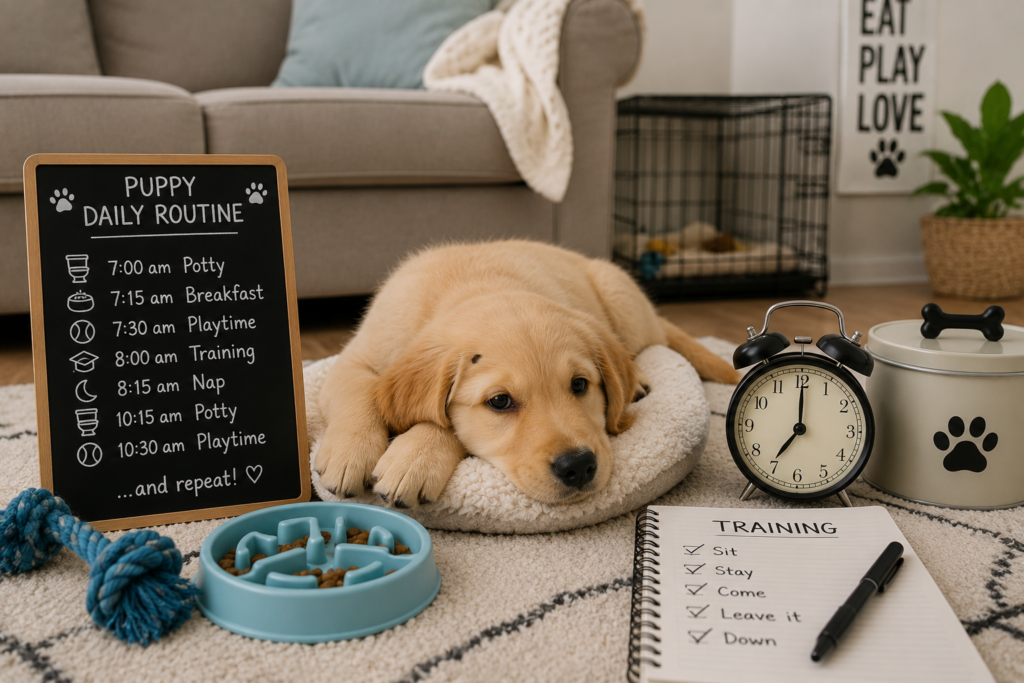
Young dogs need to sleep 18 to 20 hours per day. It might sound like an overstatement, but it’s not. Their bodies need sleep to build muscle, increase bone density, and even improve their coordination. When puppies are awake, they use a lot of energy, and without a sufficient amount of sleep to recharge, they end up taxed, which causes all the behaviors you don’t like, such as biting, rough housing, and just being generally out of control.
Because young puppies can’t eat a lot at one time, they need to nap in between to get enough calories and develop normally. A good rule of thumb with very young puppies is that they can hold their bladder for about as many hours as they are months old (so a 2-month-old puppy will need a bathroom break about every 2 hours). They can’t do this while they’re asleep, so you must be there to take them out and make sure they go.
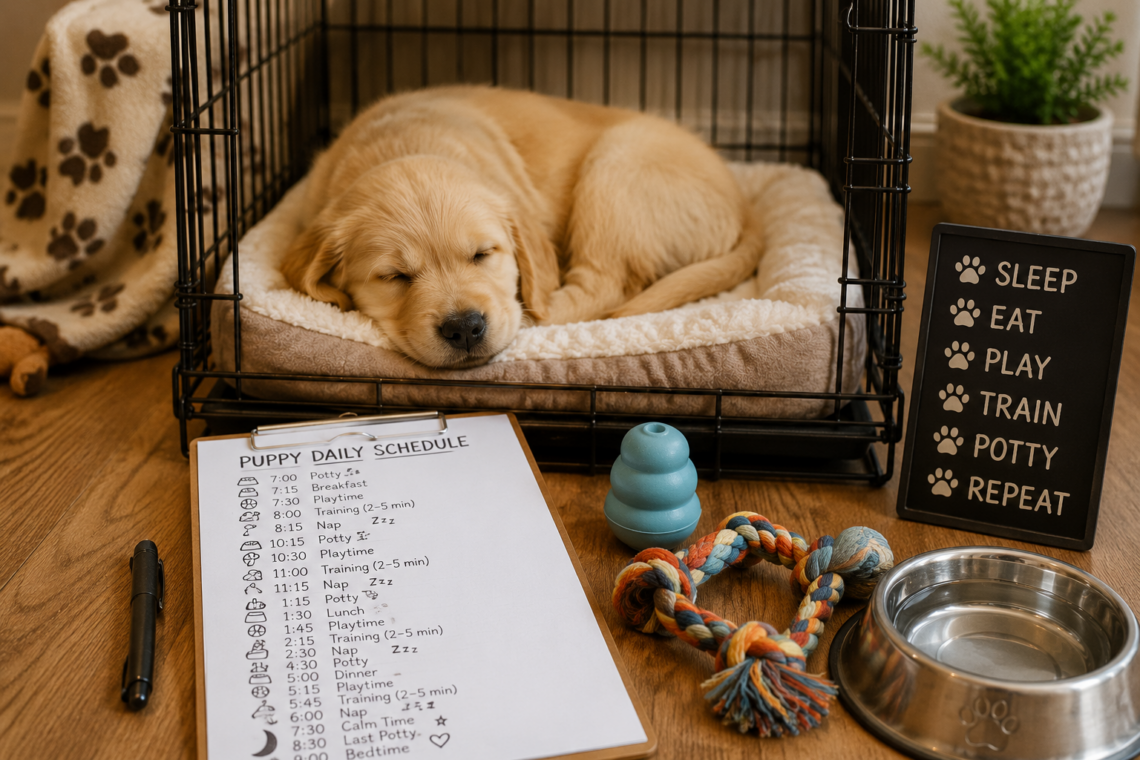
There are schedules that you can follow, but the exact times aren’t important. What is important is that you follow the same sequence every day. This is what helps regulate their body and speeds up the process of them being able to hold it until the morning. Adjust the schedule to your life, but keep the same order.
Micro-Training Sessions Beat Marathon Sessions
30-minute training blocks are not productive. At 8 to 12 weeks, your puppy’s attention span is so short you’re more talking seconds than minutes. Instead, insert 2-to-5-minute training sessions at natural transition points in the day – right before you set down a meal, immediately after a nap, or just before a play session ends.
These short windows are high-value because your puppy is alert but not yet overstimulated. Use positive reinforcement consistently: reward the behavior you want, immediately, every time. This is how puppies learn – through repetition and timing, not through duration.
Socialization needs to fit these same constraints. The primary socialization window runs from roughly 3 to 14 weeks of age (American Veterinary Society of Animal Behavior), so at-home exposure to people, sounds, surfaces, and other animals shapes your puppy’s temperament for years. Neighborhood walks and trips to the park are important, but not always the highest-value minutes because you can’t control the environment. Enrolling in perth puppy training during this window gives your puppy a structured environment to practice social skills under qualified supervision.
Feed On A Clock, Not On Demand
A puppy’s digestive system is a wonder. They need to “go” somewhere between 5 minutes and 30 minutes after eating. If you feed them at the same times daily, you will be able to count on and schedule potty breaks based on when you feed them, rather than responding to accidents.
For very young puppies (8-10 weeks), 3 meals a day is usually the norm. Free-feeding (leaving food out for your dog all day) eliminates your capacity to schedule elimination based on when you feed your dog, which is the foundation of housebreaking. Put the bowl down for 10-15 minutes and then remove it. This also teaches your puppy to concentrate and prevents the bad habit of picky eating.
Exercise That Doesn’t Do Damage
Puppies have soft growth plates, and too much impact can cause real damage – especially in larger breeds where the bones take longer to fully develop. Long runs and endless fetch on hard surfaces might seem harmless but they’re not. Save those for when your dog is older.
What actually works is mixing it up rather than ramping it up. A 10-minute walk where your puppy gets to sniff around at their own pace will wear them out more than a brisk 30-minute one. Same goes for food puzzles and scatter feeding in the grass – it sounds simple, but it genuinely takes it out of them. A tired puppy is a well-behaved puppy, and you can get there without overdoing it physically.
The Bedtime Ritual Matters More Than The Bedtime
Approximately an hour before sleep, begin winding things down. Put away the best toys, stop wrestling, dim the lights if you can, and switch to calm, quiet interaction. Go out for one last boring potty break – no playing, no wandering around, just go potty and then back inside.
This signals to your puppy’s nervous system that it’s time to wind down for the day. Eventually, the routine of this winding-down is the trigger for their nighttime settling. And it’s one of the best tools we have for preventing night-time crying, and for preventing the separation-related anxiety that comes from puppies never having to learn how to self-settle.
It’s the willingness to stick with this over weeks that makes it work. The first few days are a bit of a pain. By week three, you barely have to think about it because your puppy is already heading for their crate.


You May Also Like

Why Is My Indoor Cat Sneezing? Causes and Solutions
Pet Anxiety Solutions in 2026: The Complete Guide for Dog and Cat Owners
