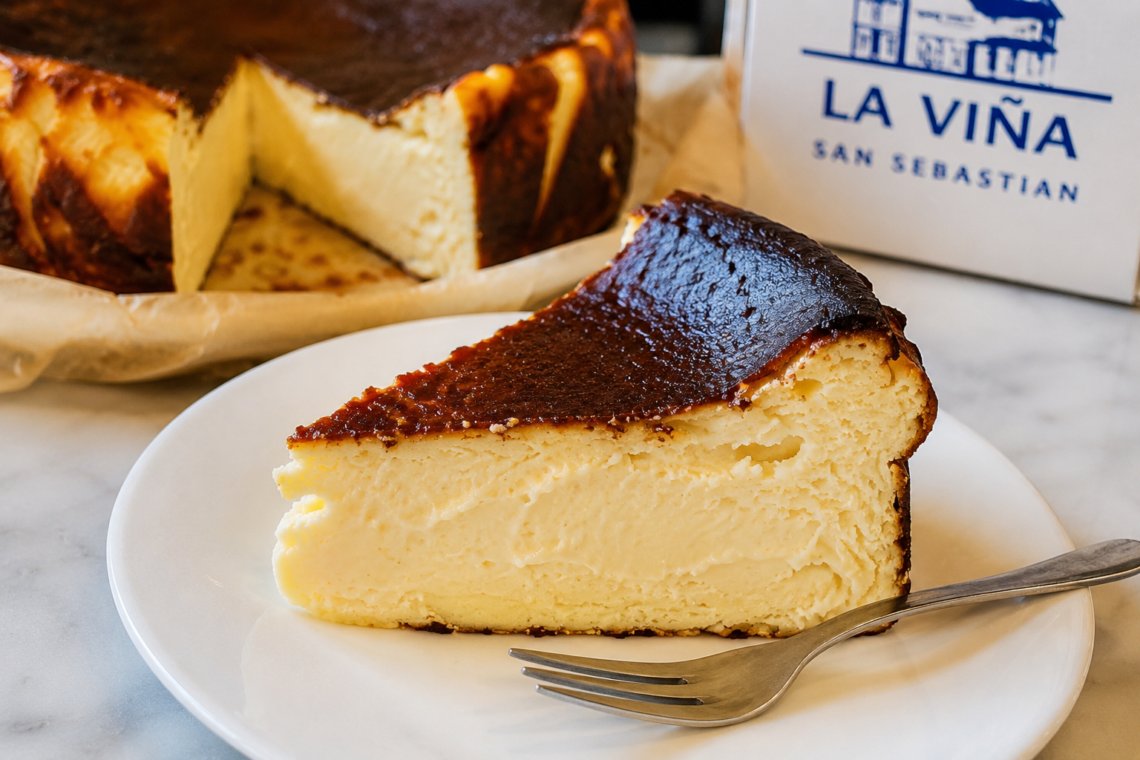
Basque Burnt Cheesecake: The Famous Spanish Cheesecake Everyone Loves
There are cheesecakes that look perfect, and then there is Basque burnt cheesecake. Dark, rustic, slightly cracked on top and wonderfully creamy in the middle, this famous dessert from San Sebastián, Spain, has become one of the most recognizable cheesecakes in the world.
Unlike the classic New York cheesecake, Basque cheesecake has no traditional crust and is intentionally baked at a very high temperature. The result is a deeply caramelized top and a soft, almost custard-like center.
What Is Basque Burnt Cheesecake?
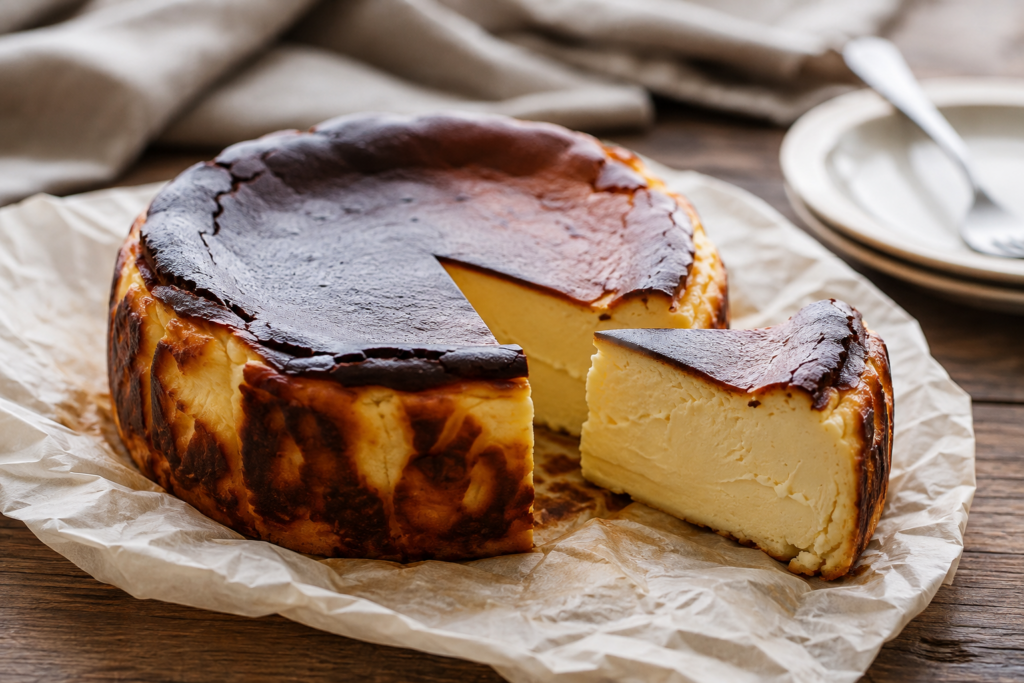
Basque burnt cheesecake is a crustless cheesecake traditionally associated with San Sebastián in Spain’s Basque Country.
Its appearance is what makes it instantly recognizable. The surface becomes very dark brown during baking, while the center stays pale, creamy and soft. It may look almost overbaked from the outside, but that contrast is exactly what makes the dessert special.
The modern version became famous at La Viña, a family-run pintxo bar in San Sebastián. Santi Rivera developed the cheesecake in the late 1980s while experimenting with recipes in the restaurant kitchen.
Why Is It Called “Burnt” Cheesecake?
The word burnt sounds slightly alarming, but the dark surface is intentional.
Basque cheesecake is baked at a much higher temperature than traditional cheesecake. The heat quickly caramelizes the sugars on the surface, producing its characteristic dark color and slightly bitter, caramel-like flavor.
The inside is completely different.
Instead of being firm and dense, the center should remain soft and creamy. When freshly baked, it can even wobble when the pan is moved.
That contrast — dark and caramelized outside, silky and creamy inside — is the whole point.
How Is Basque Cheesecake Different From New York Cheesecake?
The two desserts may look related, but they have very different personalities.
| Basque Cheesecake | New York Cheesecake |
|---|---|
| No traditional crust | Usually has a crust |
| Dark caramelized top | Pale, smooth surface |
| High-temperature baking | Slower, gentler baking |
| Soft, custardy center | Dense and creamy texture |
| Rustic appearance | More polished appearance |
| Originally from Spain | Associated with New York |
A traditional New York cheesecake is known for its dense, rich texture and often uses a graham-cracker crust. Basque cheesecake takes almost the opposite approach: high heat, no crust and an intentionally imperfect appearance.
Where Did Basque Cheesecake Come From?
The story begins in San Sebastián, a coastal city famous for its food culture.
La Viña opened in 1959, but its famous cheesecake came later. Santi Rivera, who worked at the family bar, experimented with different dishes and eventually developed the cheesecake that would become the restaurant’s signature dessert.
For years, it was mostly known locally. Its popularity grew as visitors discovered San Sebastián’s food scene, and social media later helped turn the dessert into a worldwide trend.
Today, variations of Basque cheesecake can be found far beyond Spain, from bakeries to restaurants around the world.
What Does Basque Cheesecake Taste Like?
The flavor is rich but not simply sweet.
The creamy center tastes strongly of cheesecake and cream cheese, while the dark top adds a deeper caramelized flavor. That slight bitterness helps balance the richness.
Unlike cheesecakes covered with fruit, chocolate or heavy toppings, the traditional version is deliberately simple.
At La Viña, the original is served without elaborate decoration — the cheesecake itself is the star.
Why Did Basque Cheesecake Become So Popular?
Part of the attraction is the appearance.
A perfectly smooth cheesecake is familiar. A cheesecake with a dramatically dark top, rough edges and a soft center looks completely different.
The dessert also became highly shareable on social media. Its unusual appearance made it instantly recognizable in photographs, while the contrast between the caramelized exterior and creamy center gave people a reason to try it.
Its popularity eventually spread internationally, and Basque cheesecake became much more than a local specialty from San Sebastián.
Where to Try the Original Basque Cheesecake
If you want to experience the dessert at its source, La Viña in San Sebastián is the obvious place to start.
The restaurant is located on Calle 31 de Agosto in the city’s Old Town and is the birthplace of the famous version. The cheesecake is traditionally served simply, without elaborate toppings.
For a food-focused trip to northern Spain, trying the cheesecake where it originated can be much more memorable than simply ordering a copy somewhere else.
Can You Make Basque Cheesecake at Home?
Absolutely.
One of the appealing things about Basque cheesecake is that it doesn’t require the perfectly neat appearance expected from many traditional cheesecakes.
In fact, cracks, uneven edges and a deeply browned top are part of its character.
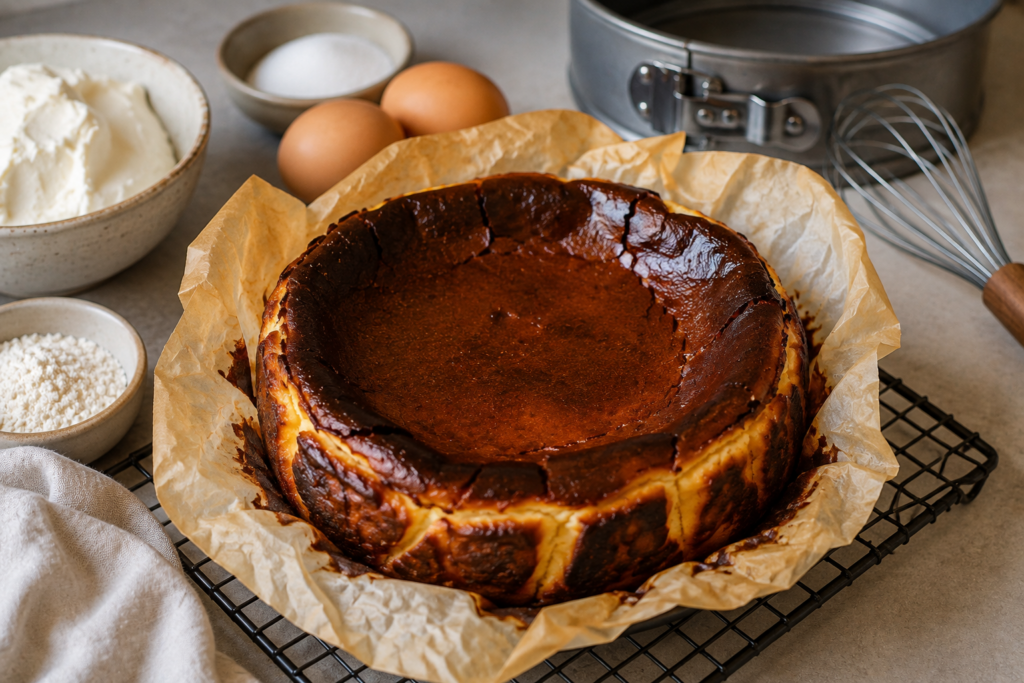
The basic ingredients are relatively simple: cream cheese, sugar, eggs and cream, with some recipes adding a small amount of flour. The batter is poured into a parchment-lined pan and baked at high heat until the top is deeply caramelized while the center remains soft.
The key is not to panic when it comes out of the oven looking very dark.
That’s the point.
Final Thoughts
Basque burnt cheesecake is famous for breaking the rules of traditional cheesecake. It doesn’t need a neat crust, a perfectly white surface or elaborate decoration.
Its charm is in the contrast: a deeply caramelized exterior with a soft, creamy center.
And perhaps that’s why this simple dessert from San Sebastián became such a global phenomenon. Sometimes the most memorable desserts aren’t the ones that look perfect — they’re the ones that taste unforgettable.
FAQ
Is Basque cheesecake really burnt?
Not exactly. Its dark surface is intentionally caramelized by baking the cheesecake at a high temperature.
Does Basque cheesecake have a crust?
Traditional Basque cheesecake is crustless.
Where was Basque cheesecake invented?
The modern famous version was developed at La Viña in San Sebastián, Spain, in the late 1980s.
Why is Basque cheesecake soft in the middle?
The cheesecake is baked at high heat for a relatively short time, allowing the exterior to caramelize while the center remains creamy.
What is the difference between Basque and New York cheesecake?
New York cheesecake is typically dense and has a crust, while Basque cheesecake is crustless, deeply browned on top and much softer in the center.

You May Also Like

The History of Hot Chocolate: From Ancient Mayans to Modern Cocoa Culture

Functional Mushrooms 2025: Mushroom Coffee, Snacks & Health Benefits Explained
