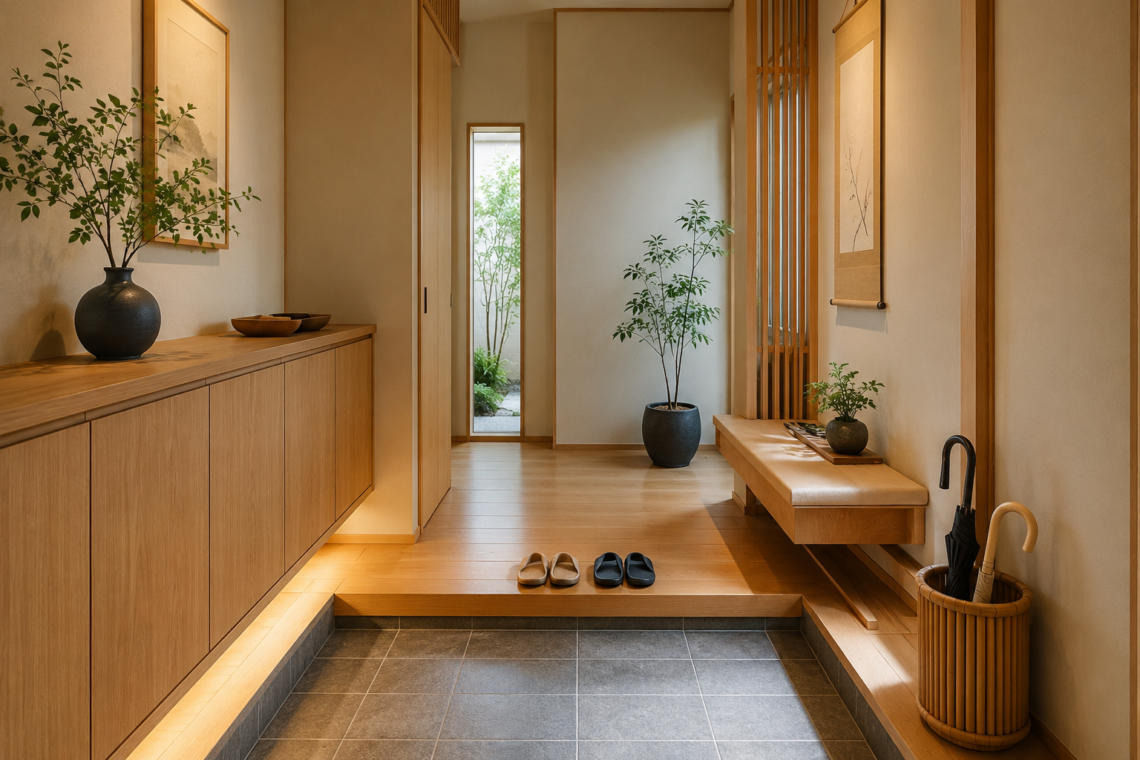
Japanese Entryway Ideas (Genkan): Create a Beautiful First Impression
The entrance to a home does much more than welcome guests—it sets the tone for everything beyond it. In Japan, this space has a special purpose and cultural significance. Known as the Genkan, the Japanese entryway serves as a transition between the outside world and the calm, clean environment of the home. While it may appear simple at first glance, every element is thoughtfully designed to combine practicality, organization, and understated beauty.
The Japanese entryway, or genkan, is much more than a place to remove your shoes. It introduces many of the ideas that define Japanese interior design, including thoughtful organization, natural materials, visual simplicity, and a smooth transition between the outside world and the calm of the home.
Unlike many Western foyers, a Genkan isn’t simply a place to leave shoes. It’s a carefully planned space that encourages cleanliness, order, and mindfulness. Shoes are removed before stepping onto the raised floor, helping keep the living areas clean while reinforcing the idea that home is a peaceful retreat from everyday life.
Today, the concept of the Genkan has inspired homeowners around the world. Even those living outside Japan are incorporating Japanese-style entryways into apartments and houses because of their elegant simplicity and practical organization. Whether you have a spacious entrance or only a small hallway, many Japanese Entryway Ideas can be adapted to fit modern homes of every size.
In this guide, we’ll explore the history of the Genkan, essential design principles, furniture ideas, storage solutions, lighting, décor, and practical tips for creating a welcoming entrance inspired by Japanese living.

What Is a Genkan?
A Genkan is the traditional entryway found in Japanese homes, apartments, and even many businesses. It usually consists of a lower tiled or stone floor where shoes are removed before stepping onto the raised wooden flooring of the main living space.
This small change in floor height has both practical and symbolic meaning. It helps keep dirt and moisture from entering the home while creating a clear transition between public and private space.
The Genkan also reflects one of the core principles of Japanese Interior Design—every area of the home should serve a purpose while maintaining harmony, balance, and simplicity. Instead of filling the entrance with unnecessary decoration, Japanese homes prioritize clean lines, natural materials, and thoughtful organization that immediately creates a calm atmosphere.
Today, modern Genkan designs often include hidden shoe cabinets, wooden benches, umbrella stands, mirrors, soft lighting, and minimalist decorative accents while preserving their traditional function.

Why Japanese Entryways Feel So Calm
One reason Japanese Entryway Ideas have become increasingly popular is their ability to create a peaceful first impression. Rather than overwhelming visitors with decorations or oversized furniture, Japanese entrances focus on visual balance and functionality.
Natural wood immediately adds warmth while neutral colors help the space feel open and uncluttered. Stone, ceramic tiles, bamboo, and soft textiles introduce texture without making the entrance appear busy. Even a small vase with seasonal flowers or a simple wall scroll can become a focal point without dominating the room.
Lighting also plays an important role. Warm indirect lighting creates a welcoming atmosphere while highlighting natural materials and architectural details. Instead of bright overhead fixtures, many Japanese homes use softer illumination that enhances the relaxing mood from the moment someone enters.
The result is an entrance that feels organized, inviting, and timeless regardless of the home’s overall size.

Smart Storage Solutions for Every Genkan
Organization is one of the defining characteristics of every successful Genkan. Even compact apartments can benefit from thoughtful storage that keeps the entrance tidy without sacrificing style.
Built-in shoe cabinets remain one of the most common solutions because they hide everyday footwear while maintaining a clean appearance. Slim vertical cabinets work particularly well in narrow hallways, while floating storage units help smaller spaces appear larger by exposing more floor area.
A simple wooden bench provides both seating and practical storage underneath for slippers or frequently used shoes. Hooks for bags and coats, umbrella stands, woven baskets, and discreet trays for keys help ensure that every item has a designated place.
Many homeowners also include a small shelf for seasonal decorations or a potted plant, adding warmth without creating visual clutter.

Decorating a Japanese Entryway Without Creating Clutter
One of the defining characteristics of the Japanese Entryway is restraint. Every decorative element has a purpose, and empty space is considered just as valuable as the objects themselves. Rather than filling shelves with numerous accessories, Japanese homes often feature only a few carefully selected pieces that create balance and harmony.
Natural materials are especially common. Wooden trays for keys, handcrafted ceramic bowls, woven baskets, linen runners, and simple glass vases introduce texture while maintaining a calm aesthetic. Indoor plants such as bonsai, bamboo, or seasonal flowers add life to the entrance without overwhelming the space.
A round mirror can also make a narrow hallway feel larger by reflecting natural light, while a single framed artwork or traditional wall scroll creates an elegant focal point. The goal is not to impress visitors with decoration but to create an atmosphere that immediately feels peaceful and welcoming.
This minimalist approach allows the entrance to remain functional while expressing the quiet beauty associated with Japanese homes.

Japanese Entryway Ideas for Small Apartments
Many people assume a Genkan requires a large house, but the opposite is often true. Because apartments in Japan are frequently compact, designers have become experts at maximizing limited space through clever planning and multifunctional furniture.
Floating shoe cabinets create valuable floor space while making the entryway feel lighter and more open. Slim benches with hidden storage allow residents to sit comfortably while removing shoes without sacrificing precious room. Wall-mounted hooks, vertical shelving, and narrow umbrella stands further improve organization while keeping the area uncluttered.
Neutral color palettes also help small entryways appear larger. White walls, light oak flooring, soft gray stone, and natural wood finishes reflect more light and contribute to the calm atmosphere that defines Japanese interiors.
The result is an entrance that feels organized, spacious, and practical regardless of the apartment’s size.

Choosing the Right Materials and Colors
Materials play a central role in creating an authentic Japanese-inspired entrance. Natural textures help establish warmth while maintaining the clean simplicity that makes the Genkan so appealing.
Wood remains the most recognizable material, often paired with stone, ceramic tile, bamboo, cotton, linen, and matte black accents for subtle contrast. These combinations create visual interest without feeling busy.
Soft neutral colors such as white, beige, warm gray, sand, taupe, and light brown dominate most Japanese entryways because they reflect natural light and contribute to a relaxing atmosphere. Small touches of greenery or dark wood provide contrast without disrupting the overall harmony.
Interestingly, many of these same principles can also be applied throughout the rest of the home. For example, homeowners researching How to Create a Japanese Style Bathroom often use similar natural materials, neutral palettes, and minimalist organization to create a consistent sense of tranquility from the entrance to every room.

Common Mistakes to Avoid
Although the Genkan appears simple, a few common design mistakes can reduce both its beauty and functionality.
Overcrowding the entrance with shoes is perhaps the most frequent problem. Only the pairs currently in use should remain visible, while the rest are stored inside cabinets or baskets.
Another mistake is choosing oversized furniture that blocks movement. The entrance should always feel open and easy to navigate.
Many homeowners also underestimate the importance of lighting. Bright, harsh ceiling lights can make the space feel cold, while warm layered lighting creates a far more inviting atmosphere.
Finally, avoid decorating every available surface. Empty space is an essential design element in Japanese homes, allowing carefully selected furniture and décor to stand out naturally.
Frequently Asked Questions
What is a Genkan?
A Genkan is the traditional Japanese entryway where shoes are removed before entering the main living area. It helps maintain cleanliness while creating a symbolic transition between the outdoors and the home.
Why are Japanese entryways lower than the rest of the house?
The lowered floor separates outdoor footwear from clean indoor spaces, preventing dirt and moisture from entering the home.
Can I create a Japanese entryway in a small apartment?
Absolutely. Floating shoe cabinets, slim benches, vertical storage, mirrors, and minimalist décor make it easy to adapt Genkan principles to apartments of almost any size.
What colors work best for a Japanese entryway?
Neutral tones such as white, beige, warm gray, light wood, and natural stone create the calm atmosphere typically associated with Japanese homes.
What furniture should every Genkan include?
Most Genkan spaces benefit from a shoe cabinet, a small bench, an umbrella stand, simple storage baskets, soft lighting, and a few carefully selected decorative accents.
Conclusion
A thoughtfully designed Japanese Entryway (Genkan) demonstrates that even the smallest spaces can have a meaningful impact on how a home feels. By combining practical storage, natural materials, warm lighting, and minimalist décor, the Genkan creates an immediate sense of order and tranquility that extends throughout the rest of the house.
Whether you’re renovating a spacious entrance or simply organizing a narrow apartment hallway, adopting Japanese design principles can transform an often-overlooked area into one of the most welcoming spaces in your home. With its balance of beauty, functionality, and simplicity, the Genkan remains one of the most timeless ideas in modern interior design and an inspiring example of how thoughtful organization can improve everyday living.


You May Also Like

Japanese Interior Design: A Harmonious Approach to Minimalism and Serenity
Tatami Room Ideas: How to Create a Calm and Functional Japanese-Inspired Space