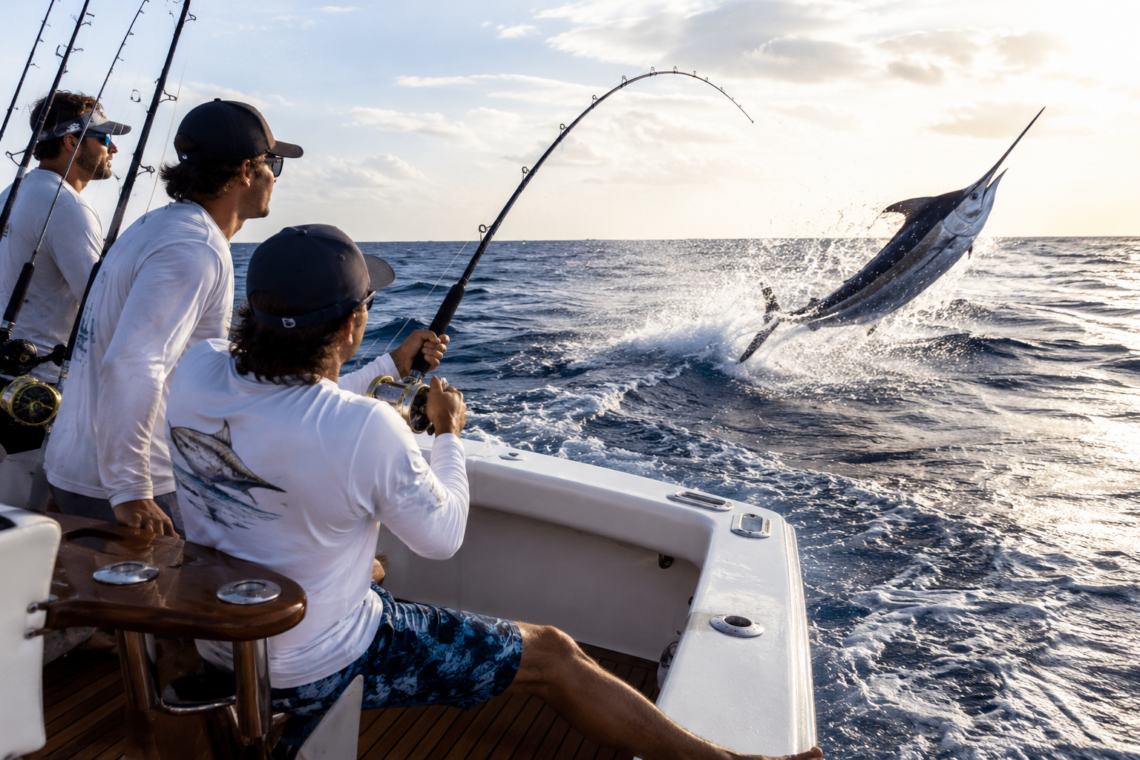
How to Prepare for Your First Offshore Angling Excursion
When most people go on their first offshore trip, they think it’s going to be like lake fishing with a lot more water. It’s not. The fish are stronger, the gear is more powerful, the sun is hotter, and the boat never stops. None of this is meant to intimidate you, it just underscores that the effort you put in before the trip ever leave the dock can make a big difference in how the trip goes.

Sort Out Seasickness Before You Leave The Dock
This is the single biggest trip-killer for first-timers, and almost all of it is preventable. Ocean swells create a continuous low-frequency motion that disrupts your inner ear in a way that flat-water fishing never does. By the time you feel symptomatic, you’re already behind.
The fix is simple: take your motion sickness medication the night before the trip and again the morning of. Dimenhydrinate tablets or a scopolamine patch both work well for most people. What doesn’t work is waiting until you’re green and 20 miles offshore and then reaching for the pills.
Pair that with smart eating. Skip the heavy, greasy dinner the night before and lay off the alcohol. Eat something light but sustaining in the morning, bring high-protein snacks on the boat, and carry electrolyte drinks. A 45-minute fight with a billfish is genuinely physical work, and you’ll feel every ounce of dehydration.
Dress For A Moving, Wet, Sun-Blasted Deck
UV radiation from the sun is reflected by the open water in all directions. You’ll be amazed how quickly you can burn while wearing a cotton tee in the sun on the bow for an hour. Be sure to look for long-sleeve shirts made of fast-drying technical fabrics that have a UPF factor of 50 or higher. A wide-brimmed hat and polarized sunglasses – they’re not optional. You need them for cutting that surface glare, tracking your lines, and spotting fish. The shoes come into account as well. Closed-toe with rubber soles, non-marking treads are essential to keep you from slipping when the deck gets wet and rolls.
Understand How The Crew Runs The Boat
This is what newbies often find confusing. Your deck mate isn’t going to pass over the rod the minute a fish hits. They’ll manage the hook-set, clear other lines, and deal with the inevitable insanity of a sailfish’s first run – they can reach speeds of 68 miles per hour (Reef Environmental Education Foundation), so the first part of the battle is just reacting. Let them handle that.
Once things are under control, they’ll position you in the fighting seat or pass you the rod complete with gimbal belt. The technique is pump and wind: lift the rod to gain line, drop the tip while reeling down, and repeat. It’s slow, grinding work. Don’t muscle it.
If you’re lucky enough to be booking someplace with serious billfish populations, the crew’s experience will make a huge difference. The best Costa Rica fishing charters all work with captains and mates who’ve seen a thousand plus strikes, and that expertise will be apparent the moment you leave the dock.
Talk To Your Captain Before You Leave The Dock
Having a quick pre-departure conversation saves a lot of frustration. Know which species you’re specifically targeting that day. Know whether the boat is catch-and-release – for many billfish operations, that’s non-negotiable, and knowing that in advance means you’re not heartbroken over a marlin going back in the water.
Ask about safety protocols: where the life jackets are, what the communication equipment is, what the plan is if weather turns foul. That’s not paranoia. Also, ask about tipping. Inshore and nearshore 10% is typically fine. Offshore, you’re generally looking at 15 to 20% of the charter cost, split among the captain and crew. It’s not mandatory, but it’s expected, and knowing that in advance means you’re not stuck at the dock looking for an ATM at 7pm.
What The Gear On The Boat Is Actually Doing
You don’t have to be an expert on how the outriggers function, but it is definitely easier to understand what is happening if you do. The outriggers, those long poles that extend out from either side of the boat, spread your trolling lines wide and help to prevent them from tangling as the boat turns. The fighting chair is mounted to the deck and includes a gimbal that holds the rod butt. This gimbal is what provides you with leverage against a fish that might weigh several hundred pounds. None of this is overly complex, but having a rough idea of how it all comes together means you won’t lose those valuable few seconds in the heat of the moment.
Offshore fishing is the ultimate prize for the angler who has taken care of all the little things. Put in the effort on the physical prep work, trust the knowledge of the team around you, and the rest of it – the blistering runs as a fish peels off hundreds of yards of line, the jumps as a sailfish shakes its head in the morning sun, the hour-long battles – it will all take care of itself.


You May Also Like

The Unsent Project Review – Meaning, Emotional Impact, Anonymous Messages, Digital Art Movement, Frankie Holt Project Explained

What Is Looksmaxxing? The Viral Self-Improvement Trend Taking Over TikTok in 2026
