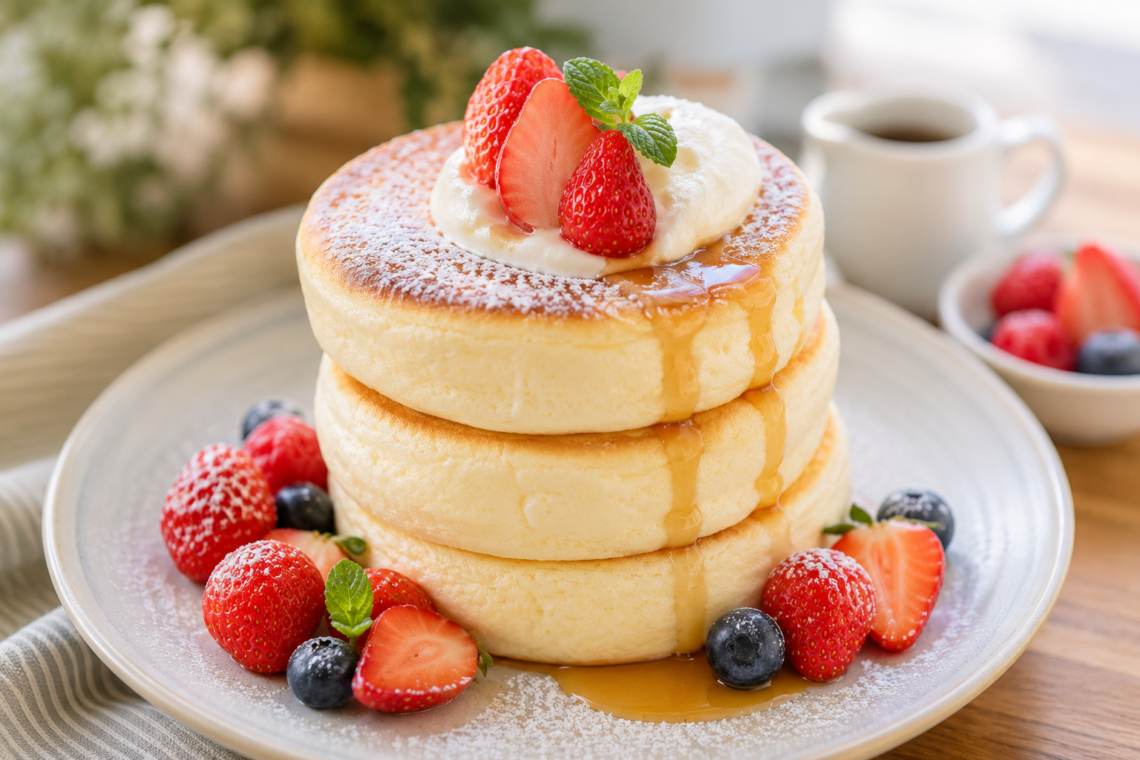
Japanese Soufflé Pancakes: How to Make Japan’s Fluffy Cloud-Like Pancakes at Home
Japanese Soufflé Pancakes: The Fluffy Dessert That Took the World by Storm
If you’ve ever visited Japan or spent time browsing food videos on social media, you’ve probably seen the famous Japanese soufflé pancakes.
Unlike traditional pancakes, these incredibly fluffy treats look like soft clouds sitting on a plate. Their airy texture, delicate sweetness, and Instagram-worthy appearance have made them one of Japan’s most beloved desserts.
Today, Japanese soufflé pancakes can be found in cafés around the world, but nothing beats making them fresh at home.

What Are Japanese Soufflé Pancakes?
Japanese soufflé pancakes are thick, airy pancakes made using whipped egg whites folded into a pancake batter.
The technique is similar to making a soufflé, which is where the name comes from.
The result is:
- Extremely fluffy texture
- Light and airy interior
- Delicate sweetness
- Melt-in-your-mouth consistency
Unlike traditional American pancakes, Japanese pancakes are much taller and softer.
Why Are Japanese Pancakes So Fluffy?
The secret lies in the meringue.
Egg whites are whipped until stiff peaks form, creating tiny air bubbles.
When folded gently into the batter, these air bubbles expand during cooking, producing the signature cloud-like texture.
The key factors include:
- Properly whipped egg whites
- Gentle folding technique
- Low cooking temperature
- Patience

Ingredients for Japanese Soufflé Pancakes
Pancake Batter
- 2 large eggs (separated)
- 2 tablespoons milk
- ½ teaspoon vanilla extract
- ¼ cup cake flour
- ½ teaspoon baking powder
- 2 tablespoons sugar
- Butter for cooking
Optional Toppings
- Fresh strawberries
- Blueberries
- Maple syrup
- Whipped cream
- Powdered sugar
- Matcha cream
- Honey
Step-by-Step Japanese Soufflé Pancake Recipe
Step 1: Separate the Eggs
Carefully separate:
- Egg yolks
- Egg whites
Place them in separate bowls.
Step 2: Make the Batter Base
Whisk together:
- Egg yolks
- Milk
- Vanilla extract
Add:
- Cake flour
- Baking powder
Mix until smooth.
Step 3: Make the Meringue
Using an electric mixer, beat egg whites until foamy.
Gradually add sugar.
Continue mixing until stiff peaks form.
The meringue should be glossy and hold its shape.

Step 4: Fold Carefully
Add one-third of the meringue into the batter.
Mix gently.
Then fold in the remaining meringue using a spatula.
Avoid overmixing.
You want to preserve as much air as possible.
Step 5: Cook Slowly
Heat a non-stick pan over very low heat.
Lightly grease with butter.
Spoon the batter into tall stacks.
Cover with a lid.
Cook for:
- 4–5 minutes per side
Flip carefully.
Continue cooking until golden and fully set.

Common Mistakes to Avoid
Overmixing the Batter
Overmixing removes air from the meringue.
Result:
- Flat pancakes
- Dense texture
Cooking on High Heat
High temperatures cause:
- Burned outsides
- Raw centers
Always use low heat.
Weak Meringue
Soft meringue won’t support the batter.
Make sure stiff peaks form before folding.
Best Toppings for Japanese Soufflé Pancakes
Traditional Japanese cafés often serve pancakes with:
Fresh Fruit
- Strawberries
- Blueberries
- Bananas
Cream
- Whipped cream
- Mascarpone cream
- Vanilla cream
Syrups
- Maple syrup
- Honey
- Brown sugar syrup
Japanese-Inspired Toppings
- Matcha cream
- Red bean paste
- Kinako powder

Where to Eat Japanese Soufflé Pancakes in Japan
If you’re visiting Japan, famous pancake cafés include:
- A Happy Pancake
- Flipper’s
- Micasadeco & Cafe
These cafés helped popularize the soufflé pancake trend worldwide.
Why Japanese Soufflé Pancakes Became So Popular
Several factors contributed to their popularity:
Social Media Appeal
Their tall appearance photographs beautifully.
Unique Texture
Most people have never experienced pancakes this soft.
Café Culture
Japan’s café culture embraces beautiful presentation and attention to detail.
Comfort Food
The flavor is simple, comforting, and universally loved.
Healthier Variations
Want a lighter version?
Try:
- Less sugar
- Greek yogurt topping
- Fresh fruit instead of syrup
- Whole wheat pastry flour
The pancakes remain fluffy while reducing overall calories.
Related Articles on ChiyoLife
You may also enjoy:
- Best Japanese Desserts You Must Try
- Japanese Convenience Store Food Guide
- Matcha Desserts Worth Trying
- Japanese Street Food Guide
- How to Make Sugar Glass
Frequently Asked Questions
What makes Japanese soufflé pancakes different?
They use whipped egg whites to create an airy, cloud-like texture.
Why did my pancakes collapse?
The meringue may not have been whipped enough, or the batter may have been overmixed.
Can I make Japanese pancakes without cake flour?
Yes. All-purpose flour works, though cake flour produces a lighter texture.
Why are soufflé pancakes so tall?
The trapped air in the whipped egg whites expands during cooking.
Can I make them ahead of time?
They are best served immediately after cooking.
Are Japanese soufflé pancakes sweet?
They are only lightly sweetened, allowing toppings to provide additional flavor.
How long do they take to cook?
Usually about 8–12 minutes total, depending on thickness.
Final Thoughts
Japanese soufflé pancakes are more than a food trend—they’re one of the most iconic desserts to come out of Japan in recent years.
With their cloud-like texture, delicate flavor, and beautiful presentation, they offer a café-quality experience that you can recreate at home.
Whether topped with berries, whipped cream, maple syrup, or matcha, these fluffy pancakes are guaranteed to impress.


You May Also Like
Mochi Ice Cream Recipe: How to Make Japan’s Most Popular Frozen Dessert at Home

Best Korean BBQ Near Tokyo Skytree: Hongdae Pocha Kinshicho Review
