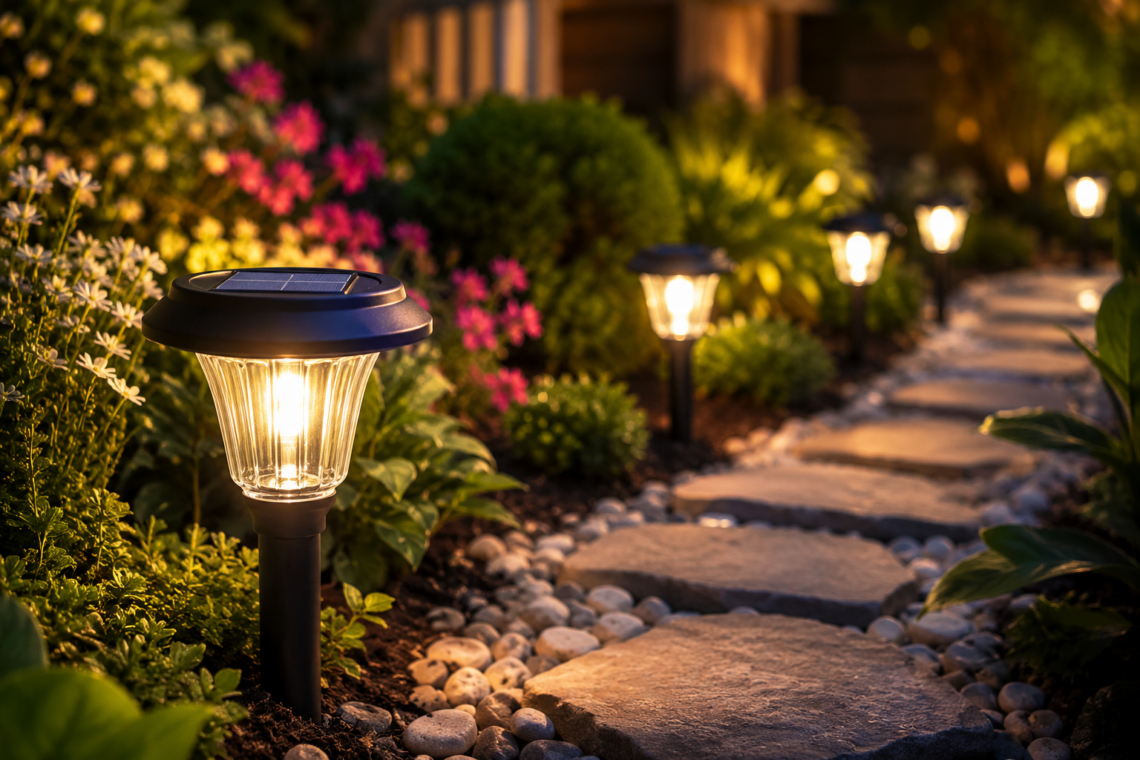
Why Are My Solar Garden Lights Not Working?
There’s nothing more disappointing than stepping into your garden after sunset and discovering that your beautiful solar garden lights are not working. One evening your pathway is glowing beautifully, highlighting flower beds and landscaping features, and the next everything is dark.
If you’ve recently searched why are my solar garden lights not working, how to fix solar garden lights, or solar light troubleshooting, you’re far from alone. Thousands of homeowners experience problems with outdoor solar lights, especially after winter, periods of bad weather, or years of continuous use.
The good news is that most solar garden light problems are surprisingly easy to solve. In many cases, the issue isn’t a broken light at all. Dirty solar panels, worn-out rechargeable batteries, insufficient sunlight, or simple maintenance issues are often responsible for poor performance.
Before replacing your entire lighting system, it’s worth understanding how solar lights work and learning the most common reasons why solar pathway lights stop working.

Understanding How Solar Garden Lights Work
To properly diagnose solar garden light problems, it’s helpful to understand the basic technology behind them.
Every solar light relies on four essential components working together:
- A solar panel
- A rechargeable battery
- An LED light
- A light sensor
During the day, the solar panel absorbs sunlight and converts it into electricity. This electricity charges the internal battery. Once darkness falls, the sensor activates the LED light using the energy stored throughout the day.
When homeowners ask why are my solar lights not charging, why are my solar lights dim, or why won’t my solar lights stay on all night, the answer almost always involves one of these four components.
Even a minor problem can interrupt the charging process and dramatically reduce performance.
Dirty Solar Panels Are the Most Common Cause
One of the biggest mistakes homeowners make is assuming their lights are broken when they simply need cleaning.
Over time, solar panels collect dust, pollen, dirt, leaves, bird droppings, and other debris. Even a thin layer of grime can significantly reduce the amount of sunlight reaching the solar cells.
As a result, your lights receive less energy during the day and produce weaker illumination at night.
If you’ve noticed:
- solar lights not staying on long
- dim solar garden lights
- solar lights not charging properly
- solar pathway lights getting weaker
a dirty panel may be the culprit.
Cleaning solar panels only takes a few minutes. Use a soft cloth and warm water to gently remove dirt and debris. Avoid abrasive cleaners that could scratch the panel surface.
Many homeowners are amazed by how much brighter their solar landscape lights become after a simple cleaning.

Your Rechargeable Battery May Be Dying
The second most common reason people search why are my solar garden lights not working is battery failure.
Most solar lights use rechargeable batteries that gradually lose capacity over time.
Depending on quality and weather conditions, most batteries last between one and three years.
As batteries age, they become less capable of storing energy. You may notice that your lights still turn on, but only remain illuminated for a short period before fading.
Common signs of solar light battery problems include:
- Lights turning off quickly
- Flickering solar lights
- Dim solar lights
- Solar lights that fail to turn on after sunset
Fortunately, replacing the battery is often inexpensive and can make old lights perform almost like new again.
Many homeowners searching how to fix solar garden lights discover that a simple battery replacement completely solves the issue.
Your Lights May Not Be Getting Enough Sunlight
Another extremely common problem involves location.
Many people install lights in areas that seem sunny during summer but receive far less sunlight during other seasons.
Trees grow larger, shrubs become denser, and nearby structures may create new shadows throughout the day.
If your solar garden lights are not charging, insufficient sunlight should be one of the first things you investigate.
Solar lights generally need at least six to eight hours of direct sunlight for optimal performance.
If your lights only receive partial sunlight, they may:
- Charge slowly
- Produce dim light
- Turn off early
- Fail to activate altogether
Homeowners frequently ask why do my solar lights only stay on for a few hours, and inadequate sunlight is often the answer.

Nearby Artificial Light Can Confuse the Sensor
Every solar light contains a built-in sensor designed to detect darkness.
Unfortunately, nearby artificial lighting can sometimes confuse the sensor.
Streetlights, porch lights, security lights, garage lights, and even bright indoor lighting can trick the system into thinking it’s still daytime.
This may result in:
- Solar lights not turning on
- Solar lights turning on late
- Inconsistent operation
If you’re wondering why won’t my solar lights come on at night, try temporarily covering the solar panel with your hand. If the light immediately activates, the sensor is likely working correctly and external light interference may be causing the problem.
Water Damage Can Cause Solar Light Failure
Although most outdoor solar lights are weather-resistant, they are not always completely waterproof.
After years of exposure to rain, snow, humidity, and temperature fluctuations, water can sometimes enter the housing.
Once moisture reaches the battery compartment or internal electronics, performance may decline significantly.
Signs of water damaged solar lights include:
- Corrosion
- Flickering LEDs
- Random shutdowns
- Complete failure
If you notice moisture inside the fixture, allow all components to dry thoroughly before testing the light again.

How to Make Solar Garden Lights Last Longer
The best way to avoid future solar light troubleshooting is preventative maintenance.
Regular maintenance helps improve performance and extend the lifespan of your lighting system.
Simple habits include:
- Cleaning solar panels monthly
- Replacing batteries every few years
- Trimming nearby vegetation
- Checking for moisture damage
- Removing leaves and debris
These small steps can dramatically improve solar garden light performance and help your lights continue working efficiently for many years.

FAQ
Why are my solar garden lights not working after rain?
Moisture may have entered the housing and affected the battery or internal electronics.
Why are my solar lights dim?
Dirty solar panels, aging batteries, and insufficient sunlight are the most common causes.
How long do solar light batteries last?
Most rechargeable batteries last between one and three years.
Can solar lights work in winter?
Yes, although shorter daylight hours and colder temperatures can reduce performance.
Why do my solar lights only stay on for a few hours?
A weak battery, dirty panel, or lack of direct sunlight is usually responsible.
Conclusion
If you’ve been asking why are my solar garden lights not working, the solution is often simpler than you might expect. Most issues stem from dirty solar panels, aging rechargeable batteries, insufficient sunlight, sensor interference, or minor maintenance problems.
By regularly cleaning your lights, replacing batteries when necessary, and ensuring adequate sun exposure, you can dramatically improve solar garden light performance, extend solar light lifespan, and keep your outdoor spaces beautifully illuminated throughout the year.


You May Also Like

7 Smart Ways to Avoid Appliance Breakdowns (And Save on Costly Repairs)

Making the Choice: Professional Gutter Maintenance vs. DIY for All Homeowners