25 Home Organization Ideas That Actually Work for Every Room
An organized home isn’t about achieving perfection—it’s about creating a space that makes everyday life easier. Whether you live in a spacious house or a compact apartment, thoughtful home organization ideas can help reduce clutter, save time, and make every room feel more functional.
Many people believe that organizing requires expensive storage systems or a complete home makeover. In reality, the most effective home organization strategies focus on using your existing space more efficiently. Small changes, such as grouping similar items, maximizing vertical storage, or creating dedicated zones for everyday essentials, often have a bigger impact than purchasing dozens of new organizers.
A well-organized home also supports your daily routine. When everything has a designated place, it’s easier to clean, prepare meals, find important documents, and enjoy your living space without feeling overwhelmed. Good organization isn’t just about appearance—it can reduce stress, improve productivity, and simplify everyday tasks.
In this guide, you’ll discover 25 home organization ideas that work in real homes. From practical storage ideas for small spaces to room-by-room solutions and simple decluttering habits, these tips are designed to help you build an organized home that stays tidy over time.
Why Home Organization Matters More Than You Think
Creating an organized home goes far beyond neat shelves and attractive storage baskets. A thoughtfully organized space can improve how you move through your day, reduce decision fatigue, and make routine tasks noticeably easier.
Clutter has a way of demanding attention, even when you’re not actively thinking about it. Overflowing drawers, crowded countertops, and disorganized closets create visual noise that can make a home feel smaller and more stressful. By applying practical home organization ideas, you create a calmer environment where everything has a purpose and is easy to find.
Organization also saves time. Instead of searching for keys, chargers, important paperwork, or cooking utensils, you’ll know exactly where everything belongs. Over weeks and months, those saved minutes add up and make daily routines far more efficient.
Perhaps most importantly, organizing isn’t about owning less—it’s about making better use of what you already have. Thoughtful storage solutions allow your belongings to support your lifestyle instead of creating unnecessary frustration.
Start With Decluttering Before You Organize
One of the biggest mistakes people make is buying storage containers before deciding what actually needs to be stored. The most successful home organization ideas always begin with decluttering.
Rather than tackling your entire home in one weekend, work through one small area at a time. A single kitchen drawer, one bathroom cabinet, or one closet shelf is much less overwhelming than an entire room. Completing smaller projects also builds momentum and makes it easier to continue.
As you sort through your belongings, ask yourself a few simple questions:
- Have I used this in the last year?
- Would I buy it again today?
- Does it serve a practical purpose?
- Is it worth the space it occupies?
If the answer is no, consider donating, recycling, or responsibly disposing of the item.
Decluttering doesn’t mean creating an empty home. Instead, it creates room for the things that genuinely add value to your daily life. Once unnecessary items are removed, even simple storage ideas become much more effective because every shelf, drawer, and cabinet has less to manage.

Home Organization Ideas for the Living Room
The living room is often one of the busiest spaces in the home. It’s where families relax, entertain guests, watch television, read, and sometimes even work. Because it serves so many purposes, clutter can accumulate surprisingly quickly.
One of the simplest home organization ideas for the living room is to create clearly defined zones. Instead of allowing books, remote controls, charging cables, blankets, and magazines to spread across every surface, assign each category a permanent home.
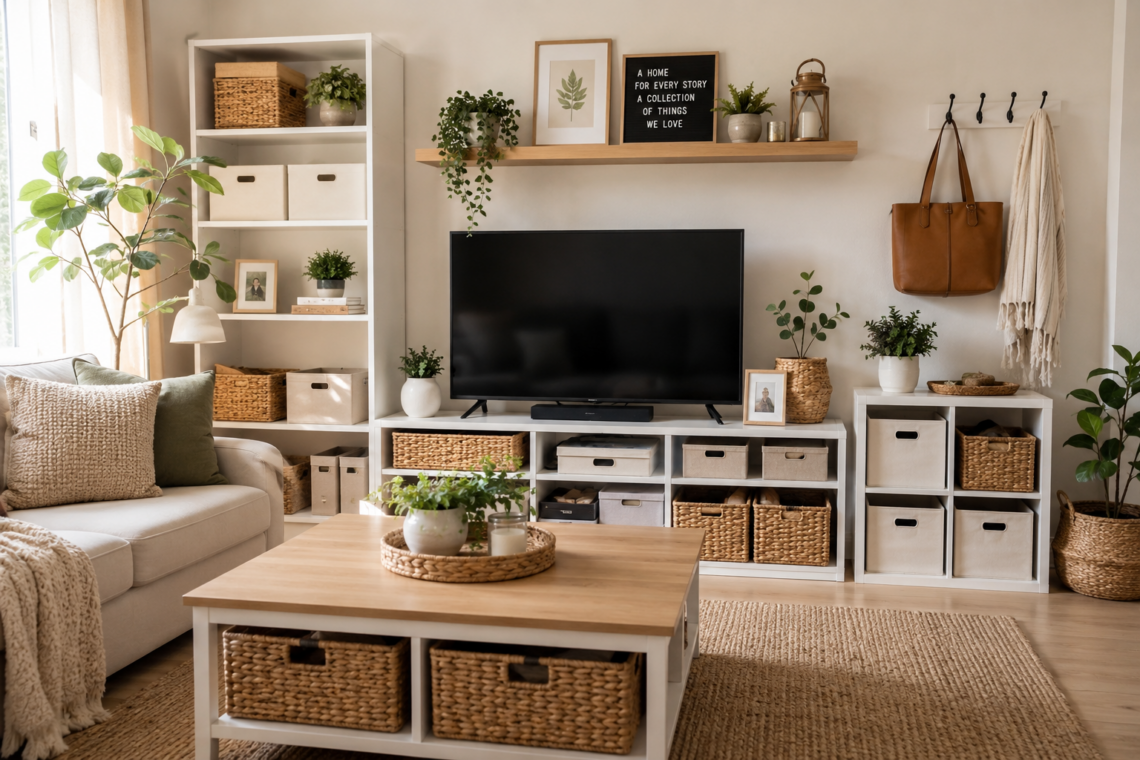
Decorative baskets provide an attractive way to store blankets and children’s toys while keeping them easily accessible. Coffee tables with built-in storage offer hidden compartments for board games, electronics, or seasonal decorations without adding visual clutter.
Vertical space is another area that’s often overlooked. Floating shelves allow you to display books, plants, and decorative pieces while freeing valuable floor space. For smaller homes, wall-mounted storage helps create a more open and spacious feel.
If your living room doubles as a workspace, designate one basket or drawer exclusively for office supplies. At the end of the day, everything can be stored neatly out of sight, allowing the room to return to its primary purpose as a comfortable place to relax.
Smart Kitchen Organization Ideas That Save Time
The kitchen is one of the hardest-working rooms in any home, which makes organization especially important. A well-organized kitchen isn’t just easier to cook in—it also helps reduce food waste, simplifies meal preparation, and keeps countertops clear.
Instead of filling cabinets randomly, organize items according to how often they’re used. Everyday dishes, glasses, and cookware should be stored within easy reach, while seasonal baking equipment or specialty appliances can be placed on higher shelves.
Drawer dividers instantly improve kitchen organization by keeping utensils separated and preventing drawers from becoming cluttered. Clear storage containers also make pantry staples easier to identify while helping preserve freshness.
Vertical shelf risers, stackable organizers, and lazy Susans maximize cabinet space without requiring renovations. Even small kitchens often have unused vertical space that can dramatically increase storage capacity.
Creating dedicated zones—for baking supplies, breakfast foods, spices, coffee, and snacks—reduces unnecessary movement while cooking and makes it much easier for every member of the household to find what they need.
Bathroom Organization Ideas That Keep Counters Clutter-Free
The bathroom may be one of the smallest rooms in the home, but it often contains a surprising number of products. Skincare, hair tools, cosmetics, medicine, towels, and cleaning supplies can quickly take over every available surface if there isn’t a clear system in place.
One of the most effective home organization ideas for bathrooms is to store items based on how often they’re used. Daily essentials should stay within easy reach, while backup products, travel-size toiletries, and seasonal items can be stored in higher cabinets or labeled storage bins.
Don’t overlook the space under the sink. Stackable drawers, pull-out organizers, and clear containers make it much easier to see what’s stored in the back without removing everything in front. This simple change transforms wasted space into practical under sink storage.
Wall-mounted shelves above the toilet are another smart solution, especially in smaller bathrooms where floor space is limited. They provide extra room for towels, decorative baskets, and everyday necessities while keeping countertops clean.
Instead of storing every beauty product together, divide them into categories such as skincare, makeup, hair care, dental care, and first aid. This approach not only improves bathroom organization but also makes morning and evening routines faster and more enjoyable.
Bedroom Organization Ideas for a More Relaxing Space
A cluttered bedroom can make it difficult to relax at the end of the day. Since this room is meant for rest, keeping it organized has benefits that go beyond appearance.
Start by reducing the number of items kept on bedside tables. A lamp, a book, a charging station, and perhaps a small tray for jewelry are often all that’s needed. Removing unnecessary objects creates a calmer atmosphere and makes cleaning much easier.
Under-bed storage is one of the most overlooked storage ideas. Low-profile containers are perfect for seasonal clothing, extra bedding, shoes, or holiday decorations. Because these items aren’t needed every day, storing them out of sight helps maximize usable closet space.
If your bedroom is small, furniture that serves multiple purposes can make a significant difference. Beds with built-in drawers, storage benches, and nightstands with shelves provide extra storage without increasing the room’s footprint.
Maintaining an organized bedroom isn’t about filling every corner with storage furniture. It’s about making sure every item has a designated place while leaving enough open space for the room to feel comfortable and inviting.

Closet Organization Ideas That Maximize Every Inch
Closets have a tendency to become crowded because they often serve as storage for clothing, shoes, bags, accessories, and seasonal items all at once. Fortunately, a few practical closet organization strategies can dramatically improve both storage capacity and accessibility.
Begin by grouping clothing into categories such as shirts, trousers, dresses, jackets, and sportswear. Keeping similar items together makes it easier to find what you need while helping you identify duplicate purchases.
Matching hangers instantly create a cleaner appearance and allow clothing to hang more evenly. Slim velvet hangers are especially useful because they prevent garments from slipping while freeing additional hanging space.
Adding shelf dividers helps keep folded sweaters and jeans neatly stacked instead of collapsing into untidy piles. Clear shoe boxes protect footwear while making it easy to identify each pair without opening multiple containers.
Accessories often create unnecessary clutter because they’re scattered throughout the closet. Hanging organizers, drawer inserts, and labeled baskets keep belts, scarves, hats, and handbags organized while making them easier to access.
Rotating seasonal clothing is another simple habit that supports long-term home organization. Store winter coats and heavy sweaters during warmer months, then switch them back when temperatures begin to drop.
Home Office Organization for Better Productivity
Whether you work remotely every day or occasionally use your home office for paying bills and managing personal projects, an organized workspace helps improve focus and efficiency.
A clean desk should contain only the items you use regularly. Pens, notebooks, chargers, and important documents deserve dedicated storage rather than remaining scattered across the work surface.
Cable management is one of the easiest upgrades you can make. Simple clips, sleeves, or cable boxes prevent cords from tangling while giving your workspace a more professional appearance.
Open shelving allows frequently used books and supplies to remain accessible, while labeled storage boxes keep less frequently used materials neatly contained.
Paper clutter is another common challenge. Creating separate folders for financial documents, warranties, receipts, and personal paperwork reduces the time spent searching for important information.
By applying practical home office organization principles, your workspace becomes easier to maintain and far more enjoyable to use.
Entryway Organization Ideas for a Cleaner First Impression
The entryway is the first space you see when arriving home, making it one of the most important areas to organize. Shoes, coats, bags, umbrellas, and keys can quickly create clutter if there isn’t a dedicated storage system.
Wall hooks provide an easy place for jackets and backpacks, while a narrow bench with built-in storage offers seating and a convenient location for shoes.
Keeping a small tray or decorative bowl near the entrance for keys, wallets, sunglasses, and loose change helps prevent those everyday essentials from getting misplaced.
If your household receives frequent deliveries, consider creating a small area for incoming packages and outgoing returns. This prevents boxes from accumulating throughout the home.
Simple entryway storage solutions make arriving home feel more welcoming while reducing clutter from spreading into other rooms.
Small Apartment Storage Ideas That Make Every Square Foot Count
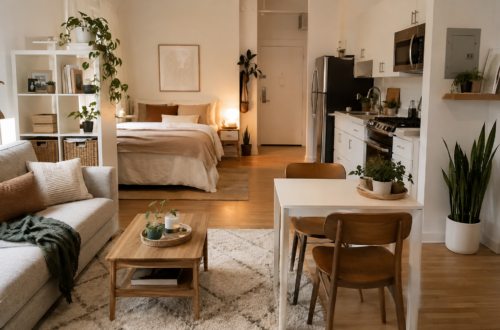
Living in a smaller home requires creativity, but it also encourages smarter organization. Some of the most effective small apartment storage ideas focus on making use of spaces that often go unnoticed.
Look upward rather than outward. Tall shelving units, wall-mounted cabinets, and floating shelves increase storage without reducing valuable floor space.
Furniture that serves more than one purpose is another excellent investment. Ottomans with hidden storage, extendable dining tables, nesting tables, and sofa beds all help maximize functionality in compact homes.
Corners are frequently underused. Corner shelving, rotating organizers, and compact desks transform awkward spaces into practical storage areas.
Finally, resist the temptation to fill every available space simply because it exists. One of the best home organization ideas is preserving a sense of openness. Empty space allows rooms to feel brighter, larger, and easier to maintain.
Daily Home Organization Habits That Keep Your House Tidy
The biggest secret behind an organized home isn’t buying more storage containers—it’s building small habits that prevent clutter from accumulating in the first place. Even the best home organization ideas won’t last if everyday routines allow items to pile up faster than they’re put away.
One of the simplest habits is following the “one-minute rule.” If a task takes less than a minute, do it immediately. Hanging up a coat, returning a book to its shelf, loading a plate into the dishwasher, or putting away clean laundry may seem insignificant, but these small actions prevent clutter from turning into overwhelming cleaning sessions.
Another effective habit is resetting each room before going to bed. Spend five to ten minutes returning items to their designated places, straightening pillows, clearing countertops, and preparing your living space for the next day. Waking up to an organized home creates a calmer start to the morning and makes regular cleaning much easier.
Families can also benefit from assigning every frequently used item a permanent location. When everyone knows exactly where keys, chargers, toys, remote controls, reusable shopping bags, or pet supplies belong, it’s much easier to maintain an organized environment without constant reminders.
Finally, review your storage systems every few months. As your lifestyle changes, your organization methods should change too. A system that worked perfectly last year may no longer fit your daily routine, and making small adjustments keeps your home organization practical instead of frustrating.
Common Home Organization Mistakes to Avoid
Many organization projects fail not because people lack motivation, but because they focus on the wrong priorities. Avoiding these common mistakes will help your home organization ideas deliver lasting results.
Buying organizers before decluttering is perhaps the most frequent mistake. Attractive storage baskets and containers won’t solve the problem if they’re simply filled with items you no longer need. Decluttering should always come first, followed by selecting storage solutions that fit the remaining belongings.
Another mistake is trying to organize an entire house in a single weekend. Large projects often become exhausting and are more likely to be abandoned halfway through. Breaking your home into smaller areas makes progress feel manageable and helps maintain motivation.
Ignoring vertical space is another missed opportunity. Walls, the backs of doors, and the inside of cabinet doors often provide valuable storage without taking up additional floor space. Floating shelves, hooks, hanging organizers, and magnetic racks are simple additions that dramatically increase storage capacity.
Many people also create systems that are too complicated. If putting something away requires opening multiple boxes or moving several other items first, chances are it won’t happen consistently. The best storage solutions are intuitive, easy to access, and simple enough that every member of the household can use them.
Finally, avoid storing items “just in case.” Keeping a few backups of everyday essentials is practical, but holding onto duplicates, broken items, or things you haven’t used in years only creates unnecessary clutter.

Best Storage Products That Make Home Organization Easier
The right products won’t organize your home on their own, but they can make maintaining an organized space much easier. Instead of buying storage solutions for every corner of the house, focus on versatile products that can adapt to changing needs.
Clear storage bins are among the most useful organization tools because they allow you to see what’s inside without opening every container. They’re ideal for seasonal decorations, craft supplies, pantry staples, and children’s toys.
Drawer dividers instantly improve kitchens, bathrooms, bedrooms, and home offices by preventing small items from becoming mixed together. Adjustable dividers are particularly useful because they can be customized as your needs change.
Storage baskets combine functionality with style. Woven baskets, fabric bins, and wire containers help keep blankets, books, electronics, and household essentials neatly contained while complementing a wide range of interior styles.
Vacuum storage bags are excellent for reducing the amount of space required by bulky seasonal clothing and bedding. They are especially useful in apartments where closet space is limited.
Finally, label makers or simple adhesive labels make organization systems easier to maintain over time. Clear labels encourage everyone in the household to return items to the correct location, reducing the chance of clutter building up again.
Frequently Asked Questions
How do I start organizing my home if it feels overwhelming?
Begin with one small area instead of an entire room. Organizing a single drawer, shelf, or cabinet creates quick progress and builds momentum for larger projects.
What is the best room to organize first?
Many people find success starting with the kitchen or bedroom because improvements in these spaces have an immediate impact on daily routines. However, any area that causes the most frustration is a good place to begin.
How often should I declutter my home?
A thorough decluttering session once or twice a year is enough for most households. Smaller monthly reviews help prevent unnecessary items from accumulating.
How can I organize a small apartment without spending a lot of money?
Use vertical storage, multifunctional furniture, under-bed containers, and inexpensive baskets or bins. Decluttering before buying organizers often creates more space than expected without additional expense.
What is the biggest mistake people make when organizing?
Purchasing storage products before removing unnecessary items. Organization should simplify your home, not create more places to hide clutter.
How do I keep my home organized long-term?
The most sustainable approach is creating simple systems that are easy to maintain every day. Small daily habits usually have a greater long-term impact than occasional intensive cleaning sessions.
Conclusion
The most successful home organization ideas are rarely the most complicated. They focus on making everyday life easier by creating simple systems that fit your home, your habits, and your family’s needs. Whether you’re organizing a spacious house or a compact apartment, thoughtful planning can transform even the smallest spaces into functional, comfortable environments.
Rather than striving for perfection, aim for consistency. Decluttering regularly, giving every item a designated place, making better use of vertical space, and choosing practical storage solutions all contribute to a home that feels calmer and easier to maintain.
Remember that organization is an ongoing process, not a one-time project. As your lifestyle changes, your storage systems should evolve with it. By applying the home organization ideas in this guide one step at a time, you’ll create a space that supports your daily routine, reduces unnecessary stress, and allows you to enjoy your home to the fullest.


You May Also Like

How to Get Rid of Mold in the Shower!: Easy Cleaning and Prevention Mold Tips

Bathroom Remodeling Mistakes to Avoid: A Homeowner’s Guide