Beppu Hells (Jigoku Meguri): Japan’s Most Surreal Geothermal Wonder
Some places don’t look real until you’re standing in front of them.
The first time I saw the brilliant turquoise water of Umi Jigoku, surrounded by clouds of steaming mist and lush tropical plants, it felt more like stepping onto another planet than visiting a hot spring. A few minutes later, the scenery changed completely. Bright red mineral pools, bubbling mud, boiling steam vents, and gardens filled with unexpected colors made it hard to believe every stop belonged to the same attraction.
That’s exactly what makes the Beppu Hells, also known as Jigoku Meguri, one of Japan’s most unforgettable experiences.
Unlike traditional Japanese onsen, these geothermal pools aren’t meant for bathing. Their water reaches temperatures close to boiling, creating spectacular natural landscapes shaped by volcanic activity over thousands of years. Instead of relaxing in the water, visitors walk through beautifully landscaped gardens, admire the extraordinary colors created by natural minerals, and experience one of the most active geothermal regions in the world.
Located in Beppu, a coastal city on Japan’s southern island of Kyushu, the famous hells are part of a landscape where steam rises from streets, rivers, gardens, and even residential neighborhoods. Long before the city became known for its relaxing hot springs, these steaming pools inspired both awe and fear, eventually earning the name “hells” because they were simply too hot for anyone to approach safely.
Although many first-time visitors spend most of their vacation exploring Tokyo, Kyoto, and Osaka, traveling beyond Japan’s largest cities reveals landscapes that feel completely different. From volcanic valleys and mountain villages to colorful geothermal springs like Beppu, some of the country’s most memorable destinations lie far from the usual tourist route.
The Beppu Hells aren’t just seven hot springs marked on a map. Each one has its own character. Some glow an almost unreal shade of cobalt blue, others resemble pools of liquid clay, while one famous spring is so intensely red that it has been compared to blood for centuries. Walking the Jigoku Meguri route means discovering how dramatically nature can transform water through heat, minerals, and volcanic activity.
Whether you’re planning your first visit to Kyushu or looking beyond Japan’s classic sightseeing itinerary, Beppu offers an experience unlike anywhere else in the country. Between dramatic geothermal landscapes, traditional hot spring culture, and peaceful gardens filled with rising steam, it’s easy to understand why so many travelers consider the Beppu Hells one of Japan’s greatest natural wonders.
What Are the Beppu Hells (Jigoku Meguri)?
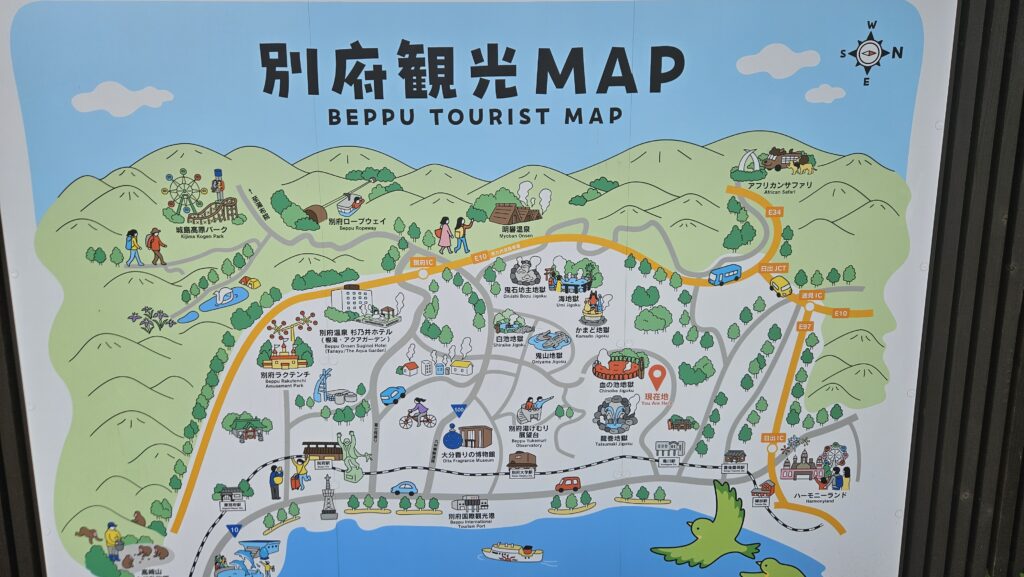
The Beppu Hells, known in Japanese as Jigoku Meguri (地獄めぐり), are a collection of spectacular geothermal springs formed by intense volcanic activity beneath the city of Beppu. The word jigoku translates as “hell,” but despite the dramatic name, these famous attractions aren’t frightening—they’re some of the most beautiful natural wonders in Japan.
Centuries ago, local residents viewed these steaming pools with both fascination and caution. Water erupted from the ground at temperatures approaching 100°C (212°F), thick clouds of steam covered the landscape, and brightly colored mineral deposits created scenes unlike anything people had seen before. Since the springs were far too hot for bathing or everyday use, they became known as “hells,” a name that has remained part of Beppu’s identity ever since.
Today, the Beppu Hells are carefully preserved as sightseeing attractions rather than public baths. Wooden walkways, landscaped gardens, observation decks, and small museums allow visitors to admire each geothermal spring safely while learning about the volcanic forces that continue shaping the region.
Unlike many hot spring destinations where every bath feels relatively similar, each stop along the Jigoku Meguri route offers something completely different. One pool glows an almost unreal shade of turquoise, another appears deep crimson because of iron-rich minerals, while elsewhere thick gray mud bubbles continuously from beneath the earth. Walking from one “hell” to the next feels like moving through several completely different landscapes within a single afternoon.
For many travelers, Beppu becomes the highlight of a wider Kyushu itinerary because nowhere else combines geothermal activity with such carefully maintained gardens and visitor facilities.
Why Every Beppu Hell Looks Completely Different
One of the biggest surprises for first-time visitors is how dramatically the scenery changes from one geothermal spring to another.
Although all seven hells belong to the same volcanic system, each contains a different combination of underground minerals, gases, temperature, and water chemistry. These natural differences create the extraordinary colors that have made the Beppu Hells famous around the world.
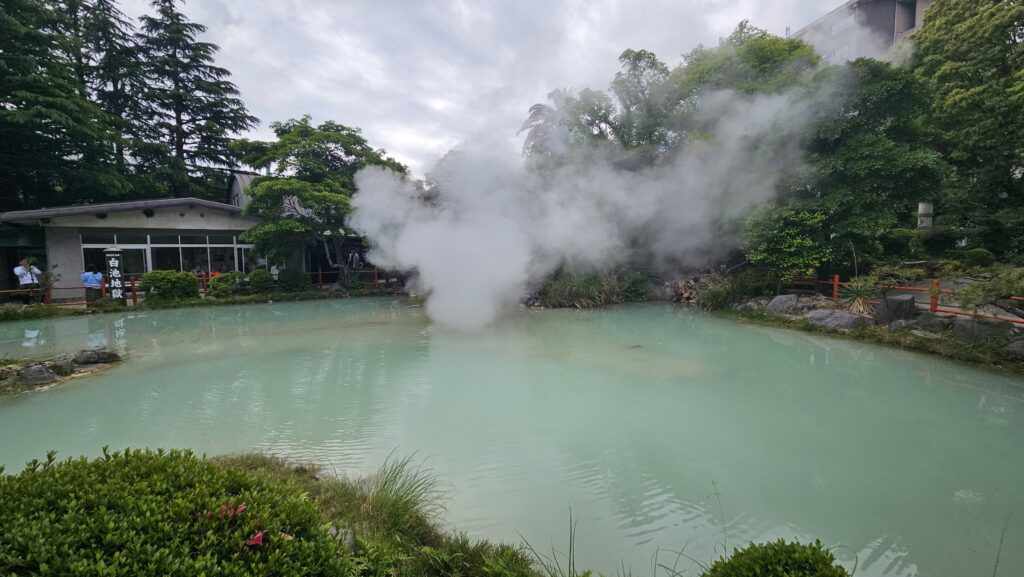
The brilliant blue of Umi Jigoku comes from dissolved minerals that reflect sunlight in much the same way as tropical oceans. Chinoike Jigoku, on the other hand, owes its vivid red color to naturally occurring iron oxide suspended in the water. Other springs contain sulfur, clay, magnesium, or silica, producing completely different shades and textures.
Perhaps the most fascinating part is that nothing has been artificially enhanced. The remarkable colors visitors see today are entirely natural, created through thousands of years of geothermal activity beneath Kyushu.
Even after visiting several of Japan’s famous volcanic regions, many travelers say Beppu feels unlike anywhere else because each stop offers a completely new landscape rather than simply another hot spring.
Umi Jigoku — The Famous Blue Hot Spring Everyone Photographs
If there’s one image that instantly represents the Beppu Hells, it’s the brilliant cobalt-blue water of Umi Jigoku, or “Sea Hell.”
At first glance, the water looks calm enough for swimming. The surface reflects the surrounding sky, tropical plants frame the shoreline, and gentle steam drifts upward into the trees. Only after getting closer do visitors realize that the pool is almost boiling.
The water reaches temperatures of around 98°C (208°F), making it impossible to enter safely despite its inviting appearance.
![Your Umi Jigoku Photo]
Surrounding the spring is one of the most beautiful gardens in the entire Jigoku Meguri complex. Walking paths wind past ponds filled with giant water lilies, seasonal flowers, and carefully maintained greenery, creating a peaceful atmosphere that contrasts with the powerful geothermal activity beneath your feet.
It’s easy to spend far longer here than expected because every viewing angle reveals another striking combination of steam, water, and lush vegetation.
Many photographers consider early morning the best time to visit. The softer light enhances the vivid blue water, while cooler air often produces thicker clouds of steam that make the landscape feel even more dramatic.
Don’t Miss the Giant Water Lilies
Beyond the main geothermal pool lies one of Umi Jigoku’s quieter highlights—a peaceful pond covered with enormous Amazon water lilies.

The contrast between these delicate floating plants and the powerful geothermal landscape just a few steps away perfectly captures what makes Beppu so unique. It’s a reminder that even in one of Japan’s most active volcanic regions, nature has found remarkable ways to thrive.
Visitors who arrive during late spring and summer may even see the enormous lily pads supporting small demonstrations that showcase their incredible strength.
Chinoike Jigoku — Japan’s Incredible Blood Pond Hell
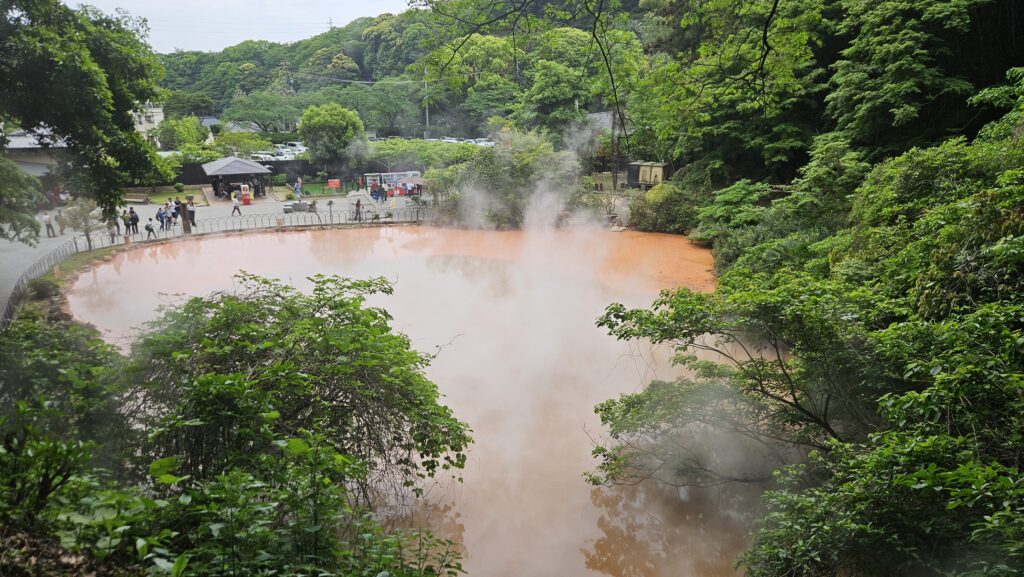
If Umi Jigoku impresses visitors with its brilliant shades of blue, Chinoike Jigoku creates the exact opposite reaction. The moment the deep crimson water comes into view, it’s easy to understand how this extraordinary hot spring earned its dramatic nickname—Blood Pond Hell.
Unlike many natural attractions that appear smaller in person than they do in photographs, Chinoike Jigoku feels even more impressive when standing beside it. The rich red water stretches across a wide geothermal basin while clouds of steam slowly drift above the surface, creating an almost surreal landscape that changes constantly with the light and wind.
The striking color comes from naturally occurring iron oxide and mineral-rich clay suspended in the boiling water. No artificial coloring has ever been added. Everything visitors see is the result of thousands of years of volcanic activity beneath Kyushu, making Chinoike Jigoku one of Japan’s oldest and most remarkable geothermal springs.

Historical records suggest that this geothermal pool has been known for well over a thousand years, making it one of the oldest documented hot springs in Japan. Long before Beppu became a famous tourist destination, local residents regarded this mysterious red pond with a mixture of curiosity and respect. Today it has become one of the most photographed locations in the entire Jigoku Meguri route.
Although the pool itself cannot be entered, the surrounding viewing areas provide excellent opportunities for photography from several different angles. Depending on the weather, the surface may appear dark crimson, rusty orange, or almost scarlet as sunlight reflects through the rising steam.
Why Is the Water Red?
The unusual appearance of Chinoike Jigoku often leads visitors to wonder whether the color has been enhanced.
The answer is simple—everything here is completely natural.
Iron-rich minerals released by underground volcanic activity mix with clay particles suspended in the water, producing the remarkable red tones that have fascinated visitors for generations. As the mineral concentration changes slightly throughout the year, the color can appear deeper or lighter depending on weather conditions and the angle of the sun.
This constant variation means no two visits are ever exactly the same. Photographers often notice that the pool looks dramatically different in the early morning compared with the middle of the afternoon.

The surrounding landscape also adds to the atmosphere. Bright green trees frame the vivid mineral pool, creating one of the strongest color contrasts anywhere in Japan. It’s no surprise that Chinoike Jigoku has become one of Beppu’s signature postcard views.
Oniishibozu Jigoku — Where the Earth Never Stops Bubbling
Among all seven Beppu Hells, Oniishibozu Jigoku offers perhaps the most unusual spectacle.
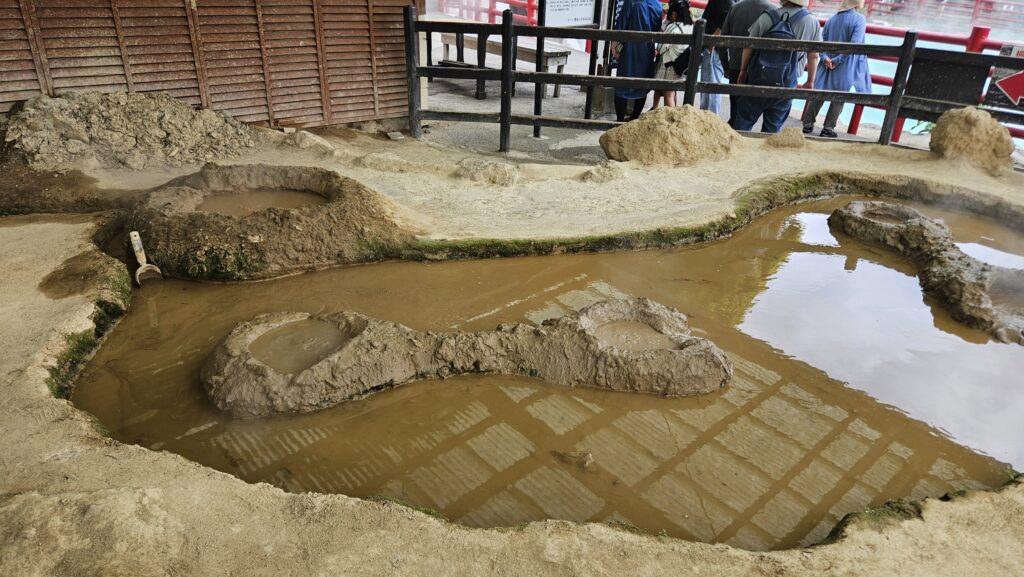
Instead of brightly colored water, visitors discover bubbling pools of thick gray mud that constantly rise, burst, and disappear before forming again a few seconds later. Watching the surface feels strangely hypnotic. Every bubble is slightly different, yet the cycle continues endlessly, powered by the geothermal energy hidden beneath the ground.
The spring takes its name from the mud bubbles, which were said to resemble the shaved heads of Buddhist monks. The word bozu means monk, while oni refers to a traditional Japanese demon, giving the attraction one of the most unusual names along the entire route.
Unlike the colorful pools found elsewhere in Beppu, Oniishibozu Jigoku focuses entirely on movement. Steam escapes continuously, mud bubbles appear without warning, and the surface never remains still for more than a moment. It feels less like looking at a pond and more like watching the Earth breathe beneath your feet.
For visitors interested in geology, this stop offers a fascinating glimpse into the volcanic forces that continue shaping Kyushu today. It’s also a reminder that Beppu’s famous hot springs aren’t simply beautiful landscapes—they’re part of one of Japan’s most active geothermal regions.
As you continue through the Jigoku Meguri, it becomes clear that each stop offers something completely different. Some travelers arrive expecting to spend an hour here, only to realize they’ve devoted half a day to wandering through the gardens, photographing the ever-changing geothermal scenery, and discovering corners of Beppu that feel worlds away from Japan’s bustling cities. For those looking to experience destinations beyond the country’s most famous tourist route, Beppu easily deserves a place among the hidden gems in Japan, offering a side of the country many international visitors never get to see.
How Long Does It Take to Visit the Beppu Hells?
One of the most common questions travelers ask is whether the Beppu Hells can be explored in just a few hours.
The answer depends entirely on your travel style.
If your goal is simply to see all seven geothermal springs, it’s possible to complete the route in around three hours. However, that usually means moving quickly between attractions without spending much time enjoying the gardens, viewpoints, small museums, souvenir shops, or cafés located throughout the complex.
A much more rewarding experience is to allow at least half a day.
The Beppu Hells aren’t a place to rush through. Every geothermal spring has its own atmosphere, and the scenery changes constantly as sunlight, clouds, and steam transform the landscape throughout the day. Some visitors spend twenty minutes at each stop, while photographers often stay much longer waiting for the perfect combination of light and drifting steam.
If your schedule allows, consider spending an entire day in Beppu. Beyond the famous Jigoku Meguri, the city offers relaxing foot baths, traditional ryokan, local restaurants, scenic ropeway rides, and countless geothermal spots scattered throughout different neighborhoods.
How to Get Around the Beppu Hells
Although the seven hells belong to the same sightseeing route, they’re divided into two separate areas.
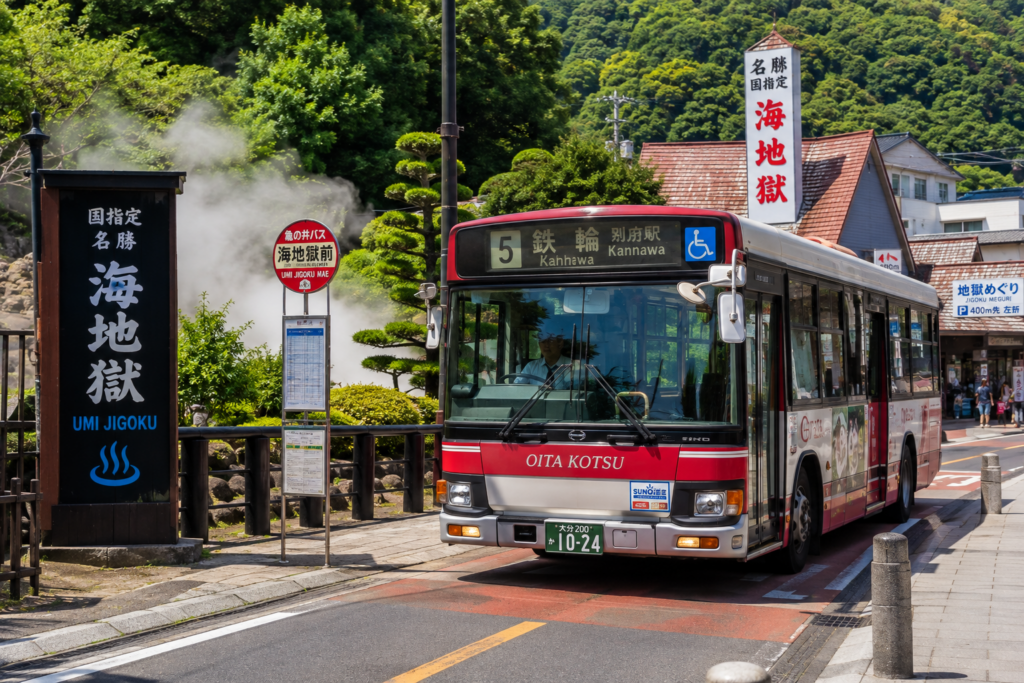
The first group is located in Kannawa, where five geothermal springs can easily be explored on foot. The remaining two attractions—Chinoike Jigoku and Tatsumaki Jigoku—are several kilometers away and are usually reached by local bus, taxi, or private car.
Fortunately, transportation around Beppu is straightforward. Local buses connect all of the major attractions, making it possible to visit every hell without renting a vehicle.
However, travelers planning to explore more of Kyushu often discover that renting a car in Japan offers far greater flexibility. Having your own transportation makes it easy to combine the Beppu Hells with nearby destinations such as Yufuin, Mount Tsurumi, the Kuju Mountains, or the dramatic coastline of Oita Prefecture—all in a single day without relying on bus schedules.
For anyone planning a broader road trip across southern Japan, driving also opens the door to scenic mountain roads, quiet villages, and viewpoints that many visitors never get the chance to experience.

Is Public Transportation Enough?
For most visitors, yes.
If you’re staying near Beppu Station and only want to explore the Jigoku Meguri, buses are frequent, affordable, and easy to use.
On the other hand, if your itinerary includes several destinations across Kyushu, having a rental car gives you the freedom to travel at your own pace and stop whenever you discover an unexpected viewpoint or local attraction.
Best Time to Visit the Beppu Hells
One of the advantages of visiting Beppu is that the geothermal springs are impressive throughout the year. Unlike destinations that rely on cherry blossoms or autumn foliage, the colorful mineral pools remain spectacular in every season.
That said, the overall experience changes depending on the weather.
Spring brings comfortable temperatures and fresh greenery, making long walks between attractions especially enjoyable. Summer fills the gardens with lush vegetation, although the combination of heat and geothermal steam can feel surprisingly intense during the middle of the day.
Autumn is often considered one of the most pleasant seasons. Cooler temperatures make sightseeing much more comfortable, and the surrounding trees gradually add warm shades of red, orange, and gold to the landscape. Winter offers an entirely different atmosphere, with cold air creating thick clouds of steam that make the geothermal springs look even more dramatic.
If you’re still deciding the best time to visit Japan, Beppu is one of those destinations that fits beautifully into almost any itinerary. Each season offers a different perspective, and the geothermal scenery remains just as fascinating whether you’re traveling in April, October, or January.
Morning or Afternoon?
Early morning is generally the best time for photography.
The softer light enhances the vivid colors of the mineral pools, and lower temperatures often create thicker steam drifting across the water. As the day becomes warmer, visibility usually improves, allowing visitors to appreciate the surrounding gardens and volcanic landscape from a different perspective.
Photographers may prefer arriving shortly after opening, while casual visitors often enjoy visiting later in the morning once the crowds begin to spread throughout the route.
Where to Stay in Beppu
Choosing where to stay in Beppu depends largely on the type of experience you’re looking for.
For many visitors, spending at least one night in a traditional ryokan is the perfect way to appreciate the city’s famous hot spring culture. Many inns feature their own natural onsen, beautifully prepared kaiseki dinners, and peaceful Japanese-style rooms overlooking gardens or mountains. After a full day walking through the Beppu Hells, soaking in a mineral-rich bath is one of the most relaxing ways to end the evening.
Travelers looking for modern accommodation will also find plenty of hotels near Beppu Station, making it easy to reach the Jigoku Meguri by bus while staying close to restaurants, cafés, and shopping streets.
Budget travelers have even more options. Hostels and guesthouses are common throughout the city, while many visitors traveling across multiple regions of Japan choose to alternate traditional inns with capsule hotels in Japan, especially when spending time in larger cities before or after visiting Kyushu. It’s an easy way to balance comfort, experience, and travel costs during a longer itinerary.
No matter where you stay, waking up to the sight of steam rising across the city is an experience that’s uniquely Beppu.
Helpful Tips Before Visiting the Beppu Hells
Although the Beppu Hells are easy to explore, a little preparation makes the visit far more enjoyable.
The walking paths are well maintained, but you’ll spend several hours on your feet, so comfortable shoes are highly recommended. During summer, lightweight clothing, sunscreen, and plenty of water are essential, as the combination of warm weather and geothermal steam can feel surprisingly intense.
Don’t rush from one geothermal spring to the next.
Some of the most memorable moments happen between the attractions—watching steam drift through quiet gardens, discovering small shrines tucked away beside the pathways, or simply stopping to admire how dramatically the colors change as clouds move across the sky.
Photography enthusiasts should also bring a wide-angle lens if possible. The landscapes are far more impressive than they appear in most guidebooks, and the constantly changing steam creates different scenes almost every minute.
Is Beppu a Good Destination for Solo Travelers?
Absolutely.
One of the things that stands out most in Beppu is how relaxed the atmosphere feels. The city is easy to navigate, public transportation is reliable, and the main sightseeing areas are well organized with clear signs in both Japanese and English.
It’s no surprise that solo female travel in Japan continues to become more popular each year, and destinations like Beppu perfectly illustrate why. Whether you’re exploring the Jigoku Meguri, enjoying a quiet café, or relaxing in a traditional hot spring, traveling independently here feels comfortable and straightforward for many international visitors.
As with any destination, basic travel awareness is always recommended, but Beppu shares the same welcoming atmosphere that has helped Japan earn its reputation as one of the world’s safest countries for independent travel.
Is Visiting the Beppu Hells Worth It?
After spending time exploring the colorful geothermal pools, peaceful gardens, and steaming landscapes, it’s difficult to imagine traveling through Kyushu without stopping in Beppu.
The experience feels completely different from Japan’s famous cities. There are no towering skyscrapers, crowded shopping districts, or flashing neon lights. Instead, nature takes center stage. Every geothermal spring tells a slightly different story, revealing how volcanic activity has shaped this region for thousands of years.
What makes the Beppu Hells especially memorable isn’t simply the remarkable colors or the dramatic clouds of steam. It’s the contrast between powerful natural forces and the quiet, carefully maintained gardens surrounding them. Within just a few minutes, you can move from an almost otherworldly volcanic landscape to a peaceful pond filled with giant water lilies, creating an experience that’s unlike anywhere else in Japan.
For travelers hoping to discover places beyond the country’s classic Golden Route, Beppu remains one of those destinations that leaves a lasting impression long after the trip has ended. Even as international tourism continues to grow, it still deserves a place among the hidden gems in Japan, offering landscapes that many first-time visitors never expect to find.
Frequently Asked Questions About the Beppu Hells
Can you swim in the Beppu Hells?
No. Despite being natural hot springs, the Beppu Hells are sightseeing attractions rather than bathing facilities. Most of the geothermal pools have temperatures close to 100°C (212°F), making them far too hot for swimming. Visitors admire the colorful springs from designated walkways and viewing platforms while learning about the area’s volcanic activity.
How many Beppu Hells are there?
The Jigoku Meguri consists of seven major geothermal attractions:
- Umi Jigoku (Sea Hell)
- Chinoike Jigoku (Blood Pond Hell)
- Oniishibozu Jigoku
- Kamado Jigoku
- Oniyama Jigoku
- Shiraike Jigoku
- Tatsumaki Jigoku
Each spring has its own unique appearance, mineral composition, and geological features, making every stop feel completely different.
How much time do you need for the Beppu Hells?
Most visitors spend four to six hours exploring all seven attractions at a comfortable pace.
If you enjoy photography, botanical gardens, or simply taking your time, it’s worth setting aside an entire day. Beppu itself has plenty to offer beyond the Jigoku Meguri, including public foot baths, scenic viewpoints, traditional neighborhoods, and local restaurants.
Is one ticket valid for all seven hells?
Yes.
Visitors can purchase either individual admission tickets or a combined pass that includes all seven geothermal springs. If you’re planning to visit the entire route, the combined ticket offers the best value.
Are the Beppu Hells suitable for children?
Yes.
Children often enjoy the colorful pools, bubbling mud, tropical gardens, and clouds of steam. The walking paths are well maintained, and most attractions are easy to explore as a family.
Parents should simply remember that the geothermal pools are extremely hot and visitors should always remain behind the safety barriers.
What should I wear?
Comfortable walking shoes are the most important item.
During summer, lightweight clothing, a hat, sunscreen, and plenty of water are recommended. In winter, temperatures are much cooler, but the geothermal steam creates a fascinating atmosphere that’s especially beautiful for photography.
Can you visit the Beppu Hells all year round?
Absolutely.
Unlike seasonal attractions that depend on cherry blossoms or autumn leaves, the Beppu Hells remain open throughout the year. Every season offers a different atmosphere, from lush summer gardens to dramatic winter steam rising into the cold air.
Is Beppu worth visiting if I’ve already been to Hakone?
Definitely.
Although both destinations are famous for hot springs, they offer completely different experiences.
Hakone is best known for relaxing onsen, mountain scenery, and views of Mount Fuji. Beppu, on the other hand, is famous for its extraordinary geothermal landscapes, colorful mineral pools, and one of the largest concentrations of hot spring sources anywhere in the world.
Can you visit Beppu as a day trip?
Yes, but staying overnight is highly recommended.
A day trip gives you enough time to explore the Beppu Hells, while an overnight stay lets you experience the city’s onsen culture, local cuisine, and peaceful evening atmosphere after most day-trippers have left.
Final Thoughts
Standing beside the brilliant blue waters of Umi Jigoku, watching steam drift across the gardens, or looking into the deep crimson surface of Chinoike Jigoku, it’s easy to understand why the Beppu Hells have fascinated travelers for generations.
These geothermal springs aren’t simply beautiful natural attractions—they’re a reminder that Japan is still being shaped by powerful volcanic forces beneath the surface. Every cloud of steam, every bubbling mud pool, and every vivid mineral color tells a story that began thousands of years ago and continues today.
What makes Beppu so memorable is its ability to surprise. Many visitors arrive expecting to spend a couple of hours exploring a famous sightseeing spot. Instead, they discover peaceful gardens, fascinating geology, traditional neighborhoods filled with rising steam, and a city where hot spring culture is woven into everyday life.
For travelers willing to venture beyond Japan’s busiest tourist route, Beppu offers a completely different perspective on the country. It combines dramatic landscapes with quiet moments, scientific curiosity with natural beauty, and centuries of history with one of the world’s most active geothermal regions.
Whether you’re planning your very first trip to Japan or returning to explore somewhere new, the Beppu Hells (Jigoku Meguri) deserve a place on your itinerary. They offer an experience that’s impossible to recreate anywhere else—one that stays with you long after you’ve left Kyushu.
If your journey takes you beyond the familiar streets of Tokyo, Kyoto, and Osaka, you’ll discover that some of Japan’s most unforgettable places are found where steam rises from the earth, mineral-rich waters paint the landscape in extraordinary colors, and nature quietly reminds us just how powerful it can be.

You May Also Like

Best Capsule Hotels in Japan 2026: Why Travelers Are Obsessed With Capsule Hotels

Best Day Trips from Tokyo: 15 Incredible Places Worth Visiting