Best Japanese Supplements for Menopause in 2026
Menopause is a natural stage of life, but the changes it brings can feel anything but simple. For many women, this period comes with hot flashes, sleep disturbances, mood swings, fatigue, changes in skin elasticity, and shifts in metabolism. These symptoms vary widely from person to person, which is why interest in the best Japanese supplements for menopause has grown so quickly in recent years.
Japan has one of the world’s largest wellness markets, and pharmacies are filled with products designed to support women through different stages of life. From collagen powders and probiotics to calcium, soy isoflavones, and multivitamins, Japanese supplements for menopause are often formulated to address several concerns at once.
Unlike quick fixes or miracle cures, these supplements are intended to complement healthy habits. Regular exercise, balanced nutrition, stress management, and quality sleep remain essential. Still, many women choose to add Japanese wellness products to their routines in an effort to support their energy, skin, digestion, and overall well-being.
This guide explores the best Japanese supplements for menopause, the ingredients most commonly found in Japan, and how to choose products that fit your lifestyle.
What Are the Best Japanese Supplements for Menopause?
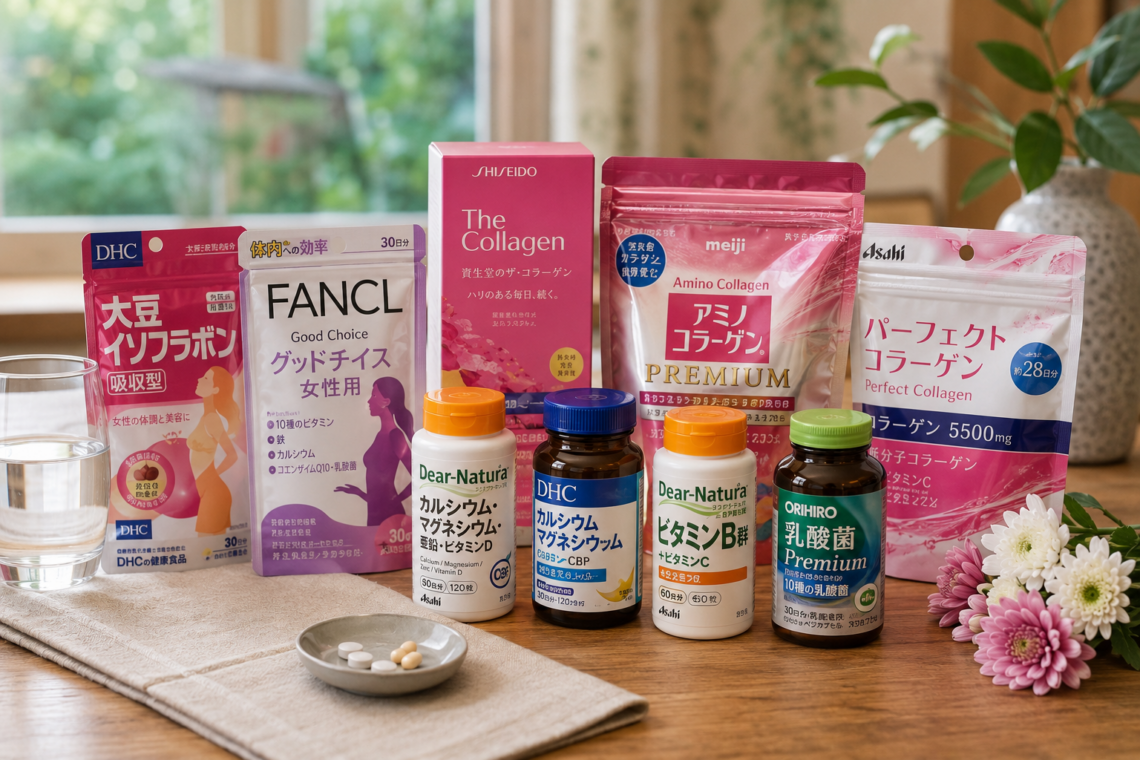
The best Japanese supplements for menopause often contain collagen, soy isoflavones, calcium, vitamin D, magnesium, probiotics, vitamin B complex, and antioxidants. Popular Japanese brands include DHC, FANCL, Orihiro, Shiseido, Asahi, Dear-Natura, and Meiji.
Many women start with one supplement and gradually build a broader wellness routine that includes products for sleep, digestion, skin health, and healthy aging.
Why Women Look for Japanese Supplements During Menopause
Hormonal changes affect nearly every system in the body. Some women notice only mild symptoms, while others experience significant changes in energy, mood, and sleep patterns.
Common reasons women search for Japanese supplements for menopause include:
- hot flashes and night sweats;
- fatigue and low energy;
- changes in skin texture;
- thinning hair;
- poor sleep quality;
- mood swings;
- joint discomfort;
- digestive changes.
Because these symptoms are interconnected, many women prefer best supplements for menopause that support multiple areas of health rather than focusing on a single issue.
Products designed for supplements for women over 40 often overlap with menopause supplements because both categories focus on long-term wellness, bone health, and hormonal changes.
Key Nutrients Found in Japanese Supplements for Menopause
Before choosing the best Japanese supplements for menopause, it helps to understand which ingredients are most commonly included in Japanese formulas.
| Nutrient | Potential Benefits |
|---|---|
| Soy isoflavones | Support hormonal balance |
| Calcium | Support bone health |
| Vitamin D | Helps calcium absorption |
| Magnesium | Supports muscles and relaxation |
| Collagen peptides | Support skin and hair |
| Vitamin B complex | Supports energy production |
| Probiotics | Support digestion |
| Coenzyme Q10 | Antioxidant support |
| Omega-3 | Supports overall wellness |
Many of the most popular Japanese anti-aging supplements combine several of these ingredients in one formula.
Can Supplements Help With Menopause Symptoms?
No supplement can completely eliminate menopause symptoms, and severe symptoms should always be discussed with a healthcare professional. However, many women find that Japanese supplements for menopause become a helpful addition to a balanced lifestyle.
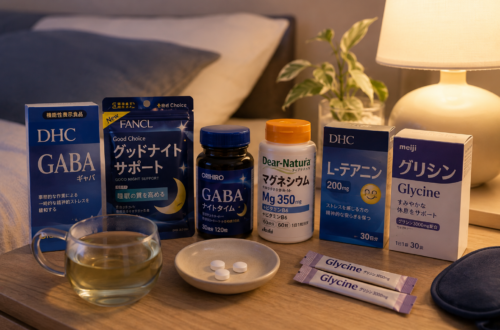
Sleep problems are one of the most common complaints during menopause. Magnesium, glycine, and GABA are frequently included in products aimed at improving rest, which explains why Japanese supplements for sleep have become increasingly popular among women in their forties and fifties.
Fatigue is another concern. Hormonal changes, poor sleep, and stress can all contribute to lower energy levels. Many Japanese products combine vitamin B, iron, and coenzyme Q10—the same ingredients often found in formulas designed for Japanese supplements for energy.
Skin and hair also change with age. As collagen production naturally declines, many women become interested in Japanese collagen supplements and beauty products that support hydration and elasticity.

10 Best Japanese Supplements for Menopause in 2026
1. DHC Soy Isoflavones
Soy isoflavones are among the most common ingredients in Japanese supplements for menopause. Derived from soybeans, they are widely used in Japan as part of natural menopause support.
Best for:
- supplements for hormonal balance;
- women over 40;
- everyday wellness.
2. FANCL Good Choice Women
This formula combines vitamins and minerals designed specifically for women’s health.
Best for:
- supplements for women over 40;
- healthy aging;
- everyday nutrition.
3. Shiseido The Collagen
Collagen remains one of Japan’s most popular beauty supplements. Many women include it in their wellness routines to support skin hydration and elasticity.
Best for:
- supplements for skin health;
- beauty routines;
- Japanese beauty vitamins.
4. Dear-Natura Calcium and Vitamin D
Bone health becomes increasingly important during menopause, making calcium and vitamin D essential ingredients in many Japanese vitamins for menopause.
Best for:
- supplements for bones and joints;
- bone support;
- healthy aging.
5. Orihiro Probiotics
Digestion can change during menopause, which is one reason why many women explore Japanese probiotics and fermented foods as part of their wellness routine.
Best for:
- gut health;
- digestion;
- daily support.
6. Meiji Amino Collagen Premium
Collagen production naturally decreases with age, which is why products containing collagen peptides remain some of the most popular Japanese supplements for menopause. Meiji Amino Collagen Premium combines collagen with vitamin C and hyaluronic acid, creating a formula aimed at supporting skin hydration and elasticity.
Many women who begin researching menopause supplements also become interested in Japanese vitamins for skin, since dryness and loss of firmness are among the most common concerns after forty.
Best for:
- supplements for skin health;
- mature skin;
- beauty routines.
7. DHC Calcium + Magnesium
Changes in hormone levels can affect bone density and muscle recovery, making calcium and magnesium essential nutrients during menopause. This supplement combines two of the most important minerals found in Japanese vitamins for menopause.
Women who experience sleep disturbances often look for formulas containing magnesium, which is also a key ingredient in many Japanese supplements for sleep.
Best for:
- supplements for bones and joints;
- muscle support;
- sleep quality.
8. FANCL Deep Charge Collagen
FANCL’s collagen supplements are widely used by women interested in long-term beauty and wellness. In Japan, collagen is often viewed as part of a broader self-care routine that includes skincare, nutrition, and exercise.
As menopause progresses, many women add Japanese collagen supplements to support skin elasticity, hair, and nail health.
Best for:
- Japanese anti-aging supplements;
- skin hydration;
- everyday beauty.
9. Dear-Natura Vitamin B Complex
Fatigue and brain fog are among the most common complaints during menopause. Vitamin B supplements are frequently chosen by women looking for ways to support energy metabolism and overall well-being.
Because low energy can have many causes, products designed for menopause often overlap with formulas marketed as Japanese supplements for energy.
Best for:
- supplements for fatigue;
- concentration;
- daily wellness.
10. Asahi Perfect Collagen Powder
This supplement combines collagen peptides, coenzyme Q10, and several vitamins in one formula. It has become one of Japan’s most recognizable beauty products and is often included in guides to best Japanese supplements.
Best for:
- supplements for healthy aging;
- skin and hair;
- long-term wellness.
Comparison Table of the Best Japanese Supplements for Menopause
| Product | Main Ingredients | Best For |
|---|---|---|
| DHC Soy Isoflavones | Soy isoflavones | Hormonal balance |
| FANCL Good Choice Women | Multivitamins | Women over 40 |
| Shiseido The Collagen | Collagen peptides | Skin health |
| Dear-Natura Calcium & Vitamin D | Calcium and vitamin D | Bone health |
| Orihiro Probiotics | Probiotics | Digestion |
| Meiji Amino Collagen | Collagen and hyaluronic acid | Mature skin |
| DHC Calcium + Magnesium | Calcium and magnesium | Sleep and recovery |
| FANCL Deep Charge Collagen | Collagen peptides | Beauty support |
| Dear-Natura Vitamin B Complex | Vitamin B | Energy |
| Asahi Perfect Collagen | Collagen and antioxidants | Healthy aging |
How Menopause Affects Sleep, Energy, and Mood
One of the reasons the best Japanese supplements for menopause attract so much attention is that menopause rarely affects only one area of life. Sleep quality, energy levels, digestion, and mood are all closely connected.
Women who struggle with falling asleep or waking up during the night often begin exploring Japanese supplements for sleep, especially formulas containing magnesium, glycine, and GABA. Better sleep can have a noticeable effect on mood, concentration, and everyday energy.
Stress is another important factor. Hormonal fluctuations can amplify anxiety and irritability, which is why ingredients such as magnesium, vitamin B complex, and amino acids frequently appear in Japanese wellness products designed for women.
Menopause, Skin Changes, and Healthy Aging
Changes in skin texture are among the most visible signs of menopause. Lower estrogen levels may contribute to dryness, reduced elasticity, and changes in collagen production.
This explains why Japanese collagen supplements remain so popular among women in their forties and fifties. Products containing collagen, vitamin C, ceramides, and antioxidants are often combined with skincare routines to support healthy aging.
Many women who focus on beauty from within also explore Japanese vitamins for skin, since these supplements often contain ingredients that overlap with menopause formulas.

The Connection Between Digestion and Menopause
Digestive changes during menopause are sometimes overlooked, yet gut health plays an important role in overall well-being. Hormonal fluctuations, stress, and dietary changes can affect digestion and comfort.
That is one reason why interest in Japanese probiotics continues to grow. Probiotic supplements, fermented foods, and fiber-rich diets have become increasingly popular among women looking for a more holistic approach to wellness.
Traditional Japanese foods such as miso, yogurt, and natto are often included in daily routines alongside vitamins and supplements.
FAQ
What are the best Japanese supplements for menopause?
Popular options include DHC Soy Isoflavones, FANCL Good Choice Women, Shiseido The Collagen, Meiji Amino Collagen, and Dear-Natura Calcium & Vitamin D.
Do Japanese supplements help with menopause symptoms?
Many women use Japanese supplements for menopause to support sleep, energy, skin health, and overall wellness, although supplements cannot replace medical care.
Which supplement is best for hot flashes?
Products containing soy isoflavones are among the most common supplements for hot flashes sold in Japan.
Can collagen help during menopause?
Many women add Japanese collagen supplements to their routines to support skin hydration and elasticity.
Are probiotics useful during menopause?
Interest in Japanese probiotics has increased as researchers continue to study the connection between digestion and overall health.
Where can tourists buy Japanese supplements?
Most Japanese pharmacy supplements are available at Matsumoto Kiyoshi, Welcia, Sundrug, Don Quijote, Amazon Japan, and Rakuten.
Conclusion
Choosing the best Japanese supplements for menopause depends on individual goals and symptoms. Some women focus on sleep and stress management, while others prioritize bone health, digestion, energy, or skincare.
Japan’s supplement market offers a wide variety of products, from soy isoflavones and probiotics to collagen powders and multivitamins. Brands such as DHC, FANCL, Shiseido, Orihiro, Meiji, and Asahi continue to develop formulas aimed at supporting women through different stages of life.
Although supplements are not a substitute for medical advice, they can become a valuable part of a healthy lifestyle that includes balanced nutrition, regular exercise, quality sleep, and stress management. Combined with these habits, Japanese supplements for menopause may help support overall well-being and healthy aging.


You May Also Like

Mental Health and Self-Care Tips 2025: Habits, Vitamins & Stress Relief
Best Japanese Collagen Supplements for Skin, Hair, and Beauty in 2026