How Often Should You Clean Your Air Conditioner?
An air conditioner quietly works in the background for months, keeping your home cool during summer and comfortable throughout the year. Yet many homeowners rarely think about maintenance until something goes wrong: weaker airflow, unpleasant smells, rising electricity bills, or rooms that never seem to cool properly. One of the most common questions people ask is how often should you clean your air conditioner, and the answer depends on several factors, including your climate, pets, allergies, and how frequently you use the system.
Regular cleaning is not just about keeping your AC looking tidy. Dust, pollen, pet hair, mold spores, and grease gradually build up inside filters, vents, evaporator coils, and outdoor condensers. Over time, this buildup forces the unit to work harder, reduces efficiency, and may even shorten its lifespan.
Whether you use a central air conditioning system, a window unit, a portable AC, or a ductless mini-split, understanding how often should you clean your air conditioner can help you avoid costly repairs and maintain healthy indoor air quality.
Why Regular Air Conditioner Cleaning Matters
Many people assume that air conditioners simply cool the air, but they actually do much more. Your AC system constantly circulates indoor air, trapping dust, allergens, bacteria, and airborne particles in its filters. Without proper maintenance, those contaminants remain inside your home.
A neglected system can lead to:
- Higher electricity consumption.
- Reduced airflow.
- Uneven cooling.
- Musty odors.
- Mold growth inside vents.
- Increased wear on the compressor.
- Poor indoor air quality.
- More frequent breakdowns.
Experts agree that cleaning your air conditioner regularly is one of the easiest ways to improve energy efficiency. According to the U.S. Department of Energy, replacing or cleaning dirty filters can significantly reduce an air conditioner’s energy usage.
Homes with pets, smokers, young children, or people suffering from allergies often require more frequent maintenance because airborne particles accumulate faster.

How Often Should You Clean Your Air Conditioner? Recommended Schedule
If you have ever searched how often should you clean your air conditioner filter or wondered whether annual maintenance is enough, this table provides a practical timeline.
| Air Conditioner Component | Recommended Cleaning Frequency |
|---|---|
| Air filters | Every 1–3 months |
| Air vents and registers | Every 3 months |
| Indoor unit exterior | Monthly |
| Evaporator coils | Every 6–12 months |
| Condensate drain line | Every 6 months |
| Outdoor condenser unit | Twice per year |
| Professional maintenance | Once a year |
This schedule should be adjusted depending on your living conditions. Homes located in humid climates, dusty areas, or places with heavy pollen seasons may need additional cleaning.
If you own pets that shed heavily, you may need to clean AC filters every month rather than every three months.
How Often Should You Clean Air Conditioner Filters?
When people ask how often should you clean your air conditioner, filters are usually the most important part of the answer.
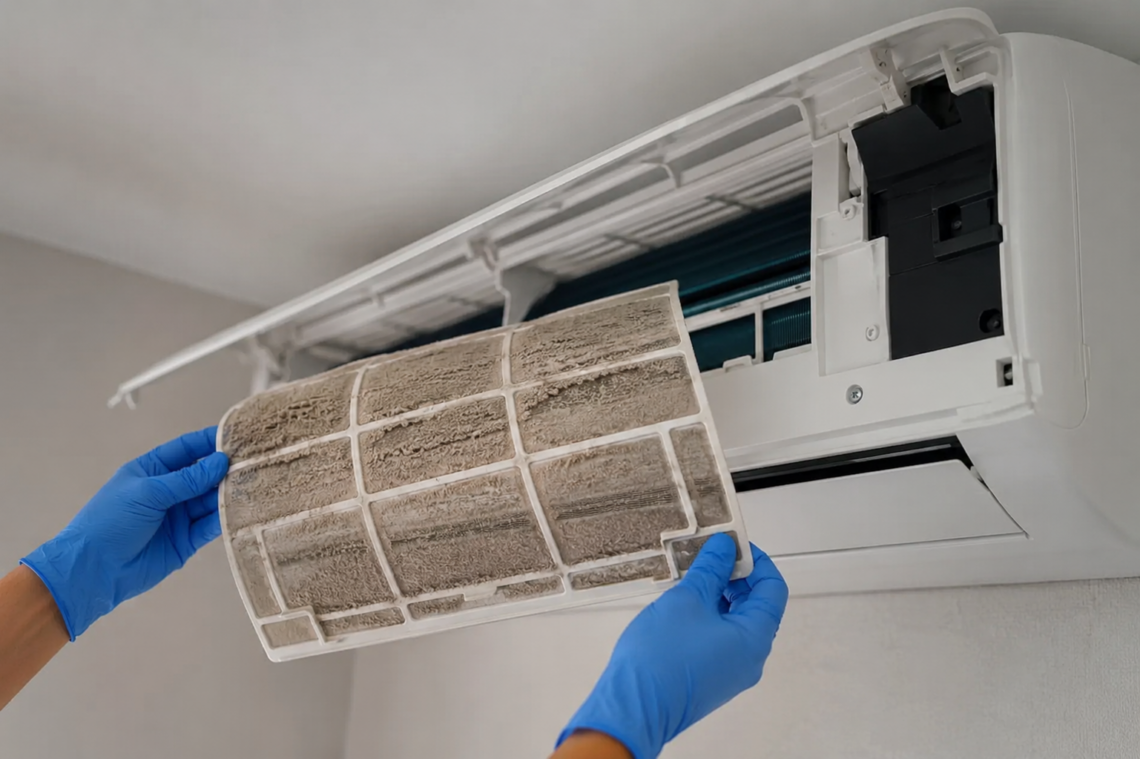
Air filters are responsible for trapping:
- Dust.
- Pet dander.
- Hair.
- Pollen.
- Mold spores.
- Cooking particles.
- Outdoor pollutants.
A clogged filter forces the system to work harder and restricts airflow. This often causes:
- Longer cooling cycles.
- Increased energy bills.
- Reduced cooling performance.
- Frozen evaporator coils.
- Strange noises.
Signs Your AC Filter Needs Cleaning
You may need to clean your filter sooner if you notice:
- Weak airflow from vents.
- More dust around the house.
- Allergy symptoms worsening indoors.
- A musty smell when the AC starts.
- Higher electricity costs.
- The filter appears gray or dirty.
For most households, experts recommend checking filters once a month during summer.
People living in apartments often overlook AC maintenance, especially in small spaces where dust accumulates quickly. Homeowners already thinking about small apartment decorating ideas often discover that cleaner vents and better airflow make rooms feel fresher and less cramped.
How Often Should You Clean a Window Air Conditioner?
Window units require slightly different care because they are exposed to both indoor and outdoor conditions.
The recommended schedule for a window AC includes:
- Cleaning the filter every month during peak use.
- Wiping down the front panel every two weeks.
- Cleaning coils every six months.
- Removing leaves and debris from outside vents regularly.
Because window air conditioners are exposed to rain, pollen, insects, and pollution, dirt accumulates much faster than in central systems.
One of the most common reasons people search how often should you clean your air conditioner is because window units begin to produce unpleasant odors. In many cases, moisture trapped inside encourages mold growth.
This is similar to the moisture problems that cause bathroom mildew, black spots, and persistent odors, which homeowners often encounter while dealing with how to get rid of mold in the shower and improving household ventilation.

How Often Should You Clean a Central Air Conditioner?
Central AC systems are more complex because they involve ductwork, indoor components, and outdoor equipment.
If you own central air conditioning, routine maintenance should include:
Monthly Maintenance
- Inspect filters.
- Check airflow.
- Remove dust around vents.
- Listen for unusual sounds.
Every Six Months
- Clean evaporator coils.
- Flush the condensate drain.
- Remove debris around the condenser.
Once Per Year
- Schedule professional servicing.
- Inspect refrigerant levels.
- Test thermostat performance.
- Check electrical connections.
Many HVAC technicians recommend scheduling maintenance in spring before summer temperatures rise. Preventive cleaning is considerably cheaper than emergency repairs in the middle of a heatwave.
How Often Should You Clean the Outdoor AC Unit?
The outdoor condenser is often ignored because it sits outside, but it plays a critical role in your cooling system.
Leaves, grass clippings, pollen, dust, and even spider webs can block airflow.
To maintain efficiency:
- Inspect the outdoor unit monthly.
- Remove debris every few weeks.
- Wash condenser fins twice per year.
- Keep at least two feet of open space around the system.
If your home has a garden, seasonal cleaning routines become even more important. Homeowners who invest in outdoor lighting for garden or patio often overlook the fact that shrubs and decorative plants can eventually block condenser airflow.
Poor airflow around outdoor units is one of the hidden reasons behind rising energy costs.
How Dirty Air Conditioners Affect Indoor Air Quality
One reason so many people ask how often should you clean your air conditioner is concern about health.
A dirty AC system may contribute to:
- Allergy flare-ups.
- Sneezing.
- Dry throat.
- Coughing.
- Headaches.
- Dust accumulation.
- Poor sleep.
- Respiratory irritation.
Although air conditioners do not necessarily create mold, trapped moisture combined with dirt can create conditions where mold thrives.
Households with children, older adults, asthma sufferers, or pets should pay particular attention to:
- Filter replacement schedules.
- Humidity levels.
- Vent cleaning.
- Professional inspections.
Improving indoor air quality is increasingly becoming part of broader home trends, alongside changing interior styles, smart technology, and the growing popularity of interior lifestyle trends.
Common Signs Your Air Conditioner Needs Cleaning Immediately
Even if you follow a maintenance schedule, some warning signs indicate that your AC needs attention right away.
Your Home Feels Humid
Air conditioners help remove excess moisture. If rooms suddenly feel sticky, dirt may be limiting performance.
The Unit Smells Musty
Persistent odors often indicate mold or bacterial growth.
Energy Bills Increase
Dirty systems consume more electricity.
Cooling Takes Longer
Restricted airflow means your air conditioner works harder to maintain temperature.
Ice Appears on the Unit
Frozen coils are often linked to blocked filters or airflow issues.
You Hear Strange Noises
Buzzing, rattling, or grinding sounds may signal debris buildup.
Ignoring these signs can lead to expensive repairs or premature system failure.

DIY Air Conditioner Cleaning vs Professional Maintenance
Many homeowners wonder whether they can handle maintenance themselves.
Tasks You Can Do Yourself
- Wash reusable filters.
- Vacuum vents.
- Wipe exterior surfaces.
- Remove debris from the condenser.
- Check for unusual noises.
- Clean accessible drain lines.
Tasks Best Left to Professionals
- Refrigerant checks.
- Deep coil cleaning.
- Electrical inspections.
- Motor repairs.
- Duct cleaning.
- System diagnostics.
Professional HVAC maintenance may seem expensive, but annual servicing often prevents larger repair bills later.
Seasonal AC Cleaning Checklist
| Season | Recommended Tasks |
|---|---|
| Spring | Replace filters, inspect outdoor unit, schedule maintenance |
| Summer | Clean vents, monitor airflow, check humidity |
| Autumn | Remove leaves, inspect insulation |
| Winter | Cover outdoor unit if recommended by manufacturer |
Following a seasonal checklist helps answer the question of how often should you clean your air conditioner without relying on guesswork.
Frequently Asked Questions
How often should you clean your air conditioner filter?
Most homes should clean or replace filters every one to three months. Homes with pets, allergies, or heavy AC usage may require monthly cleaning.
Can a dirty air conditioner make you sick?
A poorly maintained system can worsen allergies and respiratory symptoms by circulating dust, pollen, and mold spores.
How often should an outdoor AC unit be cleaned?
The outdoor condenser should be inspected monthly and cleaned thoroughly at least twice a year.
Should air conditioner vents be cleaned?
Yes. Dust and debris accumulate in vents over time, affecting airflow and indoor air quality. Cleaning every three months is a good starting point.
Is professional AC maintenance necessary every year?
Most HVAC experts recommend annual inspections to identify problems early and maintain peak efficiency.
What happens if you never clean your air conditioner?
Neglecting maintenance can lead to higher energy bills, poor cooling performance, unpleasant odors, mold growth, and costly repairs.
Conclusion
Understanding how often should you clean your air conditioner is one of the simplest ways to protect your home, reduce electricity costs, and improve comfort during hot weather. While cleaning schedules vary depending on your environment and lifestyle, most systems benefit from monthly filter checks, seasonal maintenance, and annual professional servicing.
Regular care keeps airflow strong, improves indoor air quality, and extends the life of your equipment. Whether you own a central air conditioner, a window unit, or a portable model, investing a little time in maintenance today can prevent major problems tomorrow.
A clean air conditioner does more than cool your home—it creates a healthier, more comfortable living space throughout the year.


You May Also Like
How to Prevent Black Mold in Your Home: 15 Easy Ways to Stop Mold Before It Starts

Smart Home Devices You Need in 2025: Make Your House Smarter