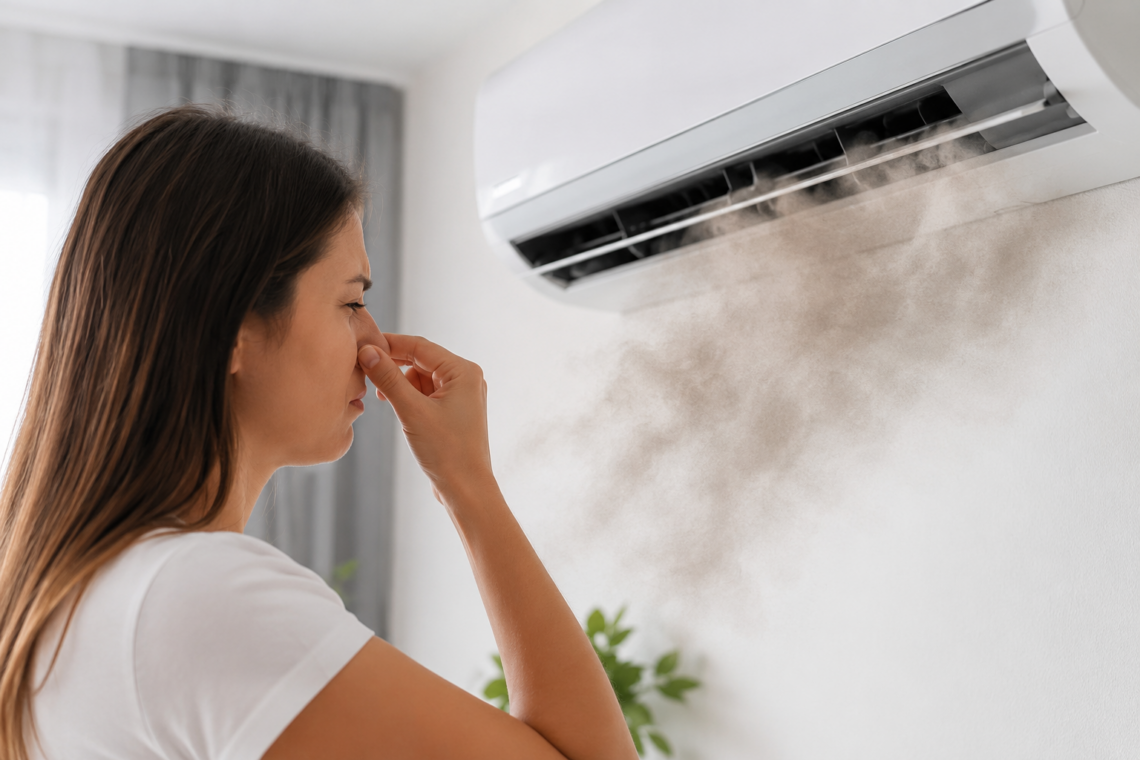
Why Does My Air Conditioner Smell?
You turn on your air conditioner expecting cool, refreshing air, but instead, an unpleasant odor fills the room. If you’ve ever wondered why does my air conditioner smell, you’re not alone. Every summer, thousands of homeowners search for answers after noticing that their AC smells musty, sour, moldy, or even like something is burning.
The truth is that strange odors coming from your cooling system are often warning signs that something inside the unit needs attention. Dust buildup, clogged filters, excess moisture, bacteria, and even electrical issues can all cause unpleasant smells. In some cases, the solution is simple cleaning. In others, your system may need professional maintenance.
Understanding why does my air conditioner smell can help you improve indoor air quality, reduce energy costs, and avoid expensive repairs later.

Why Does My Air Conditioner Smell Musty?
One of the most common complaints homeowners have is: “my air conditioner smells musty.” A musty odor is usually caused by moisture trapped inside the system.
Air conditioners naturally remove humidity from indoor air. However, when water doesn’t drain properly, damp areas become the perfect environment for mold and mildew to grow.
Common causes of a musty smell from air conditioner include:
- Dirty evaporator coils.
- Moisture trapped in the drain pan.
- Clogged condensate lines.
- Mold inside air ducts.
- Dust buildup on filters.
- Poor ventilation.
If your AC smells worse after rain or on humid days, excess moisture is likely the culprit.
Homes with bathrooms that struggle with ventilation often experience similar problems. The same conditions that cause mildew in an air conditioner can contribute to household mold issues, especially in spaces where people are already searching for solutions like how to get rid of mold in the shower.
Air Conditioner Smells Like Mold: What Does It Mean?
If your air conditioner smells like mold, the issue should not be ignored. Mold spores can spread through vents and circulate throughout your home.
Signs that mold may be growing inside your AC include:
- A strong earthy odor.
- Dark spots around vents.
- Allergy symptoms that worsen indoors.
- Increased sneezing or coughing.
- Dampness near the indoor unit.
Although a small amount of dust is normal, persistent mold smells usually mean the unit needs cleaning.
People frequently search for:
- air conditioner smells like mildew
- how to clean mold from air conditioner
- air conditioner mold removal
- how to disinfect air conditioner
In many cases, cleaning the filters and drain system helps. However, if mold has spread into the ductwork, professional service may be necessary.
Why Does My AC Smell Like Dirty Socks?
Believe it or not, HVAC technicians even have a name for this problem: “dirty sock syndrome.”
If your AC smells like dirty socks, bacteria and mold are often growing on the evaporator coil. As warm air passes over damp coils, the smell spreads throughout the room.
Several factors increase the risk:
- Running the AC at very low temperatures.
- Humid climates.
- Infrequent maintenance.
- Dirty filters.
- Turning the system on and off repeatedly.
One of the easiest ways to prevent this problem is by following a regular cleaning schedule. Many homeowners don’t realize how often should you clean your air conditioner until unpleasant odors begin to appear.
Why Does My Air Conditioner Smell Bad After Not Using It?
If you’ve just turned on your AC after winter and noticed that your air conditioner smells bad, the explanation is often simple.
During months of inactivity, dust settles inside:
- Air filters.
- Coils.
- Air vents.
- Fan blades.
- Ductwork.
The first few cooling cycles may produce a stale smell as accumulated particles begin circulating again.
Before summer starts, experts recommend:
| Maintenance Task | Frequency |
|---|---|
| Check air filters | Every month |
| Clean vents | Every 2–3 months |
| Inspect the drain line | Twice a year |
| Deep-clean the unit | Once a year |
| Professional service | Annually |
A seasonal inspection can dramatically reduce the chances of searching why does my air conditioner smell during the hottest week of the year.

Why Does My Window AC Smell?
Many apartment owners ask why does my window AC smell, especially during humid summers.
Unlike central systems, window air conditioners are constantly exposed to:
- Rain.
- Dust.
- Pollen.
- Insects.
- Outdoor pollution.
As a result, moisture and dirt accumulate faster.
Common reasons a window AC smells include:
- Standing water inside the unit.
- Dirty filters.
- Mold growth.
- Blocked drainage holes.
- Leaves and debris stuck outside.
Cleaning the front panel alone rarely solves the issue. The inside of the unit often needs attention as well.
Why Does My Air Conditioner Smell Like Vinegar?
If your air conditioner smells like vinegar, several things could be happening.
Possible causes include:
- Bacteria inside the condensate line.
- Mold buildup.
- A clogged drain.
- Excess moisture.
- Chemical residue.
Sometimes, homeowners mistake a vinegar smell for mildew because both odors become stronger in humid weather.
Ignoring the problem may eventually lead to:
- Reduced cooling efficiency.
- Water leaks.
- Higher electricity bills.
- More serious mold growth.
Why Does My Air Conditioner Smell Like Sewage?
A sewage smell is less common but should be addressed quickly.
If your air conditioner smells like sewage, possible explanations include:
- Dry plumbing traps.
- Sewer gases entering the home.
- Bacteria growth inside ducts.
- Drainage issues.
- Mold contamination.
Because sewer odors can indicate problems unrelated to the AC itself, homeowners should inspect nearby bathrooms, laundry rooms, and drains.
In modern homes, ventilation plays a huge role in maintaining comfort. As more people embrace interior lifestyle trends, air circulation, humidity control, and healthier indoor environments are becoming just as important as furniture and décor.
Why Does My Air Conditioner Smell Like Something Is Burning?
A burning smell should never be ignored.
If your air conditioner smells like burning, immediately turn the system off and investigate.
Possible causes include:
- Overheated electrical components.
- Worn wiring.
- Dust burning off heating elements.
- A failing motor.
- Mechanical problems.
A mild burning smell after months of inactivity may disappear within minutes. However, persistent odors require professional inspection.
Searches related to this issue include:
- burning smell from AC
- why does my AC smell bad
- air conditioner smells when turned on
- signs your air conditioner needs repair
Electrical problems can quickly become serious, especially in older systems.
How to Remove Smell From Air Conditioner Naturally
If you’re searching for how to remove smell from air conditioner, start with the simplest maintenance steps.
Try the following:
- Wash or replace air filters.
- Vacuum vents and registers.
- Clean visible dust.
- Check for standing water.
- Inspect the drain line.
- Let the fan run for a few minutes after cooling.
Regular maintenance not only removes odors but also improves airflow and extends the lifespan of your cooling system.
Many homeowners focus on aesthetic upgrades, from smart storage to best outdoor lighting ideas for your garden or patio while overlooking one of the biggest factors affecting comfort: clean, odor-free air.
Can a Dirty Air Conditioner Make Your House Smell?
The short answer is yes. In fact, many homeowners who ask why does my air conditioner smell initially believe the odor is coming from the kitchen, bathroom, or laundry room. Because an air conditioner continuously circulates air throughout the house, unpleasant smells trapped inside the system can quickly spread into every room.
A neglected AC unit collects dust, pet hair, pollen, and other airborne particles. Over time, moisture mixes with this debris, creating ideal conditions for bacteria and mildew. As a result, people often notice a musty smell coming from vents or wonder why their house smells when the AC turns on after several months of heavy use.
Besides unpleasant odors, a dirty cooling system can affect comfort and health. Some homeowners begin searching whether a dirty air conditioner can make you sick, especially if family members experience sneezing, headaches, or worsening allergies indoors. In homes where filters have not been replaced for a long time, an air conditioner causing allergies is not uncommon, since dust and pollen continue circulating through the vents.
Another warning sign appears when an air conditioner blows dusty air every time the system starts. If your house smells bad after running the air conditioner, clogged filters, dirty evaporator coils, or hidden mold inside the ductwork may be responsible.
Ignoring these early dirty AC symptoms can eventually lead to higher electricity bills, reduced cooling performance, and more expensive repairs.
Why Does My Air Conditioner Smell When Turned On?
Many people specifically ask why does my air conditioner smell when turned on because the odor only appears during the first few minutes of operation.
This problem often happens because dust and moisture have accumulated while the unit was inactive. The moment the fan starts moving air through the vents, those particles spread throughout the room.
Several issues can trigger this problem:
- Dirty air filters.
- Dust-covered coils.
- Condensation buildup.
- Mold growth.
- A clogged condensate drain.
- Poor ventilation.
- Debris inside ductwork.
If the smell disappears after five or ten minutes, dust is often the cause. However, if the odor persists every day, deeper cleaning may be necessary.
For people living in compact apartments, air circulation plays an even bigger role. Those planning small apartment decorating ideas that make any space feel bigger often discover that fresh air and clean ventilation systems can transform a room just as effectively as new furniture.

How to Clean a Smelly Air Conditioner Step by Step
If you’ve identified the source of the odor, the next question becomes how to remove smell from air conditioner safely.
Step 1: Turn Off the Power
Always disconnect the unit before cleaning. This prevents electrical hazards and protects the system.
Step 2: Remove and Wash the Filter
Cleaning the filter is often the fastest solution for anyone wondering why does my air conditioner smell. Wash reusable filters with warm water and allow them to dry completely.
Step 3: Inspect the Evaporator Coils
Dirty coils trap moisture and dust, which may lead to mildew and bacterial growth.
Step 4: Check the Drain Line
A blocked drain line can leave standing water inside the unit, creating unpleasant odors.
Step 5: Clean Air Vents and Registers
Dust around vents may continue spreading smells even after the main unit has been cleaned.
Step 6: Run Fan Mode
Letting the fan run for fifteen to twenty minutes helps dry any remaining moisture.
People searching for how to clean mold from air conditioner, how to disinfect air conditioner, and how to stop air conditioner odor are often surprised by how much difference a clean filter can make.
How Often Should You Clean Your Air Conditioner to Prevent Odors?
One of the easiest ways to avoid asking why does my air conditioner smell is to maintain a regular cleaning schedule.
| AC Component | Recommended Cleaning Frequency |
|---|---|
| Air filter | Every 1–3 months |
| Air vents | Every 3 months |
| Evaporator coils | Every 6–12 months |
| Condensate drain | Every 6 months |
| Outdoor condenser | Twice a year |
| Professional inspection | Once a year |
Regular maintenance reduces the risk of:
- air conditioner smells musty
- air conditioner smells like mold
- window AC smells
- dirty sock syndrome
- air conditioner smells like vinegar
- bad smell coming from vents
- air conditioner smells after rain
This maintenance schedule is especially important during hot, humid summers when mold and bacteria multiply more quickly.
Many homeowners first start paying attention to these issues while researching how often should you clean your air conditioner, since poor maintenance is one of the leading causes of unpleasant odors.
Why Does My Air Conditioner Smell After Rain?
A common seasonal search query is why does my air conditioner smell after rain.
Heavy rain increases humidity levels both indoors and outdoors. If your system already contains dust or mold, the extra moisture can intensify odors.
Possible causes include:
- Wet air filters.
- Mold inside ductwork.
- Condensation buildup.
- Clogged drains.
- Debris around the outdoor unit.
Homes with gardens may face additional challenges because leaves and dirt often collect around the condenser. Homeowners investing in best outdoor lighting ideas for your garden or patio sometimes overlook the need to keep plants trimmed away from cooling equipment.
Good airflow around the outdoor unit helps prevent moisture problems before they start.

When Should You Call an HVAC Technician?
Although basic maintenance solves many odor problems, some situations require professional help.
You should contact a technician if:
- your air conditioner smells like burning;
- your air conditioner smells like sewage;
- the smell continues after cleaning;
- the AC leaks water;
- mold is visible inside the unit;
- cooling performance suddenly drops;
- unusual noises accompany the odor.
Professional HVAC services can inspect:
- Refrigerant levels.
- Electrical systems.
- Motors.
- Ductwork.
- Coils.
- Drainage components.
Ignoring persistent odors may eventually lead to expensive repairs or even complete system failure.
As homes become more energy-efficient and people embrace interior lifestyle trends, proper ventilation and healthy indoor air are becoming just as important as design and décor.
FAQ
Why does my air conditioner smell musty every summer?
A musty smell usually means moisture has accumulated inside the system. Dirty filters, clogged drains, and mold growth are the most common causes.
Can mold in an air conditioner be dangerous?
Yes. Mold spores can circulate through your home and worsen allergies, asthma symptoms, and respiratory irritation.
Why does my window AC smell bad?
A window AC smells because it is exposed to rain, dust, pollen, and outdoor debris. Standing water inside the unit often contributes to mildew growth.
How do I get rid of the smell in my air conditioner?
Start by cleaning the filter, checking the drain line, washing vents, and removing any visible dirt. If odors continue, professional servicing may be required.
Why does my air conditioner smell like dirty socks?
This phenomenon, often called dirty sock syndrome, occurs when bacteria and mold build up on damp evaporator coils.
Why does my AC smell like vinegar?
A vinegar-like odor may indicate bacteria growth, clogged drainage, or mold inside the unit.
Should I turn off my air conditioner if it smells like burning?
Yes. Turn the system off immediately and contact an HVAC technician, especially if the smell persists.
How often should air conditioner filters be cleaned?
Most manufacturers recommend cleaning or replacing filters every one to three months, depending on usage and household conditions.
Conclusion
If you’ve been wondering why does my air conditioner smell, the answer is often linked to moisture, dust, clogged filters, or lack of maintenance. While some odors are harmless and disappear after cleaning, others may indicate mold growth, drainage problems, or electrical issues that require professional attention.
The best way to prevent unpleasant smells is to follow a consistent maintenance schedule, inspect your filters regularly, and address small problems before they become expensive repairs. Clean air conditioners cool more efficiently, last longer, and create a healthier indoor environment.
Whether your system smells musty, sour, moldy, or like dirty socks, understanding the cause behind the odor can help keep your home comfortable all summer long.