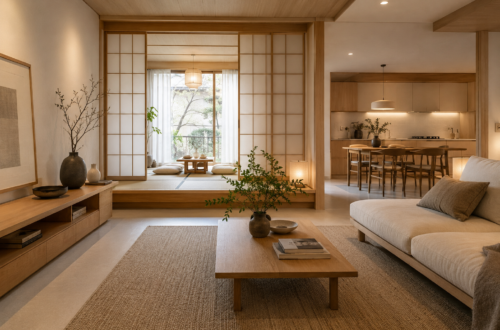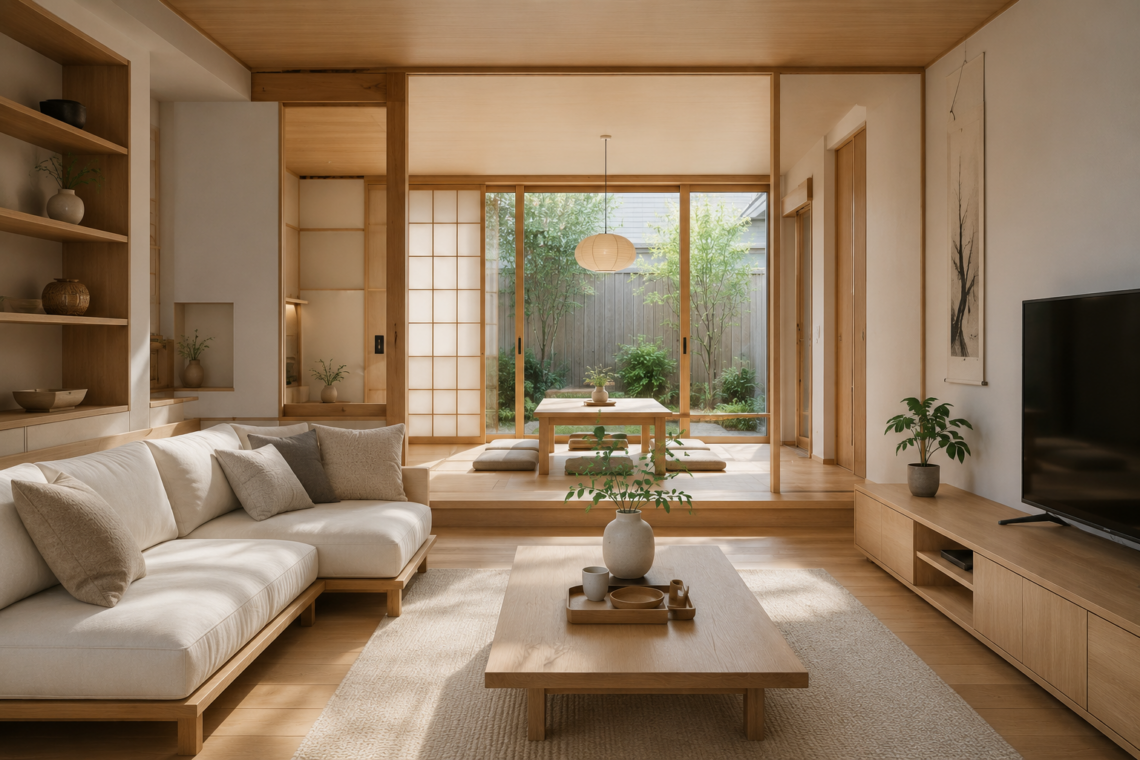
Why Japanese Homes Feel Bigger Than They Really Are
Walk into a typical Japanese home and you may notice something surprising. Even apartments measuring less than 50 square meters often feel brighter, calmer, and noticeably larger than much bigger homes elsewhere. This isn’t an illusion created by expensive architecture or luxury finishes—it’s the result of thoughtful design principles that have evolved over centuries.
The feeling of spaciousness found in Japanese homes doesn’t happen by accident. It’s the result of a broader approach to Japanese interior design, where room layouts, furniture placement, natural light, and smart storage all work together to make even compact homes feel calm and comfortable.
As land becomes increasingly valuable and cities grow denser, Japan has perfected the art of making compact spaces feel comfortable without sacrificing functionality. Every element is carefully considered, from furniture placement and lighting to storage solutions and the flow between rooms. Instead of trying to fit more into a home, Japanese design focuses on removing what isn’t necessary.
This philosophy has inspired architects and interior designers around the world. Whether you’re decorating a studio apartment, renovating a family home, or simply looking for ways to reduce clutter, understanding Why Japanese Homes Feel Bigger Than They Really Are can completely change the way you think about your living space.
In this guide, we’ll explore the design principles that make Japanese homes feel surprisingly spacious, practical, and peaceful—and how you can apply the same ideas in almost any home.

Minimalism Creates Visual Space
The most obvious reason Japanese Homes Feel Bigger is their commitment to minimalism. But Japanese minimalism is very different from simply owning fewer things. Instead, every object is expected to have a purpose, whether functional, practical, or deeply meaningful.
Removing visual clutter allows the eye to travel naturally across a room. Empty surfaces, clean architectural lines, and carefully selected furniture create a feeling of openness that large collections of decorative objects often interrupt.
This doesn’t mean homes appear empty or cold. Soft textiles, natural wood, ceramics, plants, and carefully chosen artwork introduce warmth while preserving visual balance. The result is a home that feels lived in without feeling overcrowded.
Many of these same ideas are explored in Japandi Living Room Ideas, where Scandinavian comfort and Japanese simplicity combine to create interiors that feel both cozy and spacious.

Hidden Storage Is Everywhere
One of the biggest differences between Japanese homes and many Western interiors is the way storage is integrated into architecture rather than added afterward.
Instead of displaying everyday belongings, Japanese homes rely on built-in cabinets, under-floor compartments, sliding closets, multifunctional furniture, floating shelves, and carefully planned storage systems.
This approach reduces visual noise while making rooms feel significantly larger.
Even small apartments often include surprisingly efficient storage beneath benches, inside staircases, below raised platforms, or behind sliding doors. Every unused corner becomes valuable without making the home appear crowded.
For homeowners searching for inspiration, comparing MUJI vs Nitori can provide excellent ideas for minimalist storage furniture designed specifically for compact living.

Natural Light Changes Everything
Light has an enormous influence on how large a room feels.
Japanese homes are carefully designed to maximize daylight through large windows, sliding glass doors, light-colored walls, reflective materials, and open sightlines between rooms.
Instead of blocking windows with heavy curtains, lightweight linen or sheer fabrics allow sunlight to spread naturally throughout the home.
Warm neutral colors—including white, beige, soft gray, natural oak, and light stone—further enhance brightness while helping smaller rooms appear more open.
Architects often treat sunlight as an essential design material rather than simply a source of illumination, allowing even compact interiors to feel airy throughout the day.

Open Layouts and Flexible Spaces
Another reason Why Japanese Homes Feel Bigger Than They Really Are is the flexibility of their layouts.
Rather than assigning every room a single permanent function, many Japanese homes allow spaces to adapt throughout the day. Sliding doors, movable partitions, and multifunctional furniture make it easy to open or divide areas as needed.
A dining area may become a workspace. A living room can transform into a guest room. Traditional tatami rooms often serve several purposes depending on the time of day.
This flexibility creates a stronger sense of openness because rooms aren’t permanently filled with specialized furniture that limits movement.

Low Furniture Makes Rooms Feel Taller
One of the simplest reasons Why Japanese Homes Feel Bigger Than They Really Are is the height of the furniture. Traditional Japanese interiors have long embraced floor-level living, and although modern homes have evolved, many still feature low-profile furniture that visually expands a room.
Low sofas, platform beds, coffee tables, TV consoles, and dining tables leave more visible wall space above them. This simple trick naturally draws the eye upward, making ceilings appear higher and rooms feel significantly more spacious.
This principle also improves the flow of natural light. Without tall furniture blocking windows or dividing sightlines, sunlight can travel freely across the room, creating a brighter and more open environment.
For homeowners decorating compact spaces, choosing furniture with slim legs or floating designs can create a similar effect without requiring major renovations.

The Japanese Entryway (Genkan) Keeps the Entire Home Organized
The feeling of spaciousness begins before you even enter the living room. A traditional Japanese Entryway (Genkan) creates a dedicated transition between the outside world and the home.
Shoes are removed immediately upon entering, helping prevent dirt from spreading throughout the house while encouraging organization from the very first step. Built-in shoe cabinets, umbrella stands, benches, and hidden storage ensure that everyday items never accumulate in the main living areas.
This simple routine has a surprisingly large impact on how clean and spacious a home feels. Instead of seeing shoes, bags, and jackets scattered throughout the house, everything remains neatly contained within the entrance.
Even if you don’t have a traditional Genkan, creating a small entry zone with organized storage can dramatically improve both functionality and visual calm.

Natural Materials Create Calm Instead of Clutter
Another reason Japanese Homes Feel Bigger is the restrained use of materials and color.
Rather than combining numerous finishes, Japanese interiors often rely on a limited palette of natural wood, stone, linen, cotton, bamboo, paper, and ceramic. These textures create visual interest without overwhelming the senses.
Color palettes remain equally simple. Warm whites, soft beige, light oak, sand, muted gray, olive green, and charcoal accents reflect natural light while creating a seamless transition between rooms.
Because the same materials repeat throughout the home, spaces feel connected rather than fragmented. This continuity makes even compact apartments appear larger and more harmonious.
Many homeowners searching for Best Japanese Home Decor Stores appreciate this approach because it emphasizes timeless quality instead of constantly changing trends.

Multifunctional Furniture Maximizes Every Square Meter
Japanese designers rarely waste valuable space. Every piece of furniture is expected to perform more than one function whenever possible.
Storage benches provide seating while hiding everyday items. Coffee tables often include concealed compartments. Foldable dining tables expand only when needed, while wall-mounted desks disappear after work is finished.
Many apartments also use stackable stools, nesting tables, modular shelving, and sliding partitions that adapt to changing daily routines.
This philosophy allows homeowners to enjoy comfortable living spaces without filling every corner with permanent furniture.

Less Clutter Means Less Visual Stress
Perhaps the greatest lesson Japanese homes teach is that spaciousness isn’t always about square meters—it’s about what fills them.
Japanese households often practice regular decluttering, keeping only belongings that are useful or meaningful. Instead of allowing storage areas to overflow, unnecessary items are donated, recycled, or discarded.
Kitchen organization follows the same philosophy. Carefully selected tools, hidden storage, and compact appliances keep countertops clear and functional. This is one reason many homeowners researching Best Japanese Kitchen Gadgets appreciate products that combine multiple functions while occupying very little space.
When surfaces remain uncluttered, rooms naturally feel cleaner, calmer, and much larger than their actual dimensions.
Frequently Asked Questions
Why do Japanese homes look bigger than they are?
They combine minimalist design, natural light, hidden storage, multifunctional furniture, low-profile furnishings, and uncluttered layouts that maximize every square meter.
What makes Japanese interior design unique?
Japanese Interior Design focuses on simplicity, balance, craftsmanship, natural materials, functionality, and creating peaceful living environments rather than filling spaces with unnecessary decoration.
Can I make a small apartment feel like a Japanese home?
Yes. Using neutral colors, maximizing daylight, reducing clutter, adding hidden storage, choosing multifunctional furniture, and keeping decorations intentional can dramatically improve the feeling of space.
Why is low furniture common in Japan?
Low furniture increases visible wall space, improves sightlines, allows more natural light to circulate, and makes ceilings appear higher.
Does Japanese design work outside Japan?
Absolutely. The principles of organization, simplicity, natural materials, and thoughtful design can be applied to homes of any size or location.
Conclusion
Understanding Why Japanese Homes Feel Bigger Than They Really Are reveals that spacious living isn’t determined solely by square footage. Instead, it results from thoughtful planning, intentional organization, and design choices that prioritize comfort over excess. From low-profile furniture and hidden storage to natural materials, flexible layouts, and abundant daylight, every detail works together to create homes that feel open, calm, and highly functional.
The beauty of Japanese design is that these ideas can be applied almost anywhere. Whether you live in a compact apartment or a larger family home, embracing minimalism, multifunctional furniture, smart storage, and carefully chosen décor can transform the way your space feels. By focusing on quality rather than quantity and allowing every room to breathe, you’ll create a home that feels brighter, more organized, and far more spacious than its actual size.


You May Also Like
Japandi Living Room Ideas: Modern Minimalist Design That Never Goes Out of Style

How to Create a Japanese Style Bathroom: Transform Your Small Space into a Zen Retreat