MUJI vs Nitori: Which Japanese Home Store Is Best for Furniture, Home Décor, and Everyday Living?
Japan has earned a global reputation for creating homes that are both beautiful and practical. Clean lines, clever storage solutions, natural materials, and thoughtful organization have become hallmarks of modern Japanese living. Whether you’re decorating a small apartment, furnishing a family home, or simply searching for better organization products, two retailers almost always dominate the conversation: MUJI and Nitori.
Shopping at MUJI or Nitori is about more than simply buying furniture. Both brands reflect the principles of Japanese interior design, where clean lines, natural materials, practical storage, and timeless simplicity come together to create homes that are both beautiful and comfortable.
Although these brands are often compared, they offer surprisingly different shopping experiences. One focuses on timeless minimalism, premium materials, and understated elegance. The other emphasizes affordability, variety, and practical solutions for everyday life. Both have loyal customers throughout Japan, and both have become increasingly popular with shoppers around the world who appreciate Japanese design.
If you’ve ever searched MUJI vs Nitori, you’re probably wondering which store offers better value, higher-quality furniture, more attractive home décor, or smarter storage solutions. The answer depends on your budget, decorating style, and what you’re shopping for.
In this guide, we’ll compare everything from furniture quality and organization products to bedding, kitchen essentials, bathroom accessories, pricing, and overall shopping experience. By the end, you’ll know exactly which Japanese retailer best fits your home and lifestyle.

MUJI vs Nitori: Understanding Each Brand’s Philosophy
Although both companies sell furniture, storage products, home accessories, bedding, kitchenware, and everyday household essentials, their design philosophy couldn’t be more different.
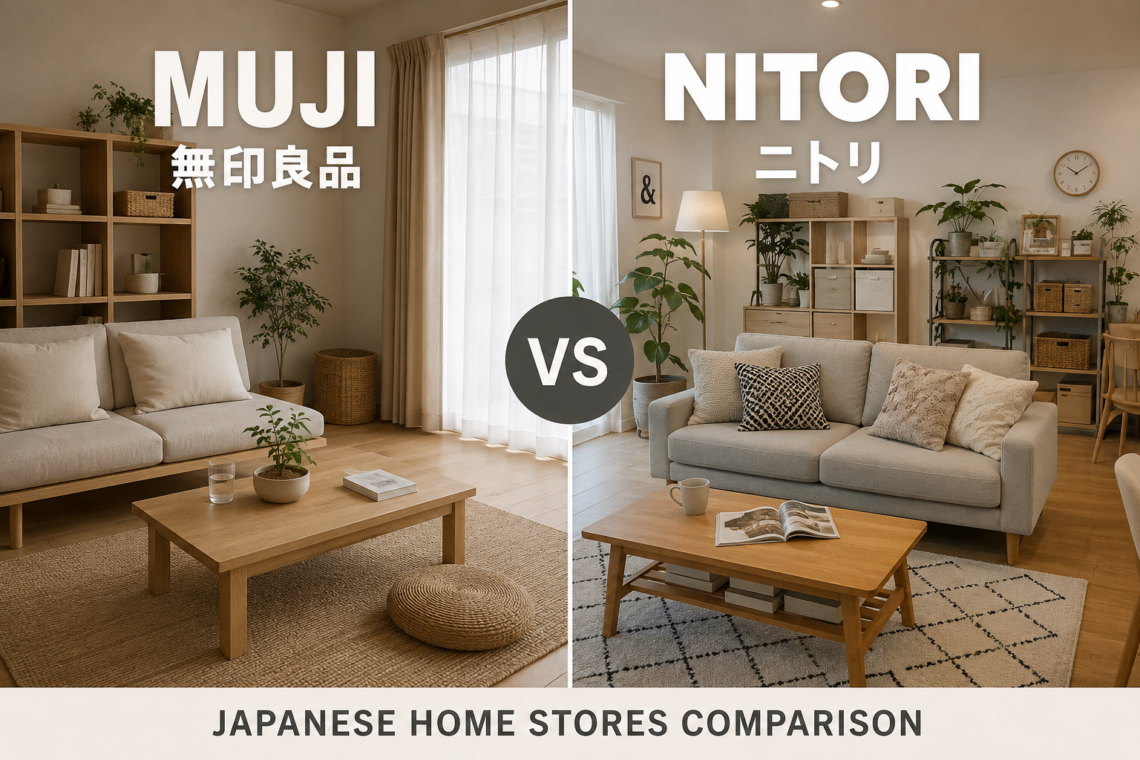
MUJI was built around simplicity. Rather than following seasonal trends or decorative excess, the brand believes products should be functional, durable, and quietly beautiful. Furniture is designed using clean lines, natural wood, soft textiles, and neutral colors that create calm living spaces. Every product feels intentionally understated, allowing the quality of the materials to speak for itself.
One reason MUJI continues attracting customers worldwide is its close connection to Japanese Interior Design. The brand embraces balance, simplicity, and thoughtful functionality instead of unnecessary decoration. Oak furniture, linen fabrics, ceramic tableware, woven baskets, and minimalist lighting all contribute to homes that feel peaceful, uncluttered, and timeless.
Nitori takes a different approach. Often described as Japan’s answer to IKEA, the company focuses on offering practical home products at accessible prices. Instead of one consistent design style, Nitori provides multiple collections ranging from Scandinavian-inspired interiors to contemporary, modern, traditional, and family-friendly designs.
For shoppers decorating an entire apartment on a budget, this variety can be a major advantage. Customers have far more freedom to mix colors, materials, and decorating styles while still finding affordable solutions for every room.

Furniture Quality: Premium Minimalism or Budget-Friendly Variety?
Furniture is often the largest investment people make when furnishing a home, making it one of the most important comparisons in the MUJI vs Nitori debate.
MUJI has built its reputation around quality rather than quantity. Many of its tables, shelving units, sofas, storage cabinets, and dining furniture use natural wood finishes and timeless designs that remain stylish for years. Instead of chasing furniture trends that quickly become outdated, MUJI focuses on pieces that continue fitting naturally into changing homes and lifestyles.
Nitori offers a significantly broader product range across multiple price categories. Students, first-time renters, and families often appreciate being able to furnish an entire apartment without exceeding their budget. While some entry-level products use more affordable materials, higher-end Nitori collections provide impressive quality for their price.
For shoppers seeking furniture that may last for decades, MUJI often feels like the stronger investment. Those prioritizing affordability, flexibility, and larger product selection generally find Nitori offers better overall value.

Home Décor and Everyday Living Products
Furniture is only part of what makes these retailers so popular. Both stores also offer thousands of products that make daily life more comfortable, organized, and visually appealing.
MUJI’s home décor collection reflects the same minimalist philosophy found throughout its furniture. Neutral bedding, soft cotton towels, elegant ceramics, glass storage jars, wooden kitchen accessories, aroma diffusers, linen curtains, and woven baskets create interiors that feel warm without becoming cluttered.
Nitori, meanwhile, appeals to shoppers who enjoy decorating with greater variety. Seasonal cushions, decorative lighting, colorful rugs, curtains, wall décor, mirrors, artificial plants, and decorative storage baskets allow homeowners to refresh rooms throughout the year without spending a fortune.
If your goal is creating a calm, minimalist environment, MUJI usually feels more cohesive. If you enjoy changing your décor regularly or experimenting with different styles, Nitori provides considerably more options.

Storage and Organization: Which Store Helps You Stay More Organized?
Organization is one of the biggest reasons people shop at both MUJI and Nitori. Japanese homes are often designed to maximize limited space, so storage products play an essential role in everyday living. Whether you’re organizing a studio apartment, a family home, or a home office, both retailers offer practical solutions—but with noticeably different approaches.
MUJI focuses on modular organization systems that are designed to work together seamlessly. Acrylic drawers, polypropylene storage boxes, woven baskets, wooden shelves, fabric organizers, and stackable containers all share the same clean aesthetic, making it easy to create a cohesive look throughout the home. Many customers appreciate that MUJI products remain available for years, allowing them to expand their storage systems over time without worrying about discontinued designs.
Nitori takes a broader approach by offering a much larger variety of storage products in different colors, materials, and price ranges. From closet organizers and under-bed storage boxes to kitchen shelving, drawer dividers, laundry baskets, and shoe cabinets, shoppers can usually find a solution regardless of their budget. Families with children often appreciate Nitori’s practical and affordable organization products, especially when furnishing an entire home.
If your priority is creating a clean, uniform, minimalist interior, MUJI often feels more refined. If flexibility, affordability, and variety matter most, Nitori offers significantly more choices.

Kitchen and Bathroom Essentials
Both retailers excel at everyday household products, making them popular destinations for people setting up new apartments or refreshing existing spaces. Kitchen utensils, cookware, food storage containers, dishes, mugs, towels, cleaning supplies, and organizers fill entire sections of both stores.
MUJI’s kitchen collection emphasizes simple shapes, neutral colors, and durable materials. Glass containers, stainless steel utensils, ceramic tableware, and wooden kitchen accessories create a timeless look that fits almost any home.
Nitori offers a wider selection of cookware, appliances, seasonal kitchen accessories, and budget-friendly household essentials. Shoppers often find more decorative options alongside practical everyday products.
Bathroom products are another area where both stores perform exceptionally well. Storage baskets, towel collections, soap dispensers, laundry organizers, mirrors, bath mats, and small accessories make it easy to upgrade your space without a complete renovation. If you’re looking for inspiration on How to Create a Japanese Style Bathroom, MUJI is often the preferred choice for its spa-like minimalist aesthetic, while Nitori provides affordable alternatives with a broader selection of storage solutions and decorative accessories.

Bedding and Home Comfort
Comfort is another category where both retailers have built loyal customer bases. MUJI is especially well known for its high-quality cotton bedding, linen duvet covers, soft towels, and minimalist bedroom accessories. The focus remains on natural materials, breathable fabrics, and calming neutral tones that create a relaxing atmosphere.
Nitori, meanwhile, offers an enormous range of bedding for different budgets and seasons. Customers can choose from cooling summer blankets, warm winter comforters, memory foam pillows, mattress toppers, and colorful duvet sets. Seasonal collections appear frequently, giving shoppers more decorative variety throughout the year.
If you value premium fabrics and understated elegance, MUJI stands out. If you’re looking for affordable comfort with plenty of choices, Nitori often delivers better overall value.

Pricing: Which Store Offers Better Value?
Price is one of the biggest differences in the MUJI vs Nitori comparison.
MUJI generally positions itself as a premium lifestyle brand. Higher-quality materials, consistent design, and durable construction often result in higher prices, but many customers see these purchases as long-term investments.
Nitori focuses on affordability without sacrificing functionality. Students, young professionals, and families furnishing their first home can often purchase furniture, storage products, kitchen essentials, and bedding for considerably less than comparable MUJI items.
For shoppers building a minimalist home piece by piece over many years, MUJI often justifies its premium pricing. For those decorating an entire apartment on a tighter budget, Nitori usually provides the better balance between cost and functionality.
Frequently Asked Questions
Is MUJI better than Nitori?
Neither store is objectively better. MUJI excels in minimalist design, premium materials, and timeless furniture, while Nitori offers greater variety and lower prices.
Is Nitori similar to IKEA?
Yes. Nitori is frequently compared to IKEA because both offer affordable furniture and home products, although Nitori often features more Japanese-inspired designs and products tailored to smaller living spaces.
Which store has better storage products?
MUJI is ideal for shoppers who want matching modular storage systems, while Nitori offers a larger variety of practical storage solutions at different price points.
Which store is better for furniture?
MUJI generally provides more premium furniture with timeless designs, whereas Nitori offers more affordable options suitable for renters, students, and families.
Can tourists shop at MUJI and Nitori?
Absolutely. Both stores are popular destinations for visitors looking to purchase Japanese home goods, organization products, and minimalist décor.
Conclusion
Choosing between MUJI vs Nitori ultimately depends on your priorities rather than finding a single winner. If you appreciate minimalist aesthetics, premium materials, and timeless furniture inspired by Japanese design principles, MUJI is an outstanding choice that rewards long-term investment. If affordability, variety, and practical everyday solutions are more important, Nitori offers exceptional value across nearly every home category.
Many people living in Japan actually shop at both stores, combining MUJI’s elegant essentials with Nitori’s budget-friendly furniture and household products. Together, they represent two of the best destinations for anyone interested in creating a functional, stylish, and comfortable home with the thoughtful simplicity that Japanese living is known for.


You May Also Like

Anime Desk Setup Ideas: How to Create the Perfect Anime Workspace
How Japanese Homes Use Plants: 12 Natural Ideas for a Calm Interior
