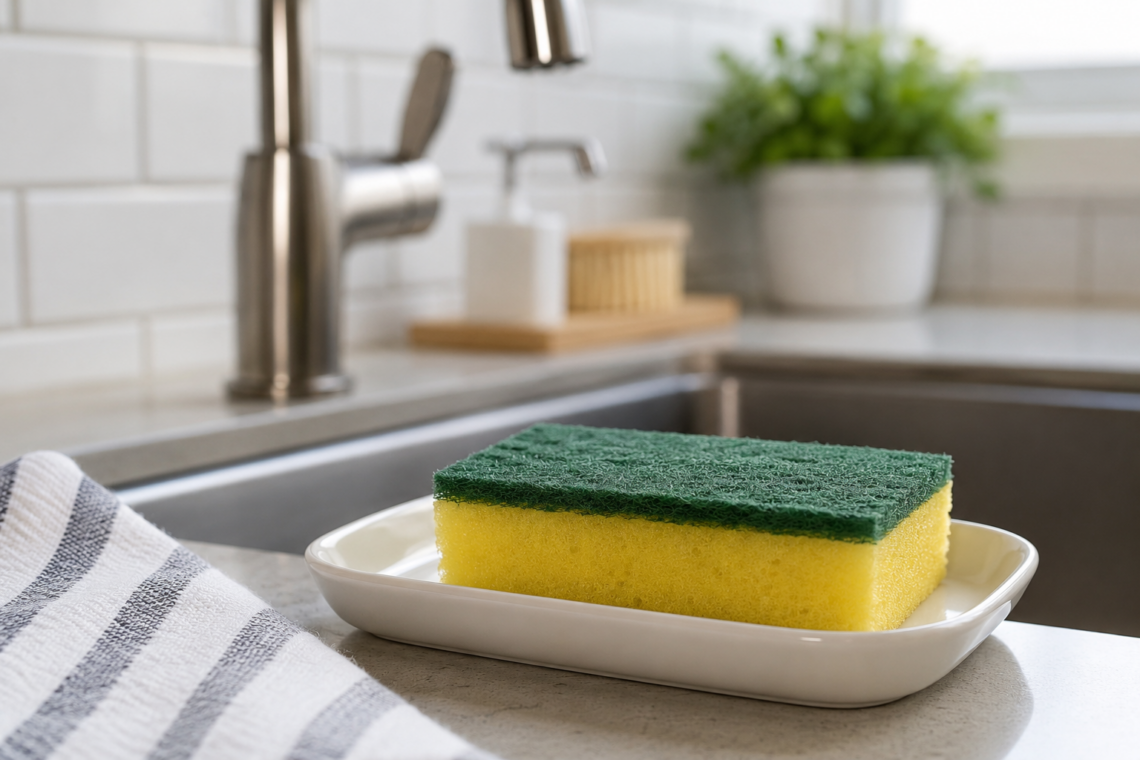
How Often Should You Replace Kitchen Sponges?
The humble kitchen sponge is one of the hardest-working items in any home. Every day, it helps clean dishes, wipe countertops, scrub sinks, and remove food residue from cookware. Because it seems so ordinary, many people rarely think about replacing it until it starts to smell unpleasant or fall apart.
If you’ve ever wondered how often should you replace kitchen sponges, you’re asking one of the most common kitchen hygiene questions online. Searches like how long do kitchen sponges last, when should you replace a kitchen sponge, how often to change dish sponge, and how to keep kitchen sponges clean continue to grow as more homeowners look for simple ways to keep their kitchens healthier.
The truth is that kitchen sponges have a surprisingly short lifespan. While they may still look usable after several weeks, millions of microscopic organisms can build up inside the sponge long before visible signs of wear appear. Food particles, grease, moisture, and warmth create an ideal environment where bacteria thrive, making an old sponge far less hygienic than many people realize.
Fortunately, keeping your kitchen sponge clean and knowing exactly when to replace a kitchen sponge is simple. With a few smart habits, you can reduce bacteria, eliminate unpleasant odors, and keep your kitchen cleaner every day.

How Often Should You Replace Kitchen Sponges?
The short answer is that most experts recommend replacing your kitchen sponge every one to two weeks if it’s used daily.
That recommendation surprises many homeowners because the sponge often still looks perfectly fine. Unlike a dish towel that can simply be washed, a sponge contains countless tiny pores that trap food particles, grease, soap residue, and moisture deep inside the material. Even after rinsing, these particles often remain hidden, creating the perfect environment for bacteria to multiply.
If your household cooks frequently, washes dishes by hand, or cleans kitchen counters several times a day, your sponge experiences constant exposure to organic matter. Over time, that buildup becomes difficult to remove completely, even with regular cleaning.
Many people searching how long should you keep a kitchen sponge expect the answer to be several months. In reality, replacing a sponge regularly is one of the easiest and least expensive ways to improve kitchen hygiene and reduce the spread of germs.
Why Do Kitchen Sponges Get Dirty So Quickly?
At first glance, it seems strange that a sponge used with soap and water could become dirty so quickly. After all, isn’t it constantly being cleaned while you wash dishes?
The reality is quite different.
Every time you wipe a plate covered in food residue or scrub a greasy frying pan, tiny particles become trapped inside the sponge. Although soap removes much of the visible dirt, microscopic food debris often remains lodged deep within the sponge’s porous structure.
Unlike a smooth dishcloth, a sponge contains hundreds of tiny air pockets that stay damp long after you’re finished cleaning. Combined with room temperature and leftover organic material, these conditions encourage bacteria to multiply rapidly.
This explains why homeowners often ask why does my kitchen sponge smell bad or why does my dish sponge smell even after washing it. The unpleasant odor isn’t caused by the sponge itself—it’s produced by bacteria breaking down trapped food particles.
Understanding why kitchen sponges smell helps explain why regular replacement is so important.
How Many Bacteria Can Live in a Kitchen Sponge?
One of the reasons kitchen sponge replacement has become such a popular search topic is growing awareness of household hygiene.
A damp sponge offers ideal conditions for bacteria because it provides everything microorganisms need: moisture, warmth, and a constant supply of food residue. Unlike dry kitchen tools, a sponge is rarely given enough time to dry completely between uses.
That doesn’t necessarily mean every old sponge is dangerous, but it does explain why experts recommend regular replacement instead of trying to keep the same sponge for months.
If your sponge has developed a sour smell, remains damp throughout the day, or feels slimy even after rinsing, these are clear signs that it’s time for a fresh one.
Many homeowners search when should I throw away my kitchen sponge only after these symptoms appear, but replacing it before reaching that point is a much better habit.

Signs It’s Time to Replace Your Kitchen Sponge
Your sponge doesn’t have to fall apart before it’s replaced.
One of the clearest signs is odor. If your sponge smells musty, sour, or unpleasant shortly after being rinsed, bacteria have likely built up inside the material.
Another warning sign is discoloration. Stains caused by coffee, tomato sauce, grease, or other foods may not affect cleaning performance directly, but they often indicate that residue has accumulated deep within the sponge.
You may also notice the sponge becoming softer, flatter, or beginning to crumble around the edges. These changes reduce cleaning effectiveness and make it harder to remove food residue from dishes.
If you’re asking how do I know when to replace a kitchen sponge, unpleasant smells, visible wear, and reduced cleaning performance are usually the clearest indicators.
Can You Sanitize a Kitchen Sponge Instead of Replacing It?
Many people hope they can simply disinfect an old sponge instead of throwing it away.
Cleaning methods such as soaking the sponge in hot water, using diluted vinegar, or washing it thoroughly with dish soap may help reduce odor temporarily. However, sanitation doesn’t restore the sponge to its original condition.
As the sponge ages, food particles become trapped deeper inside the material, making complete cleaning increasingly difficult.
For that reason, sanitation should be viewed as a way to keep a relatively new sponge fresher between replacements—not as a substitute for replacing it altogether.
If you’re wondering how to sanitize a kitchen sponge, remember that even a cleaned sponge eventually reaches the end of its useful life.
How to Make Kitchen Sponges Last Longer
Although regular kitchen sponge replacement is essential, a few simple habits can help extend its lifespan.
After each use, rinse the sponge thoroughly under hot running water to remove as much food residue as possible. Squeeze out excess moisture before placing it in a well-ventilated area where it can dry completely.
Avoid leaving the sponge sitting in standing water inside the sink, as constant moisture encourages bacterial growth.
If possible, rotate between two sponges so each one has enough time to dry completely before being used again.
These small habits won’t eliminate the need for replacement, but they can help keep your sponge fresher for longer while improving overall kitchen cleanliness.
Are There Better Alternatives to Traditional Kitchen Sponges?
As awareness of kitchen hygiene grows, many homeowners are exploring alternatives to traditional sponges.
Silicone scrubbers, microfiber cloths, natural cellulose sponges, and reusable dish brushes have all become increasingly popular.
Each option offers different advantages, but none eliminates the importance of regular cleaning and proper maintenance.
The best choice ultimately depends on your cooking habits, cleaning routine, and personal preferences.
Regardless of which product you use, keeping cleaning tools fresh remains one of the easiest ways to maintain a cleaner kitchen.
FAQ
How often should you replace kitchen sponges?
Most experts recommend replacing a frequently used kitchen sponge every one to two weeks.
How long do kitchen sponges last?
With daily use, most kitchen sponges remain effective for about two weeks before replacement is recommended.
Why does my kitchen sponge smell bad?
Food particles, grease, moisture, and bacteria trapped inside the sponge are the most common causes.
Can I sanitize my kitchen sponge?
Yes. Cleaning helps reduce odor and bacteria, but it doesn’t replace the need for regular sponge replacement.
What’s the best way to keep a kitchen sponge clean?
Rinse it thoroughly after each use, squeeze out excess water, allow it to dry completely, and replace it regularly.
Conclusion
Knowing how often should you replace kitchen sponges is one of the simplest ways to improve everyday kitchen hygiene. While many people continue using the same sponge for weeks or even months, replacing it every one to two weeks helps reduce bacteria, eliminate unpleasant odors, and keep dishes and countertops cleaner.
Combined with good cleaning habits, proper drying, and regular maintenance, replacing kitchen sponges on a consistent schedule can make a noticeable difference in the cleanliness of your home. A fresh sponge may seem like a small detail, but it’s one of the easiest steps you can take toward a healthier kitchen.


You May Also Like

Autumn Exterior Decorating Ideas 2025: Fall Porch Decor, Planters & Lighting

How Often Should You Change Air Purifier Filters?
