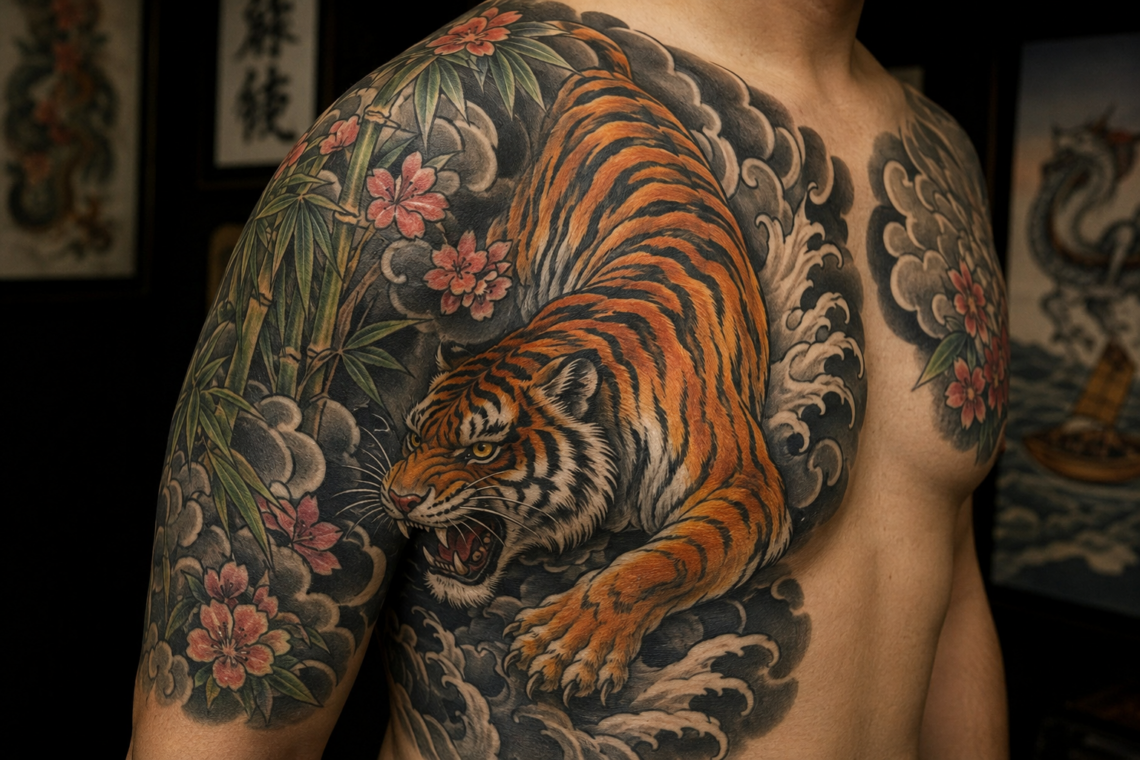
Japanese Tiger Tattoo Meaning: Symbolism, Strength, Protection, and Traditional Designs
The Japanese tiger tattoo meaning has fascinated tattoo enthusiasts, artists, and historians for centuries. Powerful, elegant, and instantly recognizable, the tiger is one of the most important symbols in traditional Japanese tattooing. Although tigers never lived in Japan, the animal became deeply rooted in Japanese culture through Chinese mythology, Buddhist teachings, and centuries of artistic exchange.
Today, Japanese tiger tattoos appear in everything from small minimalist designs to full sleeves and elaborate back pieces. Their popularity goes far beyond aesthetics. For many people, a tiger represents courage, protection, perseverance, and the ability to overcome difficult times.
Unlike Western symbolism, which often portrays tigers simply as dangerous predators, the Japanese tiger tattoo meaning is much more complex. In traditional irezumi, the tiger is considered a guardian that protects against bad luck, evil spirits, disease, and negative energy. Tattoo artists frequently combine tigers with dragons, snakes, peonies, bamboo, waves, and storm clouds to create dramatic compositions rich in symbolism.
Alongside dragons, koi fish, and mythical masks, the tiger remains one of the defining motifs found in traditional Japanese tattoo symbolism.
What Does a Japanese Tiger Tattoo Mean?
At its core, the Japanese tiger tattoo meaning revolves around strength and protection. For centuries, the tiger has symbolized bravery, leadership, discipline, and resilience.
Depending on the composition, a tiger tattoo can represent different qualities:
| Symbolism | Meaning |
|---|---|
| Strength | Physical and mental power |
| Courage | Facing fears and adversity |
| Protection | Warding off bad luck |
| Wisdom | Experience and maturity |
| Independence | Self-confidence |
| Perseverance | Overcoming obstacles |
| Leadership | Responsibility and authority |
Because of these associations, many people choose tiger tattoos during major life changes or after overcoming personal struggles. The image serves as a reminder to remain strong even when circumstances become difficult.
The enduring popularity of the Japanese tiger tattoo meaning comes from its ability to combine beauty, spirituality, and personal symbolism in a single design.
Why Is the Tiger Important in Japanese Culture?
One of the most surprising facts about the Japanese tiger tattoo meaning is that tigers never roamed Japan. Their image arrived centuries ago through Chinese paintings, trade routes, and Buddhist texts. Japanese artists quickly became fascinated by the animal’s power and grace.
During the Edo period, tiger imagery spread through woodblock prints, folding screens, samurai armor, and eventually traditional tattooing. Warriors admired the tiger for its fearlessness and discipline, qualities that still define tiger symbolism today.
In East Asian mythology, the tiger is one of the Four Guardian Beasts and is associated with:
- Autumn.
- The west.
- Wind.
- Military strength.
- Spiritual protection.
- Courage.
The tiger’s role in Japanese body art exists alongside dragons, demons, and legendary fish, complementing themes of determination and transformation associated with Japanese koi symbolism and folklore.


Japanese Tiger and Dragon Tattoo Meaning
Few combinations are more iconic than the tiger and dragon. In traditional Japanese art, these creatures represent two opposing yet complementary forces.
The Japanese tiger tattoo meaning changes when paired with a dragon. While the tiger symbolizes physical strength and earthly power, the dragon represents wisdom, spirituality, and heavenly energy.
Together, they symbolize:
- Heaven and earth.
- Wisdom and strength.
- Action and patience.
- Spirit and body.
- Balance and harmony.
Large sleeves and back pieces often feature this pairing because the symbolism echoes themes explored through Japanese dragon symbolism and traditional body art.
Tiger and Bamboo Tattoo Meaning
Bamboo frequently appears alongside tigers in Japanese tattoos. Because bamboo bends without breaking, it symbolizes resilience and adaptability.
Together, the tiger and bamboo represent endurance, longevity, and inner strength.
Tiger and Peony Tattoo Meaning
The contrast between fierce tigers and delicate peonies has fascinated Japanese artists for centuries.
A tiger and peony tattoo may symbolize:
- Strength and beauty.
- Courage and elegance.
- Power and compassion.
- Balance between opposing qualities.
Tiger and Snake Tattoo Meaning
Snakes are another common element in Japanese tattoo compositions. Combined with a tiger, they can symbolize wisdom, protection, rebirth, and transformation.
Complex compositions often weave several traditional motifs together, creating the same visual storytelling found in traditional Japanese body tattoos and cultural symbolism.
Japanese Tiger Tattoo Colors and Their Meanings
Color can dramatically change the symbolism behind a tiger tattoo.
| Tiger Color | Symbolism |
|---|---|
| Orange tiger | Strength and confidence |
| White tiger | Purity and spiritual power |
| Black tiger | Wisdom and resilience |
| Blue tiger | Protection and tranquility |
| Gold tiger | Prosperity and success |
White Tiger Tattoo Meaning
The white tiger is one of the most important guardian figures in East Asian mythology. It symbolizes purity, honor, spiritual protection, and divine strength.
Black Tiger Tattoo Meaning
A black tiger often represents experience, resilience, and the wisdom gained through hardship.
Gold Tiger Tattoo Meaning
Gold and orange tigers are associated with leadership, ambition, prosperity, and success.
Because color adds another layer of symbolism, understanding the complete Japanese tiger tattoo meaning requires looking beyond the animal itself.

Popular Japanese Tiger Tattoo Designs
The versatility of the tiger has made it one of the most popular motifs in traditional Japanese tattooing. While the core Japanese tiger tattoo meaning remains centered around strength, protection, and courage, the symbolism can shift depending on the placement and surrounding elements.
From small tattoos to full-body compositions, each design tells a different story.
Japanese Tiger Sleeve Tattoo
A Japanese tiger sleeve tattoo is one of the most popular options because the shape of the arm allows artists to create dynamic scenes with waves, wind bars, maple leaves, clouds, and flowers.
Traditional sleeves often symbolize:
- Endurance.
- Discipline.
- Personal growth.
- The ability to overcome obstacles.
Many artists combine tigers with dragons, masks, and flowers, drawing inspiration from traditional Japanese tattoo designs and their meanings.
Full Back Tiger Tattoo
Large back pieces remain one of the most respected forms of irezumi. A tiger stretching across the back symbolizes power, protection, and determination.
Back tattoos give artists enough space to incorporate:
- Bamboo forests.
- Storm clouds.
- Cherry blossoms.
- Peonies.
- Snakes.
- Dragons.
People planning larger compositions often browse collections of back tattoo ideas for women and men before choosing a traditional Japanese design.
Chest and Shoulder Tiger Tattoos
Chest tattoos are often associated with courage and deeply held personal values, while shoulder tattoos symbolize leadership and responsibility.
Small and Minimalist Tiger Tattoos
Modern trends have expanded the popularity of:
- Small tiger tattoos.
- Fine-line tiger tattoos.
- Black and grey tiger tattoos.
- Geometric tiger tattoos.
- Minimalist tiger designs.
Although simpler in appearance, these tattoos still preserve the essence of the Japanese tiger tattoo meaning.

Are Japanese Tiger Tattoos Connected to the Yakuza?
Because tiger motifs frequently appear in traditional full-body tattoos, many people assume they are directly connected to organized crime. In reality, the symbolism behind tiger tattoos existed long before modern criminal organizations appeared.
Historically, some yakuza members adopted tiger imagery as part of elaborate body suits. However, the tiger itself is not a criminal symbol. Its meaning comes from mythology, Buddhism, and Japanese art.
The public perception of these tattoos developed over time alongside the history of traditional Japanese body tattoos and their symbolism, which includes dragons, demons, samurai, and mythical creatures.
Today, tiger tattoos are worn by people all over the world who appreciate Japanese culture and traditional craftsmanship.
Japanese Tiger Tattoo Meaning for Men and Women
Although tiger tattoos were historically associated with warriors and masculinity, they have become increasingly popular among women.
For men, the Japanese tiger tattoo meaning often emphasizes:
- Strength.
- Leadership.
- Honor.
- Protection.
- Courage.
For women, tiger tattoos frequently symbolize:
- Independence.
- Confidence.
- Emotional resilience.
- Transformation.
- Determination.
Modern tattoo artists reinterpret traditional tiger imagery in countless ways, from bold sleeves to delicate fine-line designs.
Best Placements for a Japanese Tiger Tattoo
| Placement | Common Meaning |
|---|---|
| Back | Protection and power |
| Sleeve | Perseverance |
| Chest | Courage |
| Shoulder | Leadership |
| Leg | Ambition |
| Thigh | Stability |
Large placements also allow artists to combine the tiger with koi fish, dragons, masks, and flowers. These compositions often explore themes of transformation and perseverance associated with Japanese koi symbolism and ancient folklore.
How Much Does a Japanese Tiger Tattoo Cost?
The cost of a tiger tattoo depends on several factors:
| Factor | Effect on Price |
|---|---|
| Tattoo size | Larger pieces require more sessions |
| Artist experience | Master artists charge more |
| Color complexity | Multi-color tattoos cost more |
| Placement | Difficult areas increase the price |
| Level of detail | Traditional designs take longer |
A small tiger tattoo may cost a few hundred dollars, while a traditional sleeve or full-back piece can take dozens of hours and several thousand dollars to complete.

FAQ
What does a Japanese tiger tattoo symbolize?
The Japanese tiger tattoo meaning is most commonly associated with strength, courage, wisdom, protection, and perseverance.
Is a tiger tattoo considered lucky in Japan?
Yes. Tigers have traditionally been viewed as protectors against evil spirits, illness, and bad fortune.
What does a white tiger tattoo mean?
A white tiger tattoo typically symbolizes purity, spiritual power, divine protection, and honor.
Why are dragons and tigers often tattooed together?
The dragon and tiger represent balance between opposing forces such as wisdom and strength, heaven and earth, and spirit and body.
Are tiger tattoos only for men?
No. Tiger tattoos are popular among both men and women and can be adapted to many different styles and placements.
Are Japanese tiger tattoos associated with the yakuza?
Although tiger imagery appeared in some traditional body suits, its origins lie in mythology and Japanese art rather than organized crime.
Conclusion
The enduring popularity of the Japanese tiger tattoo meaning comes from its unique blend of strength, courage, wisdom, and protection. For centuries, the tiger has represented the ability to confront challenges, overcome adversity, and remain resilient during difficult times.
Whether featured in a traditional sleeve, a dramatic back piece, or a minimalist design, the tiger continues to embody some of the most admired qualities in Japanese culture. Alongside dragons, koi fish, and legendary masks, it remains one of the defining symbols in the world of Japanese tattooing and one of the most powerful motifs in traditional irezumi.


You May Also Like

The Smart Choice: Advantages of Living in Off Campus Apartments

10 Countries With the Best Cuisines in the World: A Food Lover’s Guide
