Yakuza Tattoo Meaning: The History, Symbolism & Art of Traditional Japanese Irezumi
Few tattoo styles are as instantly recognizable as traditional Japanese tattoos. Rich in symbolism, history, and artistic craftsmanship, these remarkable works have fascinated people around the world for centuries. Large dragons flowing across a back, vibrant koi fish swimming through crashing waves, fierce tigers emerging from clouds, and legendary samurai warriors are far more than decorative images—they are visual stories inspired by Japanese mythology, religion, folklore, and history.
When many people hear the phrase Yakuza Tattoo, they immediately picture elaborate full-body tattoos associated with Japan’s organized crime groups. While this connection certainly exists, it represents only one chapter in a much older and far more fascinating story. The traditional art of Irezumi began centuries before the modern yakuza emerged and continues today as one of the world’s most respected tattoo traditions.
Modern collectors choose Japanese Tattoo Designs because they admire the artistry, symbolism, and cultural heritage behind every piece. Understanding the true Yakuza Tattoo Meaning means looking beyond popular movies and stereotypes to appreciate an art form that has evolved for hundreds of years.
In this complete guide, you’ll explore the origins of Traditional Japanese Tattoo art, learn the meanings behind famous Japanese Tattoo Symbols, discover why dragons and koi fish remain timeless favorites, and understand how Irezumi became one of the most influential tattoo styles in the world.


The Ancient History of Irezumi and Japanese Tattoo Culture
Long before tattoos became associated with organized crime, body art already existed throughout Japan. Historical records suggest that tattoos were used for spiritual rituals, tribal identification, and cultural traditions dating back thousands of years. Over time, however, their meaning changed dramatically depending on the historical period.
During certain eras, tattoos were unfortunately used as punishment. Criminals were marked with permanent symbols that publicly identified them, making it difficult to escape their past. Although this practice eventually disappeared, it influenced how tattoos were viewed for centuries afterward.
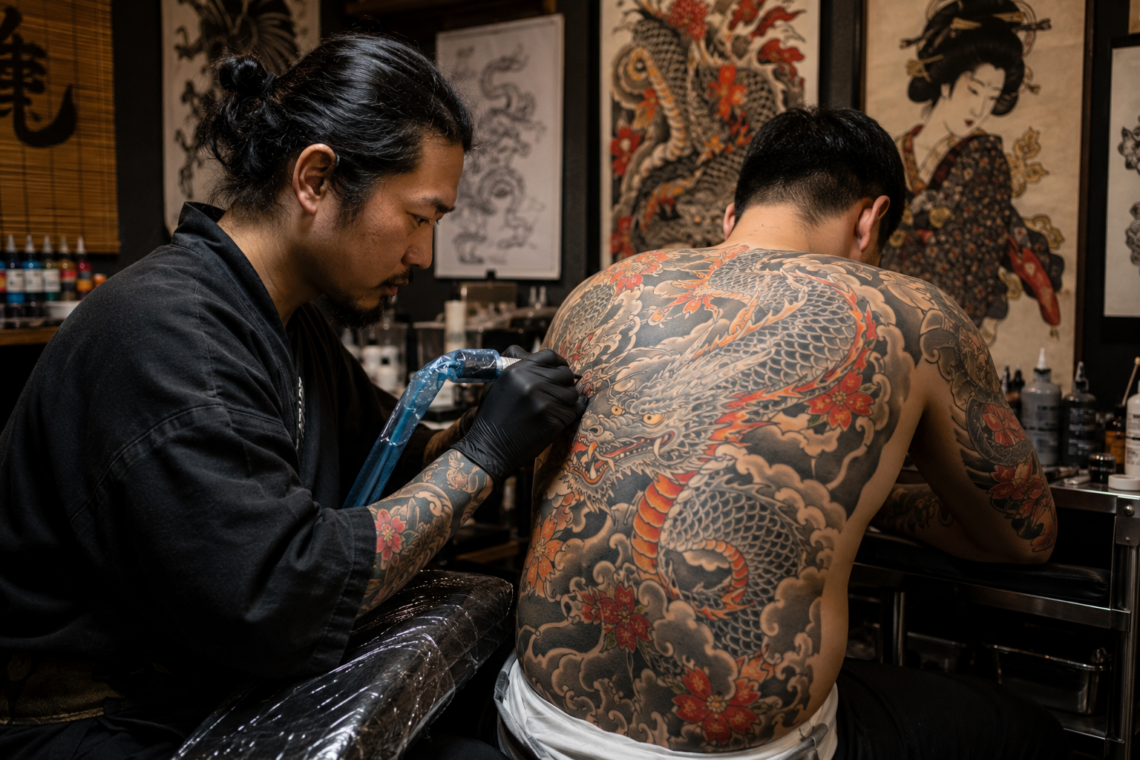
The artistic tradition we now recognize as Irezumi developed during the Edo period between the 17th and 19th centuries. Inspired by colorful woodblock prints known as ukiyo-e, tattoo artists began creating large-scale masterpieces covering the arms, back, chest, and legs. These weren’t random images. Every tattoo was carefully planned as one complete composition where dragons, waves, flowers, clouds, and legendary heroes blended together into a single flowing work of art.
Unlike many modern tattoos that focus on individual images, Traditional Japanese Tattoo designs are intended to work together across the body. Background elements connect every subject, creating movement and balance that can only be appreciated when viewed as an entire composition.
This artistic philosophy remains one of the defining characteristics of authentic Japanese Tattoo culture today.


How Yakuza Tattoos Became Famous
The connection between the Yakuza Tattoo and organized crime developed gradually rather than appearing overnight. During the Edo period, many laborers, firefighters, craftsmen, and merchants proudly wore elaborate tattoos that represented bravery, endurance, and personal identity. These professions often involved dangerous working conditions, and tattoos became symbols of courage and resilience.
As organized crime groups expanded during the late nineteenth and twentieth centuries, many members also embraced Irezumi. Full-body tattoos required incredible patience because traditional hand tattooing was extremely painful and could take years to complete. Enduring this lengthy process became a demonstration of loyalty, commitment, and personal toughness.
This visibility eventually caused many people outside Japan to assume that every large Japanese Sleeve Tattoo or back piece belonged to a yakuza member. In reality, countless tattoo collectors have chosen traditional Japanese artwork purely because they admire its beauty and symbolism.
Today, tattoo culture has changed significantly. Around the world, artists specialize in authentic Japanese Tattoo Designs, creating breathtaking pieces that celebrate centuries of artistic tradition rather than any criminal association. While the historical connection remains important to understand, it represents only one part of a much larger cultural story.


The Symbolism Behind Japanese Dragon Tattoos
Perhaps no image represents traditional tattooing better than the dragon. Unlike European mythology, where dragons often symbolize destruction or chaos, the Japanese Dragon Tattoo carries a very different meaning. Japanese dragons are generally viewed as wise, protective, and benevolent creatures connected with rivers, rain, prosperity, and spiritual balance.
A dragon represents strength guided by wisdom rather than aggression. It symbolizes personal growth, protection from misfortune, determination, and the ability to overcome life’s challenges. Because of their flowing bodies, dragons naturally wrap around the shoulders, back, chest, or arms, making them one of the most impressive choices for large-scale Japanese Tattoo compositions.
Traditional dragons rarely appear alone. They are commonly surrounded by swirling clouds, crashing waves, maple leaves, peonies, cherry blossoms, or lightning. These background elements aren’t simply decorative—they create movement while reinforcing the overall story told by the tattoo.
For this reason, the Japanese Dragon Tattoo remains one of the most requested designs in tattoo studios around the world and continues to inspire both experienced collectors and newcomers interested in Traditional Japanese Tattoo art.


The Meaning of Koi Fish Tattoos in Japanese Culture
Among all Japanese Tattoo Symbols, the koi fish is one of the most meaningful and recognizable. Inspired by an ancient Chinese legend that later became deeply rooted in Japanese culture, the koi represents determination, courage, resilience, and the ability to overcome life’s greatest obstacles.
According to the legend, a powerful koi swam upstream against strong currents before successfully climbing a waterfall known as the Dragon Gate. As a reward for its perseverance, the koi transformed into a magnificent dragon. This story has inspired generations of artists and tattoo collectors because it symbolizes personal growth achieved through patience and hard work.
A Koi Fish Tattoo often represents someone who has overcome significant life challenges or is determined to achieve ambitious goals despite setbacks. Depending on its direction, the symbolism may vary slightly. A koi swimming upstream is commonly associated with struggle, ambition, and persistence, while a koi swimming downstream may represent accomplishment, peace, and enjoying the rewards of previous efforts.
Traditional Japanese Tattoo Designs frequently combine koi fish with lotus flowers, maple leaves, crashing waves, or cherry blossoms. Together, these elements create dynamic compositions that celebrate both the beauty and unpredictability of life while remaining faithful to classic Irezumi traditions.
Today, koi fish remain one of the most requested subjects for both full-body tattoos and Japanese Sleeve Tattoo projects because their symbolism is universally inspiring and timeless.


Samurai Tattoo Meaning: Honor, Discipline, and Loyalty
The Samurai Tattoo represents far more than an ancient warrior. Samurai remain powerful symbols of honor, integrity, discipline, courage, and unwavering loyalty—qualities that continue to inspire people throughout the world.
For centuries, samurai followed the principles of Bushidō, often translated as “the way of the warrior.” This ethical code emphasized honesty, self-control, respect, responsibility, and dedication even during difficult circumstances. Because of these values, many people choose samurai tattoos not to celebrate warfare but to remind themselves to live with strength and purpose.
In traditional Japanese Tattoo art, samurai are often portrayed wearing beautifully detailed armor while carrying a katana or standing beneath falling cherry blossoms. These surrounding elements add emotional depth to the composition. Cherry blossoms symbolize the fleeting nature of life, reminding us that courage includes accepting life’s temporary beauty.
Modern Japanese Tattoo Ideas frequently blend samurai with dragons, koi fish, or tigers to create larger storytelling compositions that flow naturally across the back, chest, or sleeves while preserving the balance characteristic of authentic Irezumi.


Tiger, Phoenix, and Hannya Mask Tattoo Symbolism
Although dragons and koi often receive the most attention, several other symbols play an equally important role in Traditional Japanese Tattoo art.
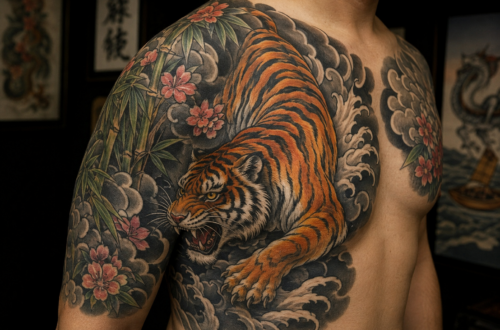
The tiger symbolizes courage, confidence, protection, and the ability to overcome fear. Unlike dragons, which rule the sky and water, tigers represent mastery over the earth and natural strength. Their powerful appearance makes them a popular choice for sleeves and shoulder pieces.
The phoenix represents rebirth, transformation, hope, and renewal. Many people choose this mythical bird after overcoming major life challenges, seeing it as a reminder that every ending can become a new beginning.
The Hannya mask is one of the most misunderstood Japanese Tattoo Symbols. Originating in traditional Noh theater, it depicts a woman transformed by overwhelming jealousy, anger, and heartbreak. Rather than celebrating these emotions, the mask serves as a reminder of how powerful feelings can shape human behavior. Modern collectors often choose Hannya tattoos to symbolize emotional growth, resilience, or learning from difficult experiences.
Together, these iconic images demonstrate why Japanese Tattoo Designs remain among the most meaningful forms of tattoo art anywhere in the world.


Choosing an Authentic Japanese Tattoo Artist
If you’re considering your first Japanese Tattoo, choosing the right artist is one of the most important decisions you’ll make. Traditional Irezumi is very different from many modern tattoo styles because it focuses on complete compositions rather than isolated images.
Experienced artists carefully design tattoos to follow the natural movement of the body. Instead of simply placing individual subjects, they connect dragons, koi, flowers, waves, clouds, and seasonal elements into one flowing masterpiece. This planning creates harmony that becomes more impressive as the tattoo expands over time.
Before choosing an artist, review complete healed portfolios rather than fresh tattoos alone. Look for clean line work, smooth color transitions, balanced compositions, and a strong understanding of traditional symbolism. An experienced artist should also be able to explain the cultural meaning behind different subjects while helping you choose imagery that reflects your personal story.
Large-scale Japanese Back Tattoo projects and sleeves often require multiple sessions spread over many months. Patience is part of the tradition, and the final result is usually worth the commitment.


Frequently Asked Questions
What is the true Yakuza Tattoo Meaning?
Historically, elaborate tattoos became associated with members of Japan’s organized crime groups, but the art of Irezumi existed long before the yakuza. Today, these tattoos are widely appreciated for their artistic and cultural significance.
What does a Japanese Dragon Tattoo symbolize?
Japanese dragons typically represent wisdom, protection, prosperity, strength, and balance rather than destruction.
Why is the Koi Fish Tattoo so popular?
The koi symbolizes perseverance, determination, personal growth, and overcoming adversity, making it one of the most meaningful traditional tattoo designs.
What makes Traditional Japanese Tattoo art unique?
Unlike many tattoo styles, traditional Japanese compositions tell complete visual stories using interconnected symbols, seasonal imagery, flowing backgrounds, and balanced body placement.
Can anyone get a Japanese tattoo?
Yes. Many people around the world choose Japanese Tattoo Designs because they admire the history, symbolism, and craftsmanship. Learning about the cultural background helps ensure the artwork is appreciated respectfully.
Conclusion
The true Yakuza Tattoo Meaning extends far beyond its historical association with organized crime. At its heart lies the remarkable tradition of Irezumi, an artistic practice that has evolved over centuries through mythology, folklore, religion, and master craftsmanship. Every dragon, koi fish, samurai, tiger, phoenix, and Hannya mask carries a story that reflects courage, perseverance, wisdom, loyalty, transformation, or personal growth.
Whether you’re exploring Japanese Tattoo Ideas, planning a Japanese Sleeve Tattoo, or simply interested in the rich symbolism behind Traditional Japanese Tattoo art, understanding the history makes every design even more meaningful. These timeless masterpieces continue to inspire tattoo enthusiasts around the world, proving that great art transcends generations while preserving one of Japan’s most fascinating cultural traditions.


You May Also Like

Kokeshi dolls: Traditional Japanese wooden dolls with a touch of culture

7 Simple Ways Japanese Families Abroad Keep Their Culture Alive | Japanese Diaspora Traditions and Family Life