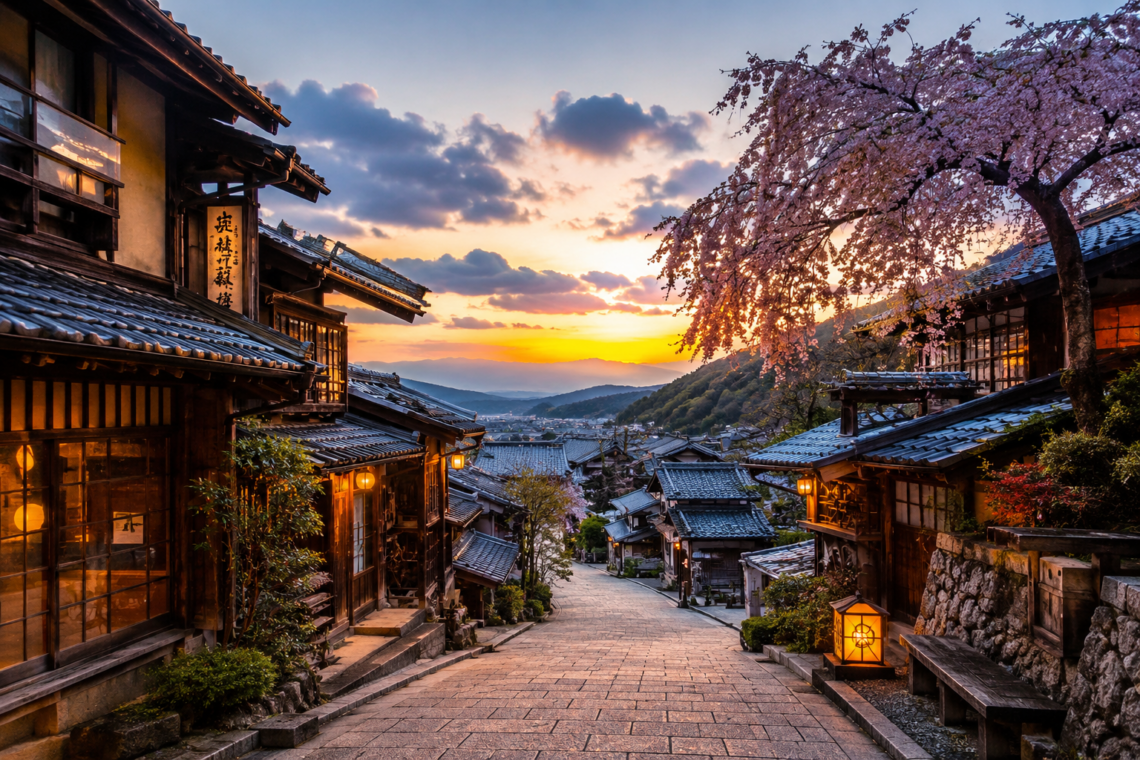
7 Non-Touristy Places to Visit in Japan Beyond Tokyo and Kyoto
Japan is famous for Tokyo’s bright city streets, Kyoto’s temples, and Osaka’s food scene. But there is another side of the country that is much quieter.
If you want to experience non-touristy places in Japan, you do not necessarily have to travel somewhere completely remote. Even a short day trip from Tokyo can take you to quieter coastal towns, historic neighborhoods, and scenic areas beyond the city’s busiest districts. For longer trips, smaller cities, mountain communities, and traditional towns offer an even slower pace.
These places offer a slower pace, local restaurants, historic streets, traditional architecture, hot springs, and beautiful scenery without the same intensity you may experience in Japan’s biggest tourist destinations.
Here are seven places worth considering if you want to see a different side of Japan.

1. Kanazawa – Traditional Japan Without Kyoto’s Crowds
Kanazawa is one of the best places to experience traditional Japanese culture without spending your entire trip surrounded by crowds.
Located on the Sea of Japan coast, the city is known for beautifully preserved historic neighborhoods, traditional tea houses, Japanese gardens, and excellent seafood.
The city has plenty to keep you busy without feeling overwhelming.
Don’t miss:
- Kenroku-en Garden
- Higashi Chaya District
- Omicho Market
- Nagamachi Samurai District
- local gold leaf products and sweets
Kanazawa is particularly beautiful during spring and autumn, when the gardens and historic streets take on a completely different atmosphere.
It is also a good choice if you want a destination where sightseeing, food, and traditional Japanese culture can all be enjoyed without constantly rushing between attractions.
2. Kinosaki Onsen – A Classic Japanese Hot Spring Town
If you want to experience the traditional side of Japanese bathing culture, Kinosaki Onsen deserves a place on your itinerary.
This small hot spring town is known for its atmospheric streets, traditional ryokan, and public bathhouses. Guests staying overnight can often explore the town wearing a yukata and traditional wooden geta sandals.
The experience is less about checking off attractions and more about slowing down.
Spend the day walking along the canal, visiting the different bathhouses, enjoying local food, and relaxing at your ryokan.
Kinosaki is especially appealing after several busy days in Tokyo or Osaka. Sometimes the best part of a Japan trip is simply doing less.
3. Naoshima – A Peaceful Island for Art and Architecture
Naoshima is very different from the traditional image of Japan.
This small island in the Seto Inland Sea is famous for contemporary art, unusual architecture, museums, and peaceful coastal scenery.
The island is home to attractions including:
- Chichu Art Museum
- Benesse Art Site Naoshima
- Yayoi Kusama’s famous pumpkin sculpture
- modern architectural spaces
- quiet seaside cycling routes
Naoshima works particularly well for travelers who enjoy combining sightseeing with art, design, and beautiful scenery.
The pace is slow, and that is exactly the point.
Instead of squeezing another five temples into your afternoon, you can spend the day exploring an art museum, cycling beside the sea, and stopping for coffee when you feel like it.
4. Takayama – A Mountain Town With Old Japan Charm
Takayama is an excellent choice if you want to see a more traditional side of Japan while still having plenty of things to do.
Located in the Japanese Alps, the city is known for its beautifully preserved wooden buildings, morning markets, local breweries, and Hida beef.
The historic Sanmachi district is particularly atmospheric, with narrow streets lined with traditional merchant houses.
While you’re there, try:
- Hida beef
- local sake
- Hida-style dishes
- fresh produce from the morning markets
Takayama also makes a convenient base for exploring the surrounding mountains and countryside.
Many travelers combine it with Shirakawa-go, famous for its traditional gassho-zukuri farmhouses.
If Tokyo feels like another planet and Kyoto feels too busy, Takayama offers a very different rhythm.
5. Kamakura – A Relaxed Coastal Escape From Tokyo
Kamakura is not exactly a secret, but it is still an excellent way to experience a quieter side of Japan without traveling far from Tokyo.
The former political capital is known for temples, shrines, traditional streets, beaches, and the famous Great Buddha.
You can easily spend a day walking between temples before heading toward the coast for a completely different atmosphere.
Kamakura is ideal for travelers who want:
- temples and historic sites
- ocean views
- small cafes
- local shopping streets
- an easy escape from central Tokyo
It also works perfectly as one of the classic Day Trips from Tokyo, especially if you don’t want to spend several hours traveling to reach a quieter destination.
The best approach is to avoid rushing. Pick a few places, walk between them, stop for lunch, and leave enough time to enjoy the town itself.
6. Onomichi – A Quiet Coastal Town in Japan
Onomichi is the kind of place that rewards travelers who don’t mind slowing down.
Located in Hiroshima Prefecture, this small coastal town is known for narrow hillside streets, old temples, traditional houses, and views across the Seto Inland Sea.
The town is easy to explore on foot, although you’ll have to deal with plenty of stairs. That’s part of the charm.
Spend a few hours wandering through the old streets, visiting small temples, stopping at a local café, and enjoying the views over the water.
Onomichi is also associated with the Shimanami Kaido, one of Japan’s most scenic cycling routes, which connects the area with islands across the Seto Inland Sea.
It’s a particularly good choice for travelers who want:
- quiet coastal scenery
- traditional Japanese streets
- local cafés
- temples and small shrines
- slow travel
- an alternative to larger tourist cities
Onomichi isn’t about one spectacular attraction. Its appeal is the atmosphere — and that’s exactly what makes it such a good addition to a list of non-touristy places in Japan.
7. Kurashiki – A Beautiful Historic Canal Town
Kurashiki is one of those places that can make you wonder why it isn’t already on everyone’s Japan itinerary.
The city’s historic Bikan Historical Quarter is famous for white-walled buildings, traditional warehouses, willow trees, and a peaceful canal running through the center.
The area is compact enough to explore on foot, with small museums, cafes, shops, and traditional buildings along the narrow streets.
Kurashiki is especially enjoyable for travelers interested in:
- traditional Japanese architecture
- photography
- historic neighborhoods
- quieter sightseeing
- local crafts and shopping
It doesn’t require an exhausting itinerary. Walk around the old quarter, visit a museum, stop for lunch, and enjoy the atmosphere.
That’s part of the appeal.
Why Visit Japan Beyond Tokyo and Kyoto?
Tokyo and Kyoto are absolutely worth visiting. But they are only a small part of what makes Japan interesting.
Once you travel beyond the country’s biggest tourist destinations, the experience often becomes slower and more personal.
You may find yourself eating in a tiny local restaurant, taking a train through the mountains, staying at a family-run ryokan, or wandering through a shopping street where almost everything is written in Japanese.
These moments can be less spectacular on Instagram, but they often become the memories you remember longest.
And you don’t necessarily need to travel to the middle of nowhere to find them. Kamakura, Kanazawa, Takayama, and Kurashiki are all relatively accessible while offering a noticeably different atmosphere from the country’s busiest tourist centers.
How to Plan a Less Tourist-Heavy Japan Trip
You don’t have to avoid Tokyo and Kyoto completely. Instead, consider building your itinerary around a combination of major cities and smaller destinations. If you’re looking for more scenic and atmospheric places, exploring some of the Most Beautiful Cities in Japan can also help you discover a different side of the country.
Traveling slower can also make a big difference if you’re planning solo female travel in Japan. Smaller cities and towns can be easier to enjoy at your own pace, especially when you leave enough time for local trains, walking, and unplanned stops along the way.
For example:
Tokyo → Kamakura → Kanazawa → Takayama → Kyoto
Or:
Osaka → Kinosaki Onsen → Kyoto → Kurashiki
This gives you a mixture of major attractions and quieter experiences without turning your trip into a complicated transportation project.
Consider renting a car
If you’re planning to explore smaller towns, mountain areas, or rural parts of Japan, renting a car can give you much more flexibility. Public transportation is excellent in major cities, but services can be less frequent once you get farther from the main tourist routes. A car also makes it easier to stop at viewpoints, local restaurants, and small towns along the way.
Travel slower
Trying to visit too many cities in one trip can leave you spending more time on trains than actually experiencing Japan.
Two or three nights in one destination can be much more rewarding than constantly packing and unpacking.
Consider staying in a ryokan
A traditional ryokan can turn an ordinary overnight stay into part of the trip itself.
Depending on the property, you may have a tatami room, futon bedding, Japanese breakfast, dinner, and access to an onsen.
If your itinerary starts in Tokyo before heading to smaller towns, staying in a capsule hotel in Tokyo can be a practical way to keep accommodation costs down before moving on to more traditional stays.
Travel outside the busiest seasons
Spring cherry blossom season and autumn foliage can be spectacular, but they are also among the most popular periods for travel.
If you want a quieter experience, consider traveling during less busy periods and exploring smaller towns.
Are These Places Really Non-Touristy?
It’s worth being realistic.
None of these destinations is completely unknown, and you shouldn’t expect to have a historic Japanese town entirely to yourself.
Kamakura, Kanazawa, Takayama, and Kinosaki Onsen are established tourist destinations.
The difference is that they can offer a less intense experience than Tokyo’s busiest districts or Kyoto’s most famous attractions, particularly if you stay overnight, explore early in the morning, or visit outside peak periods.
That’s a more useful definition of “non-touristy” for modern Japan travel: places where you can slow down and experience more than the standard checklist.
Final Thoughts
Japan doesn’t end with Tokyo, Kyoto, and Osaka.
Some of the country’s most memorable experiences can happen in a mountain town, beside a quiet canal, in a small onsen village, or on a peaceful island in the Seto Inland Sea.
From Kanazawa and Takayama to Kinosaki Onsen, Onomichi, and Kurashiki, these destinations offer a chance to see Japan at a slower pace.
You don’t have to completely abandon the classic itinerary. Just leave some space for places that don’t require you to fight through a crowd to enjoy them.
Sometimes the best Japan experience starts when you take the less obvious train.
FAQ
What are the best non-touristy places to visit in Japan?
Kanazawa, Kinosaki Onsen, Naoshima, Takayama, Beppu, Kurashiki, and Kamakura are excellent options for travelers who want to experience a quieter side of Japan.
Where should I go in Japan besides Tokyo and Kyoto?
Consider destinations such as Kanazawa, Takayama, Kinosaki Onsen, Beppu, or Kurashiki. Your choice depends on whether you’re more interested in traditional towns, hot springs, mountains, art, or coastal scenery.
What is the best quiet place to visit in Japan?
Kinosaki Onsen and Naoshima are particularly good choices if you want a slower atmosphere. Takayama and Kurashiki are also excellent for travelers who prefer historic streets and smaller-town experiences.
Can I visit these places without a car?
Yes. Most of the destinations on this list can be reached by train and/or bus. However, transportation becomes less frequent in some rural areas, so checking connections before you leave is important.
How can I avoid crowds in Japan?
Travel outside the busiest seasons, start sightseeing early, stay overnight rather than visiting only as a day trip, and include smaller cities and towns in your itinerary. You don’t have to avoid popular destinations completely—just don’t build your entire trip around them.
Is Japan worth visiting beyond Tokyo and Kyoto?
Absolutely. Tokyo and Kyoto offer incredible experiences, but traveling beyond them gives you a chance to see Japan’s regional food, traditional towns, hot springs, mountains, coastline, and everyday local life.


You May Also Like

Best Capsule Hotels in Tokyo 2026: Prices, Areas & Tips
Best Time to Visit Japan: Seasons, Weather & What to Pack
