Pros and Cons of Chickens Eating Kiwi: A Detailed Analysis with FAQs
Keeping backyard chickens has become increasingly popular around the world, and many poultry owners enjoy treating their flocks with fresh fruits and vegetables alongside a balanced feed. While chickens naturally eat seeds, insects, grains, and leafy greens, they can also enjoy a surprising variety of fruits. One question that often appears among new chicken keepers is whether kiwi is a safe choice.
The answer is yes—kiwi can be a healthy occasional treat for chickens when offered in moderation. This colorful fruit contains valuable vitamins, antioxidants, fiber, and water that may support overall health. However, like many treats, kiwi should never replace a complete poultry diet, and there are a few precautions every chicken owner should understand before adding it to the menu.
Understanding the Pros and Cons of Chickens Eating Kiwi helps ensure your flock enjoys the nutritional benefits without unnecessary digestive problems or an unbalanced diet. Knowing how much to feed, which parts of the fruit are safe, and how often to offer kiwi can make a noticeable difference in your chickens’ long-term health.
In this guide, we’ll explore everything you need to know about feeding kiwi to chickens, including nutritional value, health benefits, possible risks, serving recommendations, and answers to the most common questions asked by backyard poultry owners.

Can Chickens Eat Kiwi?
Yes, chickens can safely eat kiwi as an occasional treat. Both green and golden kiwi varieties are generally considered safe for healthy adult chickens. The soft flesh is easy for birds to peck, and many chickens quickly develop a taste for its sweet yet slightly tart flavor.
Kiwi provides several nutrients that support general health, including vitamin C, vitamin K, potassium, fiber, and natural antioxidants. Although chickens naturally produce their own vitamin C, additional antioxidants from fresh fruits may still contribute to overall wellness, particularly during periods of environmental stress such as hot weather.
The seeds inside kiwi are also safe because they are extremely small and soft. Most chickens consume them without any difficulty.
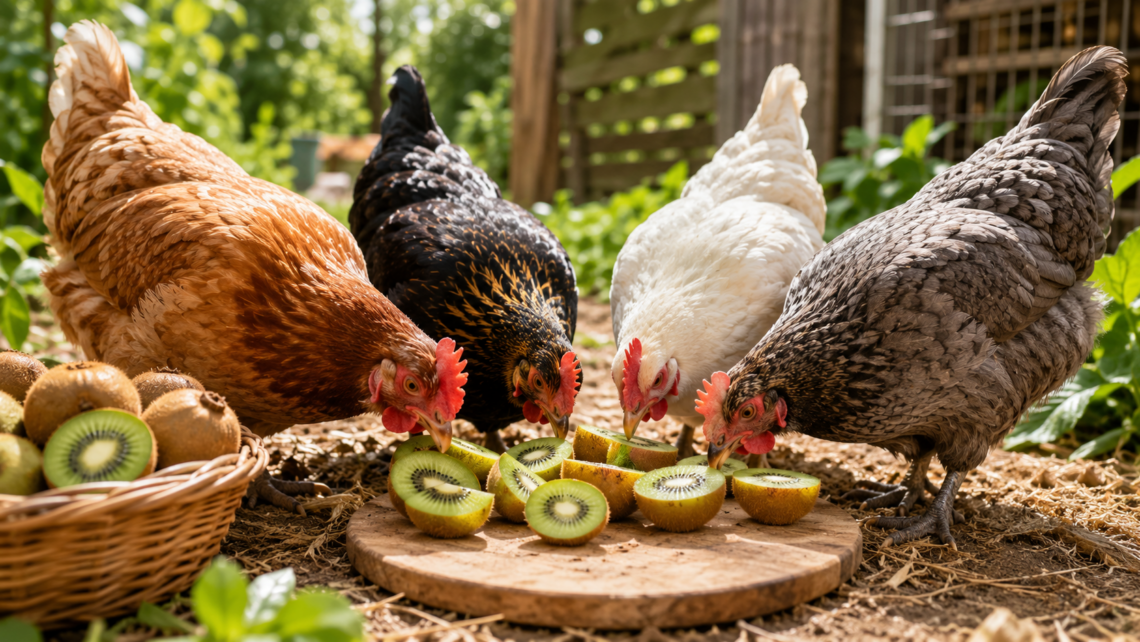
Some keepers even allow chickens to peck directly from a halved kiwi placed on the ground or hung inside the run, creating both a nutritious snack and an enriching activity.

Nutritional Benefits of Kiwi for Chickens
One reason kiwi is becoming a popular treat among poultry keepers is its impressive nutritional profile.
The fruit contains antioxidants that help protect cells from oxidative stress while supporting overall health. Its high water content also helps maintain hydration, especially during warm summer months when chickens naturally drink more water.
Dietary fiber supports healthy digestion when consumed in appropriate amounts. Potassium contributes to normal muscle and nerve function, while vitamin K plays a role in maintaining healthy body processes.
Natural fruit sugars provide a quick source of energy, making kiwi an enjoyable occasional snack without requiring processed ingredients or artificial additives.
Although these nutrients are beneficial, it’s important to remember that chickens obtain nearly all of their essential nutrition from a balanced commercial feed. Fresh fruit should remain a supplement rather than the foundation of the diet.
Pros of Feeding Kiwi to Chickens
There are several reasons why kiwi can make an excellent occasional addition to your flock’s diet.
Its high moisture content helps chickens stay hydrated during warmer weather. The natural sweetness encourages picky eaters to enjoy fresh fruit while providing enrichment through pecking and foraging.
Kiwi is also relatively soft compared with many other fruits, making it easy for chickens of different ages to consume. Because it contains no harmful compounds for poultry, it is generally considered one of the safer fruits to offer when served in moderation.
Many backyard chicken keepers also enjoy rotating kiwi with berries, watermelon, grapes, apples, pears, and leafy vegetables to provide dietary variety and environmental enrichment throughout the week.

Cons of Feeding Kiwi to Chickens
Although kiwi is considered a safe fruit for poultry, there are a few disadvantages that chicken keepers should keep in mind.
The biggest concern is moderation. Kiwi contains natural sugars, and while these sugars are healthier than processed treats, excessive amounts can upset the digestive balance of chickens. Offering large portions too frequently may contribute to loose droppings or reduce the amount of balanced poultry feed birds consume.
Another consideration is the fruit’s acidity. Most chickens tolerate kiwi very well, but some birds may be more sensitive than others. Introducing kiwi gradually allows you to observe how your flock responds before making it a regular treat.
Spoiled fruit should never be left in the coop or run for extended periods. Overripe kiwi attracts insects, encourages mold growth, and may invite rodents, especially during warm weather.
Like all treats, kiwi should make up only a small portion of a chicken’s overall diet. Most poultry experts recommend limiting treats to approximately 10% of daily food intake while the remaining 90% comes from a complete layer or grower feed.

Can Chickens Eat Kiwi Skin?
Yes, chickens can generally eat kiwi skin. The peel is not toxic and contains additional fiber and nutrients. However, there are a few important precautions before offering it to your flock.
Always wash kiwi thoroughly to remove dirt, waxes, or pesticide residues that may remain on the surface. Choosing organic fruit whenever possible further reduces potential exposure to agricultural chemicals.
Some chickens happily eat the peel, while others ignore it and focus only on the soft interior. Both behaviors are completely normal.
If you’re introducing kiwi for the first time, cutting the fruit into smaller pieces often makes it easier for birds to investigate and consume without wasting large portions.
6
How Much Kiwi Should Chickens Eat?
Kiwi should always be viewed as an occasional snack rather than a staple food.
For a small backyard flock, offering one or two kiwis divided among several chickens once or twice each week is generally more than enough. This allows birds to enjoy dietary variety without consuming excessive fruit sugars.
Rotating different fruits throughout the week is usually a better approach than feeding the same treat repeatedly. Watermelon, strawberries, blueberries, apples (without seeds), pears, grapes, bananas, and leafy greens all provide excellent variety while helping chickens remain interested in foraging.
Fresh drinking water should always be available whenever fruit or vegetables are offered.

The Best Fruits for Chickens
Kiwi is only one of many nutritious fruits suitable for backyard poultry. Offering a variety of fresh produce keeps chickens mentally stimulated while providing different vitamins, minerals, and textures.
Some of the safest and most popular fruits include:
- Apples (without seeds)
- Blueberries
- Strawberries
- Watermelon
- Grapes (cut for smaller birds if necessary)
- Pears
- Bananas
- Raspberries
- Blackberries
- Cantaloupe
- Mango
- Papaya
These fruits should always complement a nutritionally balanced poultry feed rather than replace it.
Frequently Asked Questions
Can chickens eat kiwi every day?
No. Kiwi should be offered only as an occasional treat because excessive fruit may reduce balanced feed consumption and increase sugar intake.
Can baby chicks eat kiwi?
Very young chicks should receive a properly formulated chick starter feed. Small amounts of soft fruit may be introduced later, but only after consulting appropriate poultry feeding guidelines and once they are eating a balanced diet.
Is golden kiwi better than green kiwi?
Both varieties are generally safe. Nutritional differences are relatively small, and chickens typically enjoy either type.
Can chickens eat frozen kiwi?
Yes. Small thawed pieces can be a refreshing treat during hot weather, although fresh fruit is usually preferred.
What foods should chickens never eat?
Avoid feeding chickens avocado pits and skin, chocolate, alcohol, raw dried beans, moldy food, excessively salty foods, and spoiled leftovers.
Conclusion
Understanding the Pros and Cons of Chickens Eating Kiwi allows backyard chicken keepers to provide safe, enjoyable treats while maintaining a healthy and balanced diet. Kiwi offers valuable hydration, fiber, antioxidants, and vitamins that can add variety to your flock’s nutrition when served in moderation.
Like all treats, kiwi should never replace a complete poultry feed, but it can become an excellent occasional snack that encourages natural pecking and foraging behavior. By introducing fresh fruit gradually, washing it thoroughly, and serving appropriate portions, you can safely include kiwi as part of a diverse diet that helps keep your chickens active, healthy, and happy for years to come.


You May Also Like

Why Do Clean Towels Smell Bad After Washing?

Autumn Exterior Decorating Ideas 2025: Fall Porch Decor, Planters & Lighting
