Retinol for Beginners: The Complete Guide to Younger, Healthier-Looking Skin
Retinol for Beginners: Everything You Need to Know Before You Start
Retinol has earned a reputation as one of the most effective skincare ingredients available today.
Dermatologists recommend it.
Beauty experts swear by it.
Countless skincare enthusiasts credit retinol for smoother, brighter, and younger-looking skin.
But if you’re new to retinol, the idea of adding it to your routine can feel intimidating.
Stories about peeling, redness, and irritation often make beginners nervous.
The good news?
When used correctly, retinol can become one of the most powerful tools in your skincare routine.

What Is Retinol?
Retinol belongs to a family of ingredients called retinoids, which are derived from Vitamin A.
Retinol works by accelerating skin cell turnover, helping your skin produce fresh, healthy cells more efficiently.
This process can improve:
- Fine lines
- Wrinkles
- Acne
- Hyperpigmentation
- Uneven skin tone
- Skin texture
Over time, retinol encourages smoother, healthier-looking skin.
Why Is Retinol So Popular?
Few skincare ingredients have been studied as extensively as retinoids.
Research has consistently shown that retinol can help improve visible signs of aging while supporting overall skin health.
Many people begin using retinol to reduce wrinkles, but quickly discover additional benefits.
Common improvements include:
- Brighter complexion
- Smaller-looking pores
- Fewer breakouts
- Smoother texture
- Improved skin elasticity

Retinol Benefits for Beginners
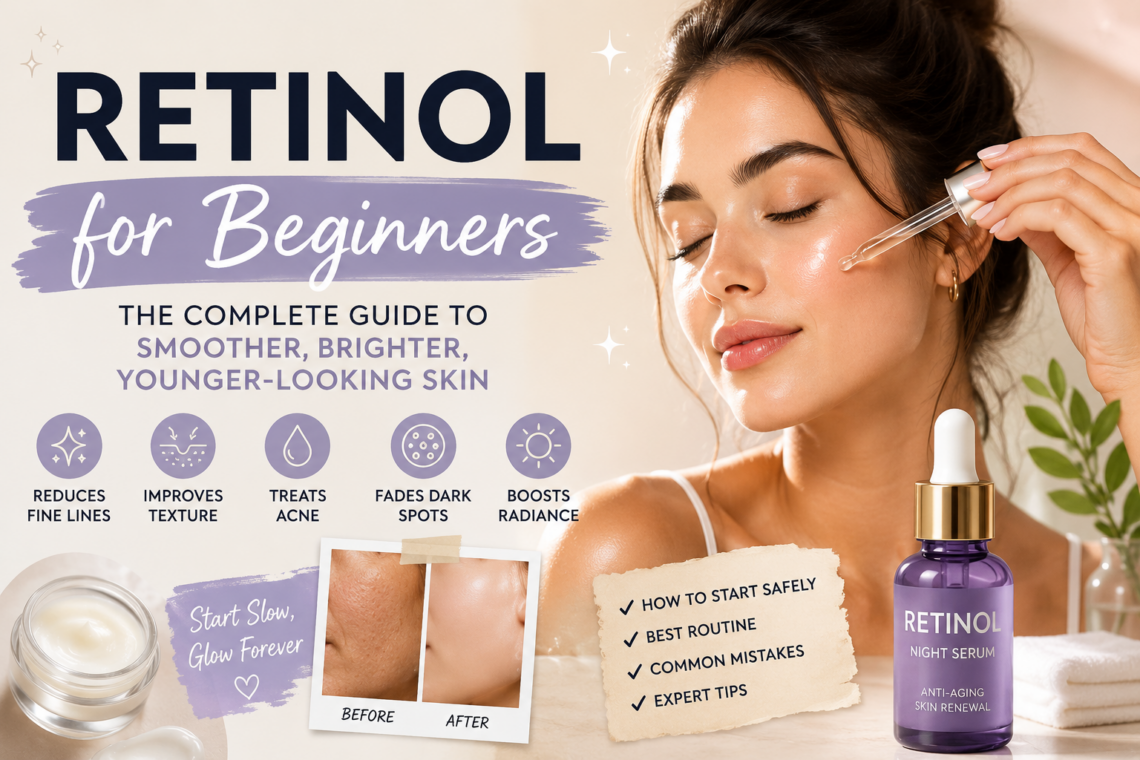
Reduces Fine Lines
Retinol stimulates collagen production, which helps maintain firm, youthful-looking skin.
Improves Skin Texture
Many users notice smoother skin after several weeks of consistent use.
Helps With Acne
Retinol can help keep pores clear and reduce breakouts.
Fades Dark Spots
Post-acne marks and sun damage may gradually become less noticeable.
Boosts Overall Skin Radiance
As old skin cells are replaced more efficiently, skin often appears brighter and healthier.
How to Start Using Retinol
One of the biggest mistakes beginners make is using too much too soon.
Slow and steady wins the race.
Week 1-2
Use retinol:
- 1–2 times per week
- At night only
Week 3-4
If your skin tolerates it well:
- Increase to 2–3 nights per week
After One Month
Gradually work toward every other night if your skin remains comfortable.
Remember:
Consistency matters more than speed.

The Perfect Beginner Retinol Routine
Step 1: Gentle Cleanser
Start with a mild cleanser that won’t strip the skin.
Step 2: Moisturizer
Many beginners benefit from applying moisturizer before retinol.
This technique is called the “retinol sandwich method.”
Step 3: Retinol
Apply a pea-sized amount to the entire face.
More is not better.
Step 4: Moisturizer Again
Finish with another layer of moisturizer to reduce irritation.
Common Side Effects
During the first few weeks, it’s normal to experience:
- Mild dryness
- Peeling
- Tightness
- Slight redness
This adjustment period is often called the “retinol purge.”
Most symptoms improve as the skin adapts.

Mistakes Beginners Should Avoid
Using Too Much Product
A pea-sized amount is enough.
Applying Every Night Immediately
Build tolerance gradually.
Skipping Moisturizer
Hydration is essential while using retinol.
Forgetting Sunscreen
This is one of the biggest mistakes.
Retinol increases sun sensitivity.
Never Skip Sunscreen
If you use retinol, sunscreen becomes non-negotiable.
Many skincare experts recommend combining retinol with daily use of Japanese Sunscreens, which are known for lightweight formulas and excellent UV protection.
Apply sunscreen every morning, even on cloudy days.
How Long Does Retinol Take to Work?
Patience is essential.
Typical timeline:
2–4 Weeks
- Improved skin texture
- Slight increase in brightness
6–12 Weeks
- Fewer breakouts
- Smoother complexion
3–6 Months
- Visible reduction in fine lines
- Improved elasticity
- More even skin tone
The best results often appear after several months of consistent use.
Who Should Avoid Retinol?
Retinol may not be suitable for everyone.
Consult a healthcare professional if you:
- Are pregnant
- Are breastfeeding
- Have severe eczema
- Have highly reactive skin conditions
Best Ingredients to Pair With Retinol
Retinol works especially well with:
- Hyaluronic Acid
- Ceramides
- Niacinamide
- Peptides
These ingredients help support the skin barrier and reduce irritation.

5
FAQ
What age should I start using retinol?
Many people begin using retinol in their mid-20s to early 30s, though it can also be beneficial for acne-prone skin at younger ages.
How often should beginners use retinol?
Start with 1–2 nights per week and increase gradually.
Can I use retinol every night?
Eventually yes, if your skin tolerates it well.
Should I use retinol in the morning?
No. Retinol is best used at night.
What should I not mix with retinol?
Avoid combining retinol with strong exfoliating acids or other potentially irritating ingredients until your skin has adjusted.
Is peeling normal?
Mild peeling and dryness are common during the adjustment period.
Final Thoughts
Retinol remains one of the most effective skincare ingredients for improving skin texture, reducing signs of aging, and promoting a brighter complexion.
The key is patience.
Start slowly, moisturize generously, wear sunscreen daily, and allow your skin time to adapt.
With consistent use, retinol can become one of the most rewarding additions to your skincare routine.


You May Also Like

Cherry Girl Makeup: The Viral Beauty Trend Everyone Is Talking About

The Beauty of Easy Front Hand Mehndi Designs: Simple Ideas for Every Occasion