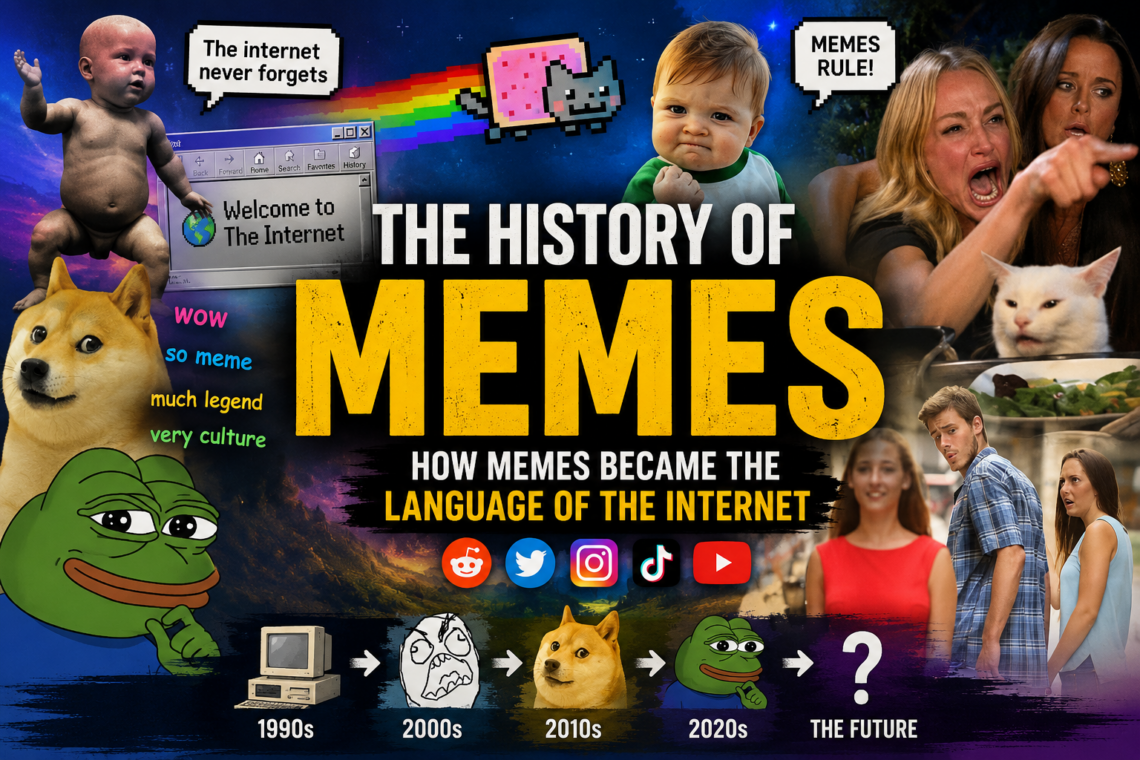
The History of Memes: How Memes Became the Language of the Internet
Today, it’s almost impossible to spend a few minutes online without encountering a meme.
Whether you’re scrolling through Instagram, browsing Reddit, watching TikTok videos, or chatting with friends, memes are everywhere. They make us laugh, help us express emotions, and sometimes even explain complex ideas better than entire articles.
But where did memes come from?
And how did they become one of the most powerful forms of communication in modern culture?
Let’s explore the fascinating story behind internet memes.
What Is a Meme?
The word “meme” existed long before the internet.
In 1976, evolutionary biologist Richard Dawkins introduced the term in his book The Selfish Gene. He used it to describe ideas and behaviors that spread from person to person in the same way genes spread biological information.
At the time, nobody imagined funny cat pictures or viral TikTok videos.
However, the internet would eventually transform Dawkins’ idea into something entirely new.

The Early Days of Internet Memes
Before Facebook, Instagram, and TikTok existed, people shared content through forums, message boards, and email chains.
Internet connections were slow.
Websites were simple.
Yet even then, viral content existed.
One of the earliest examples was the famous Dancing Baby.
The strange 3D animation showed a baby dancing in a loop. It spread rapidly through emails and websites during the late 1990s and became one of the first truly global internet sensations.
For many people, it was their first experience with viral online content.

When Cats Took Over the Internet
If there is one thing the internet has always loved, it’s cats.
In the early 2000s, images of cats with humorous captions exploded in popularity.
These became known as LOLcats.
The captions intentionally used incorrect grammar and spelling, which somehow made them even funnier.
Phrases like “I Can Has Cheezburger?” quickly became part of internet culture.
What started as a joke soon became one of the defining meme trends of an entire generation.


The Era of Viral Pranks
As internet culture evolved, users began creating memes designed specifically to surprise people.
One of the most famous examples was Rickrolling.
Someone would share a seemingly interesting link.
Instead of opening the promised content, users were redirected to Rick Astley’s music video Never Gonna Give You Up.
Millions of people fell for the joke.
Even today, Rickrolling remains one of the longest-lasting memes in internet history.

Social Media Changed Everything
The rise of Facebook, Twitter, Instagram, Reddit, and TikTok completely transformed how memes spread.
What once took weeks could now happen in minutes.
A meme created in one country could be viewed by millions of people around the world before the end of the day.
Social media also turned ordinary users into creators.
Anyone with a smartphone suddenly had the ability to make content that could reach a global audience.
This changed internet culture forever.


The Most Famous Memes of Modern Times
Some memes became so popular that they transcended internet culture.
Distracted Boyfriend
A stock photo showing a man looking at another woman while his girlfriend reacts angrily became one of the most recognizable memes ever created.
The image was endlessly adapted to represent distractions, competing priorities, and everyday struggles.
Woman Yelling at Cat
Another legendary meme combined two completely unrelated images:
An emotional woman pointing and yelling.
A confused white cat sitting at a dinner table.
Together, they created one of the funniest and most versatile meme formats ever.


Success Kid
A toddler holding a clenched fist became the symbol of small victories and unexpected success.
Years later, Success Kid remains one of the internet’s most beloved memes.

Why Memes Matter
At first glance, memes may seem like simple jokes.
But they play a much bigger role in modern communication.
Memes allow people to:
- Express emotions quickly
- Share opinions
- Create community
- Discuss social issues
- Spread information
A single meme can communicate an idea faster than several paragraphs of text.
This efficiency is one reason memes continue growing in popularity.

The Future of Memes
Memes continue evolving every year.
Today, many memes are no longer static images.
They are videos, AI-generated content, interactive posts, and short-form social media clips.
Artificial intelligence is already changing how memes are created and shared.
Future memes may become more personalized, interactive, and immersive than anything we’ve seen before.
One thing is certain:
As long as people communicate online, memes will remain part of internet culture.

FAQ
Who invented the term meme?
Richard Dawkins introduced the term in 1976 in his book The Selfish Gene.
What was the first internet meme?
Many experts consider Dancing Baby from 1996 to be one of the earliest viral internet memes.
Why do memes spread so quickly?
Memes are easy to understand, emotionally engaging, and highly shareable.
Are memes important in modern culture?
Yes. Memes influence communication, entertainment, marketing, politics, and social trends worldwide.
Will memes continue evolving?
Absolutely. New technologies, especially artificial intelligence and short-form video platforms, continue creating new meme formats.
Final Thoughts
Memes have evolved from a scientific concept into one of the defining features of internet culture.
From Dancing Baby and LOLcats to modern viral TikTok trends, memes continue shaping how people communicate online.
Whether they make us laugh, think, or share a common experience, memes have become a universal language of the digital age.


You May Also Like

What Is the Opposite of Orange on the Color Wheel? (And What Color Cancels Out Orange?)

Best Side Hustles in 2026: Smart Ways to Make Extra Money Online
