The Timeless Beauty of Persian Architecture: 8 Stunning Places Across Iran That Feel Like Another World
Persian architecture is one of the most breathtaking architectural traditions in human history. From glowing stained-glass mosques to turquoise domes, intricate geometric tilework, grand bazaars, and ancient desert cities, Iran preserves some of the world’s most spectacular examples of Islamic architecture and Persian design.
The beauty of traditional Persian architecture lies not only in its visual richness but also in its spiritual atmosphere. Every arch, courtyard, dome, and mosaic pattern was carefully designed to create harmony, balance, light, and reflection. Persian architects mastered symmetry centuries before modern minimalism became fashionable — except they did it with poetry, mathematics, gardens, and 40 million tiles.
Today, many historical Persian buildings remain remarkably preserved, especially in cities like Isfahan, Shiraz, Yazd, and Kashan.
In this guide, we’ll explore some of the most beautiful examples of Persian architecture in Iran, including famous mosques, UNESCO World Heritage Sites, Persian palaces, historical houses, traditional bazaars, and ancient desert structures.
What Makes Persian Architecture Unique?
Persian architecture combines artistic elegance with engineering brilliance. Many architectural features that later influenced Islamic architecture across Asia and the Middle East first evolved in ancient Persia.
Key Features of Persian Architecture
Muqarnas Ceilings
Muqarnas are decorative honeycomb-like vaults often seen beneath domes and arches. These sculptural ceiling forms create dramatic shadows and depth.
Persian Domes
Traditional Persian domes are famous for:
- Turquoise tiles
- Floral mosaics
- Geometric symmetry
- Massive scale
- Double-shell engineering
Iwans and Pointed Arches
An iwan is a monumental vaulted hall with one open side, commonly found in mosques and madrasas throughout Iran.
Persian Tilework
One of the defining characteristics of Iranian Islamic architecture is colorful tile decoration featuring:
- Blue and turquoise mosaics
- Arabic calligraphy
- Floral arabesques
- Geometric Islamic patterns
Persian Gardens
Persian architecture often integrates gardens, reflecting pools, fountains, and natural cooling systems. The idea of paradise gardens in Islamic culture was heavily influenced by Persian landscape design.
How Old Is Persian Architecture?
Persian architecture dates back over 2,500 years, beginning during the Achaemenid Empire around 550 BC.
Ancient Persian architectural traditions evolved through several dynasties, including:
- Achaemenid Empire
- Parthian Empire
- Sassanian Empire
- Safavid Dynasty
- Qajar Dynasty
The Safavid period, especially during the 16th and 17th centuries, became the golden age of Persian Islamic architecture.
1. Golestan Palace — Tehran
Golestan Palace


Golestan Palace is one of the most famous royal complexes in Iran and a masterpiece of Qajar-era Persian architecture.
Located in Tehran, the palace combines Persian artistic traditions with European influences introduced during the 19th century.
Highlights of Golestan Palace
- Mirror-covered ceremonial halls
- Marble throne platform
- Decorative Persian tilework
- Royal gardens and courtyards
- Intricate stained glass windows
The palace feels almost theatrical, blending luxury with delicate craftsmanship.
Photo Sources
2. Shah Mosque (Imam Mosque) — Isfahan
Shah Mosque


The Shah Mosque, also called the Imam Mosque, is considered one of the greatest masterpieces of Safavid architecture.
Built during the reign of Shah Abbas I, the mosque dominates the southern side of Naqsh-e Jahan Square.
Why the Shah Mosque Is Famous
- Massive turquoise dome
- Extraordinary Persian mosaics
- Monumental iwans
- Symmetrical Islamic geometry
- Acoustic engineering inside prayer halls
The colors of the mosque change throughout the day depending on sunlight. Persian architects understood light long before Instagram filters tried to imitate it.
Photo Sources
3. Sheikh Lotfollah Mosque — Isfahan
Sheikh Lotfollah Mosque


Unlike most mosques, Sheikh Lotfollah Mosque has no minarets and no courtyard. It was built as a private royal mosque for the Safavid court.
Architectural Features
- Peacock-inspired dome patterns
- Delicate floral mosaics
- Golden cream-colored exterior
- Exceptional calligraphy artwork
- Intimate spiritual atmosphere
Many historians consider its dome one of the most beautiful in Islamic architecture.
Photo Sources
4. Ali Qapu Palace — Isfahan
Ali Qapu Palace


Ali Qapu Palace once served as the ceremonial palace of the Safavid rulers.
The palace overlooks Naqsh-e Jahan Square and contains one of the most fascinating music halls in Persian architecture.
Notable Elements
- Wooden columned terrace
- Music room with acoustic niches
- Lavish wall paintings
- Royal reception halls
- Panoramic city views
The acoustic design inside the music hall was centuries ahead of its time.
Photo Sources
5. Nasir al-Mulk Mosque — Shiraz
Nasir al-Mulk Mosque


Known worldwide as the Pink Mosque, Nasir al-Mulk Mosque is one of Iran’s most photographed architectural wonders.
Morning sunlight transforms the interior into a kaleidoscope of color through stained-glass windows.
Famous Features
- Pink floral tiles
- Rainbow light reflections
- Persian arches
- Colorful stained glass
- Elegant prayer halls
It feels less like a building and more like walking inside a living watercolor painting.
Photo Sources
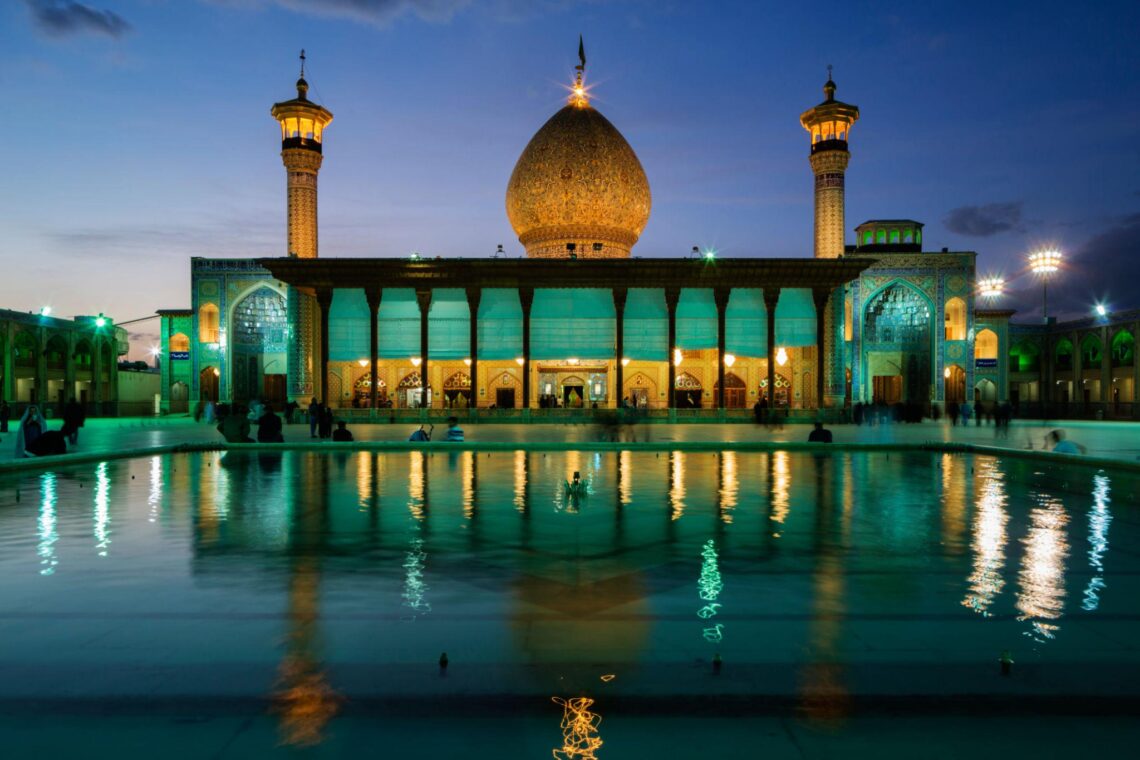
6. Shah Cheragh — Shiraz
Shah Cheragh


Shah Cheragh is famous for its dazzling mirrored interior covered in millions of reflective glass fragments.
Architectural Highlights
- Mirror mosaic walls
- Glittering domes
- Islamic calligraphy
- Spiritual shrine atmosphere
- Ornate chandeliers
At night, the interior resembles a crystal cave illuminated from within.
Photo Sources
7. Sultan Amir Ahmad Bathhouse — Kashan
Sultan Amir Ahmad Bathhouse


Traditional Persian bathhouses were masterpieces of engineering and social life.
This historical hammam in Kashan features beautifully decorated domes and sophisticated ventilation systems.
Features
- Turquoise ceiling mosaics
- Curved domes with skylights
- Traditional heating systems
- Elegant symmetrical interiors
Persian architects understood climate control centuries before modern air conditioning arrived.
Photo Sources
8. Jameh Mosque of Yazd — Yazd
Jameh Mosque of Yazd


This grand mosque dominates the desert skyline of Yazd with some of the tallest minarets in Iran.
Why It Matters
- Stunning entrance portal
- Deep blue tile mosaics
- Ancient desert city setting
- Exceptional Persian calligraphy
Yazd itself is one of the oldest continuously inhabited desert cities in the world.
Photo Sources
UNESCO World Heritage Sites Connected to Persian Architecture
Naqsh-e Jahan Square
Naqsh-e Jahan Square
One of the largest historical squares in the world, surrounded by Safavid architectural masterpieces.
Arg-e Bam
Arg-e Bam
The largest adobe fortress in the world and an extraordinary example of ancient desert urban planning.
Persian Gardens
Traditional Persian gardens influenced landscape architecture throughout Asia and the Islamic world.
Why Persian Architecture Still Fascinates the World
Persian architecture remains globally admired because it combines:
- Mathematics and symmetry
- Spiritual symbolism
- Natural light
- Engineering innovation
- Artistic detail
- Environmental adaptation
Unlike many modern buildings designed for speed and profit, historical Persian architecture was created to inspire emotion, contemplation, and beauty that lasts for centuries.
And frankly, a 400-year-old Persian mosque still looks more elegant than half the glass office towers built last Tuesday.
Final Thoughts
The architecture of Iran is one of humanity’s greatest artistic achievements. From the glowing stained glass of Nasir al-Mulk Mosque to the grand domes of Isfahan and the ancient mud-brick cities of Yazd and Bam, Persian architecture continues to inspire architects, historians, photographers, and travelers around the world.
These historical landmarks are more than tourist attractions — they are living records of Persian culture, Islamic art, engineering genius, and timeless craftsmanship.
For anyone passionate about Islamic architecture, historical cities, Persian culture, or UNESCO heritage sites, Iran remains one of the most visually extraordinary destinations on Earth.


You May Also Like

Smart Home Trends 2026: The Future of Connected Living

Best Outdoor Lighting Ideas for Your Garden or Patio
