How Japanese Homes Use Plants: 12 Natural Ideas for a Calm Interior
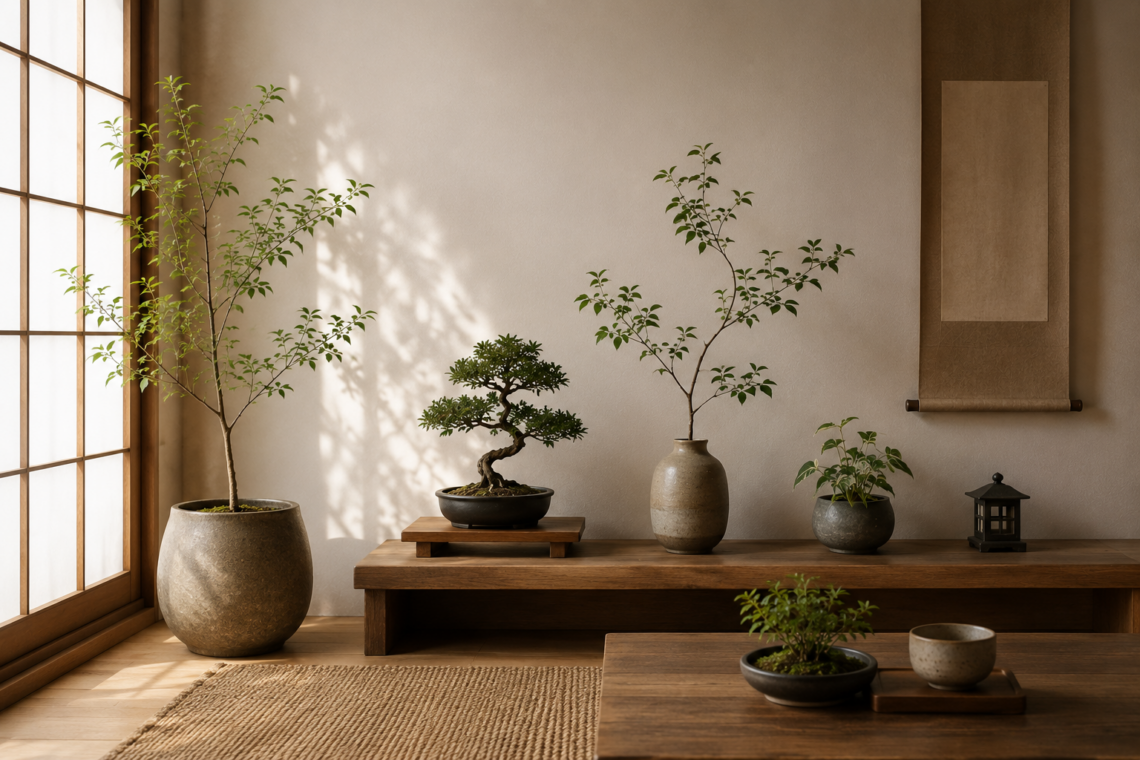
Japanese homes have a special way of bringing nature indoors without making the space feel crowded or overly decorated. A single bonsai, a vase of seasonal branches, a small ikebana arrangement, or even one carefully placed houseplant can change the atmosphere of a room.
Plants in Japanese interiors are not simply used to fill empty corners. They are often chosen for their shape, seasonality, texture, and ability to create a quiet connection with nature. This approach works particularly well in smaller homes and apartments, where too many decorative objects can quickly make a room feel busy.
You don’t need a traditional Japanese house, tatami rooms, or a huge collection of plants to recreate the feeling. In fact, the Japanese approach is often about using less, but choosing carefully.
From bonsai and ikebana to balcony gardens and simple greenery near a window, here are 12 ways Japanese homes use plants to create a more natural and peaceful interior.
1. Plants Are Used to Bring Nature Indoors
One of the most appealing aspects of Japanese interiors is the relationship between the home and the natural world.
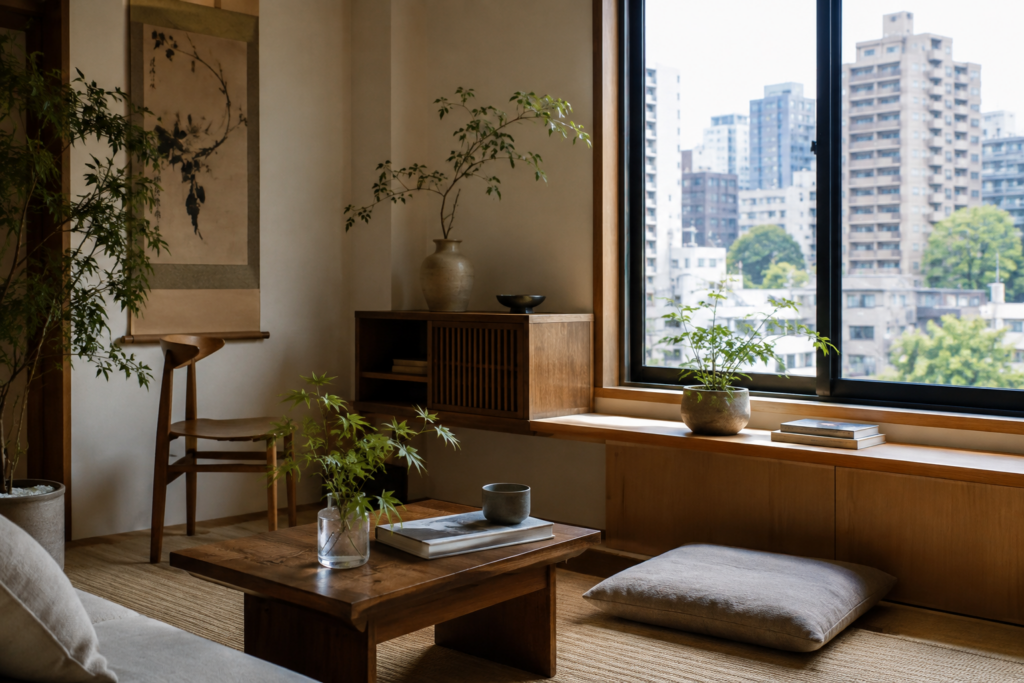
Rather than treating plants as purely decorative accessories, Japanese design often uses greenery to soften the boundary between indoors and outdoors. A plant near a window, a branch in a simple ceramic vase, or a small arrangement beside a wooden cabinet can make an ordinary room feel more connected to nature.
This idea works particularly well in cities.
In a place like Tokyo, where apartments can be surrounded by buildings and busy streets, even a small amount of greenery can provide a visual break from concrete and glass.
The plant doesn’t have to dominate the room. Sometimes one carefully chosen plant is enough.
That restraint is important. Japanese interiors generally don’t need dozens of plants to create a natural atmosphere.
2. Bonsai Can Become a Small Piece of Nature
Bonsai is probably one of the most recognizable forms of Japanese plant culture.
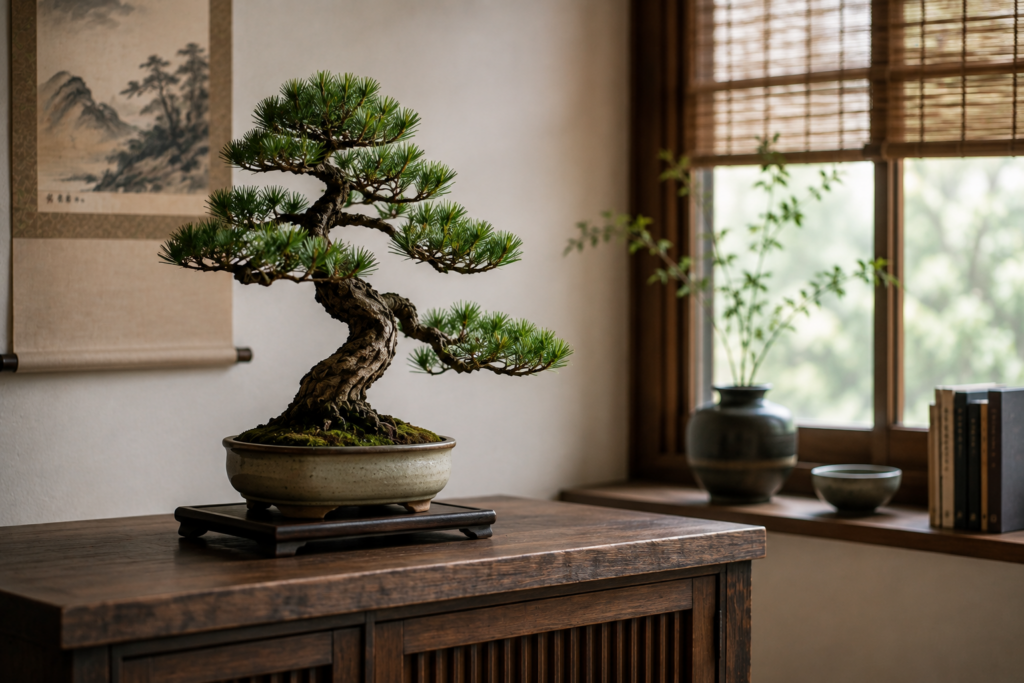
A bonsai tree is much more than a miniature plant placed on a shelf. Its form, branches, trunk, pot, and overall composition are carefully considered, and the tree changes as it grows.
In a home, even a small bonsai can become a focal point without requiring a large amount of space.
This makes bonsai particularly interesting for apartment living. Instead of filling a room with large plants, you can choose one small tree and give it enough space to be appreciated.
The key is not to surround it with too many other decorative objects.
A simple bonsai on a wooden surface, near natural light, can be much more effective than a crowded display.
3. Ikebana Brings Plants Into the Home Differently
Ikebana offers another way to experience plants indoors.
Unlike a conventional bouquet that may focus on having lots of flowers, traditional Japanese flower arrangement often pays attention to line, shape, space, balance, and seasonality.
This means an arrangement doesn’t necessarily need to be large.
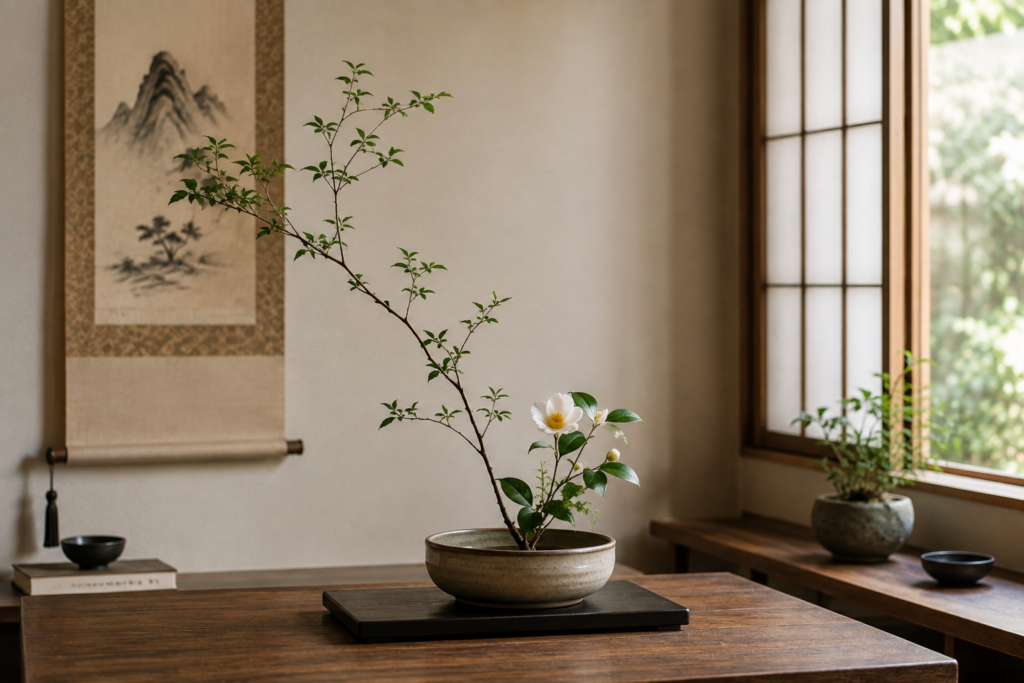
A few branches, leaves, or flowers placed thoughtfully in a simple vase can have more visual impact than an oversized bouquet.
Ikebana also fits naturally into Japanese interiors because both share an appreciation for simplicity and empty space.
You don’t need to create a formal ikebana arrangement to borrow the idea. Even a single branch in a handmade ceramic vase can create a similar feeling.
4. Seasonal Branches and Flowers Change With the Year
One of the most beautiful ideas to borrow from Japanese homes is the use of seasonal plants.
Instead of decorating with exactly the same greenery throughout the year, you can allow your home to change naturally with the seasons.
In spring, this might mean delicate flowering branches.
Summer can bring fresh green leaves and lighter arrangements.
Autumn is perfect for branches with changing leaves, while winter often works beautifully with bare branches, evergreen plants, or simple arrangements with strong shapes.
This approach makes decorating feel less like a permanent project and more like a relationship with the changing year.
You don’t need to spend much money, either. A few interesting branches from a florist or local market can completely change the feeling of a room.
5. Small Plants Work Beautifully in Japanese Apartments
Japanese apartments are often compact, particularly in major cities.
That doesn’t mean you have to give up on having plants.
Instead of buying large floor plants simply because you have an empty corner, consider smaller options that fit naturally into the space.
A tiny plant can sit on a shelf. A trailing plant can hang near a window. A small bonsai can occupy a narrow table. Herbs can grow in a kitchen window.
The important thing is to choose plants according to the space you actually have.
A small apartment can feel more elegant when plants are integrated into the existing layout rather than added wherever there happens to be room.
And if you’re working with a particularly small space, one beautiful plant can often do more than five average ones.
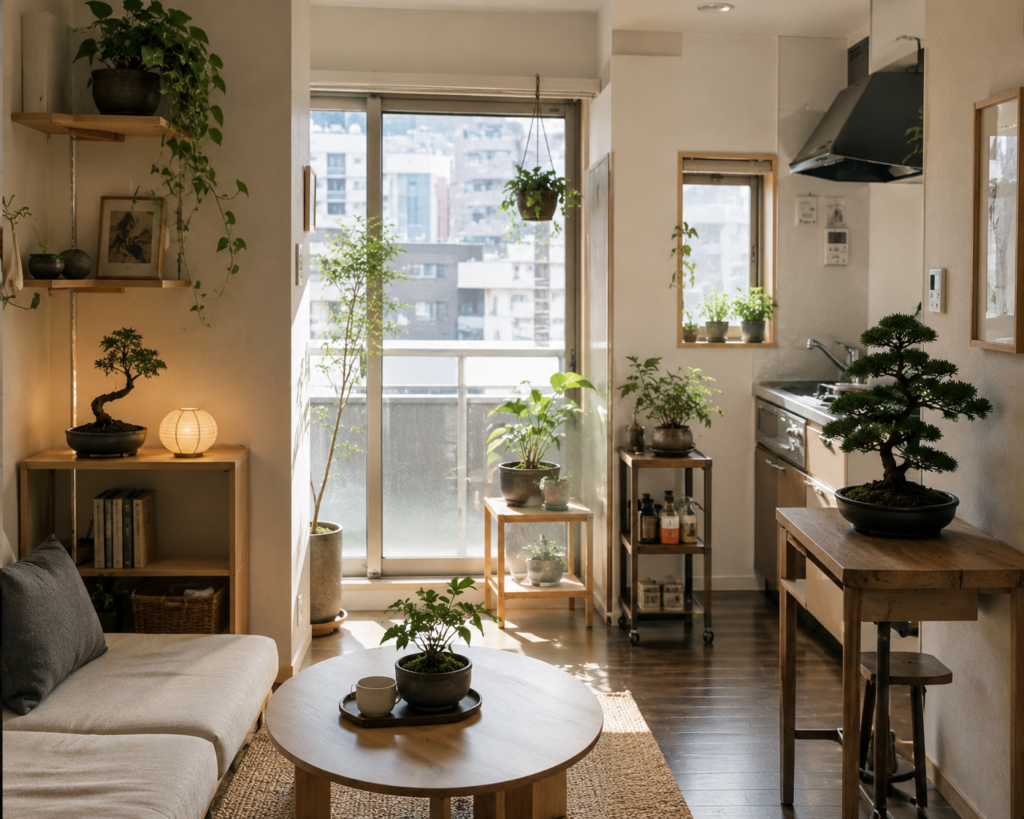
6. Japanese Homes Often Let Natural Light Do the Work
Plants look completely different depending on the light around them.
This is why placement matters.
A plant near a bright window can become part of the room’s visual composition, especially when its leaves create soft shadows throughout the day.
Japanese interiors often make good use of natural light, wood, neutral colors, and uncluttered surfaces. Plants work naturally within this environment because their shapes and textures become part of the decoration without requiring additional visual elements.
If you are creating a Japanese-inspired plant corner, start by observing your room during the day.
Where does the sunlight fall?
Which area feels naturally calm?
Where can a plant be seen without being in the way?
Sometimes the best location isn’t the empty corner you were planning to fill. It may be the small space beside a window where the plant becomes part of the view.
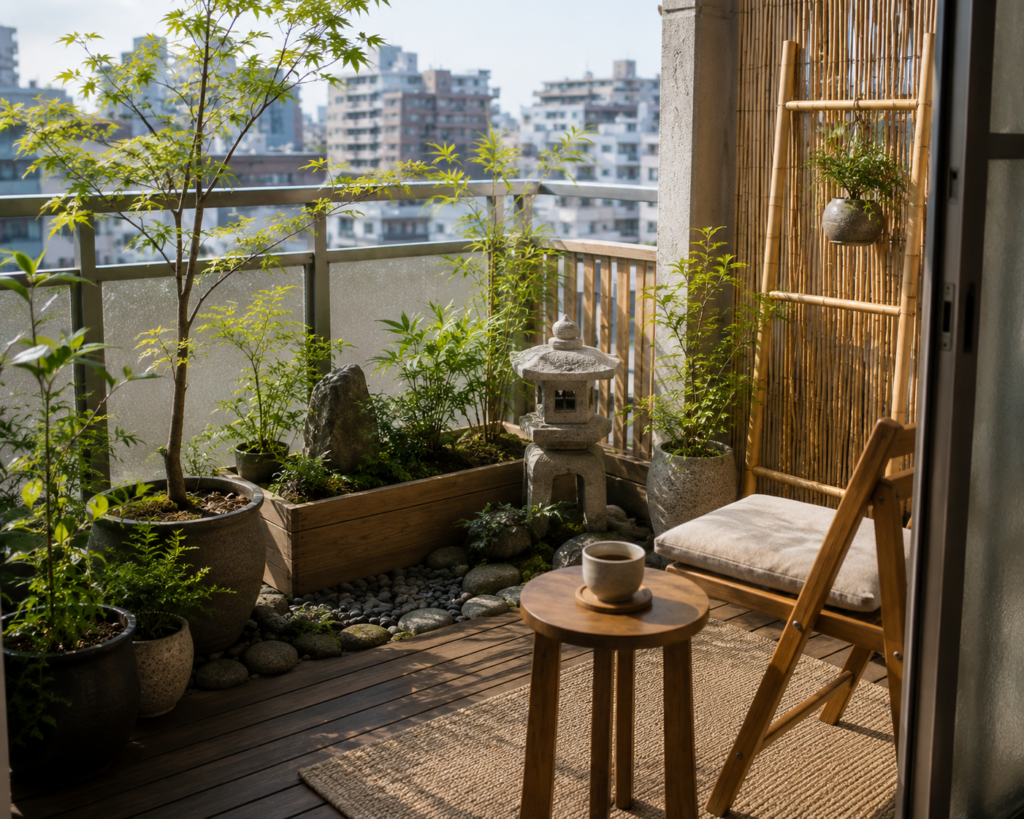
7. A Japanese Balcony Can Become a Tiny Garden
You don’t need a backyard to create a small Japanese-inspired outdoor space.
A balcony can become a miniature garden with a few carefully selected plants, a wooden planter, stones, or a simple ceramic pot.
This is particularly relevant in Tokyo and other large Japanese cities, where private outdoor space can be limited.
The goal isn’t to cram the balcony with greenery.
Instead, think about creating a small composition.
A few plants at different heights can create depth. Natural materials can soften the appearance of concrete. A small evergreen or seasonal plant can provide interest throughout the year.
If you have enough room, you can even create a tiny seating area where you can drink coffee or tea while looking at the plants.
The result doesn’t have to look like a formal Japanese garden. It can simply feel quiet, natural, and intentional.
8. Moss, Stones, and Greenery Create a Garden-Like Feeling
Japanese gardens offer another useful lesson for indoor decorating: plants don’t have to work alone.
Moss, stones, wood, gravel, and water are all materials traditionally associated with Japanese garden aesthetics. Bringing small references to these materials indoors can make greenery feel more integrated into the space.
For example, a plant in a rough ceramic pot can be placed on a wooden tray with a small natural stone.
You don’t need to reproduce an entire garden inside your living room.
The idea is simply to create a subtle relationship between plants and natural materials.
This is also where the philosophy behind a Japanese Zen garden can provide inspiration. Rather than filling every surface, allow a few natural elements to have enough space around them to be noticed.
9. Plants Can Make the Genkan Feel More Welcoming
The genkan, or entrance area of a Japanese home, is one of the most interesting places to use greenery.
The entrance is where you transition from the outside world into the home, so even a small plant can make the space feel warmer and more welcoming.
You don’t need a large arrangement.
A small potted plant, a simple branch, or a seasonal flower can work beautifully on a narrow console or shelf.
The trick is keeping the area practical.
The genkan is not the place for a collection of enormous pots that make it difficult to remove your shoes.
A single plant with a beautiful shape can be enough.
10. Japanese Homes Don’t Need to Be Full of Plants
This may be the most important lesson.
Japanese design values negative space — allowing empty areas around objects to remain part of the overall composition. This principle is also important in Interior Design, where a carefully chosen plant can make a stronger impression when it has room around it rather than being surrounded by decorations and other greenery.
Before buying another houseplant, look around your room. Maybe you don’t need another plant — maybe you just need to give the one you already have more space.
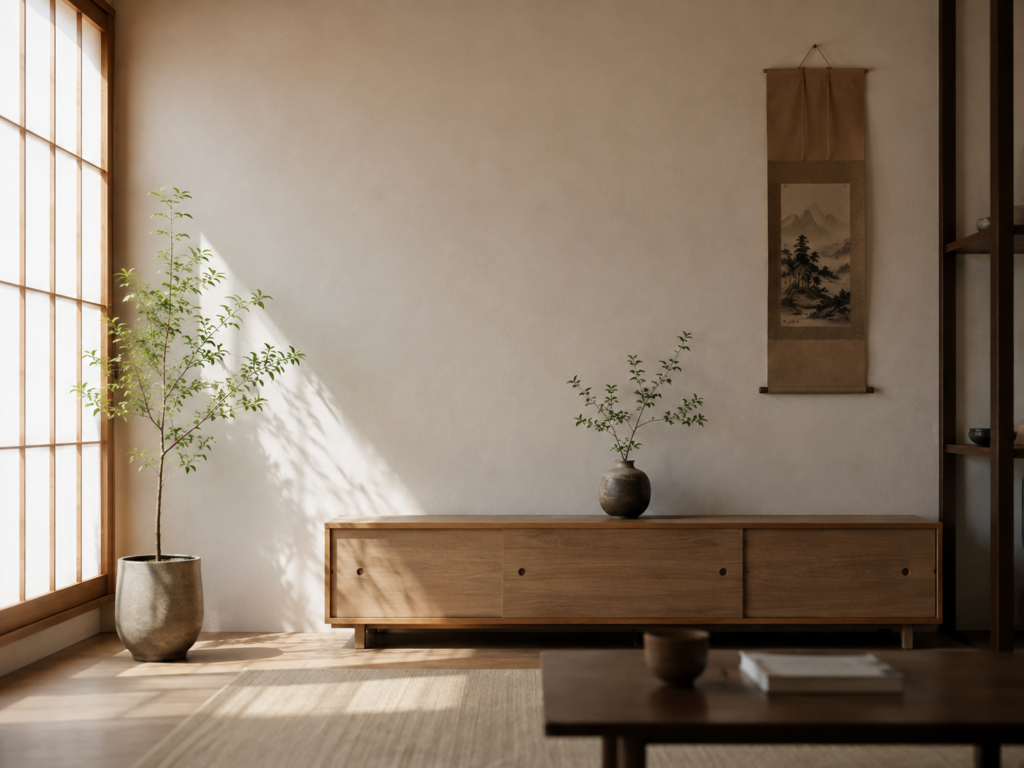
11. Wabi-Sabi Makes Imperfect Plants More Interesting
Plants don’t stay perfect.
Leaves turn yellow. Branches grow in unexpected directions. Flowers fade. Bark changes. Some plants become more beautiful as they age.
This fits naturally with the Japanese concept of wabi-sabi, which finds beauty in simplicity, imperfection, and the passage of time.
You don’t necessarily need to remove every imperfect leaf or replace everything as soon as it begins to look slightly different.
Sometimes the changing appearance of a plant is part of its character.
An aged wooden planter, an uneven ceramic pot, or a slightly weathered branch can feel more authentic than something that looks perfectly manufactured.
The same principle can be applied throughout the home: nature doesn’t need to look flawless to be beautiful.
12. Create a Simple Japanese-Inspired Plant Corner
You don’t need to redesign your entire home to bring this idea into your space.
Start with one small area.
Choose one plant or seasonal branch that you genuinely like. Place it in a simple ceramic or natural-material pot. Add a wooden surface, a small stone, or another subtle natural element if it feels appropriate.
Then leave some empty space around it.
That’s important.
Don’t immediately fill the remaining space because it looks “too empty.”
Let the plant breathe.
You can place your little arrangement near a window, in the genkan, on a low shelf, beside a reading chair, or on a balcony.
The result doesn’t need to look like a showroom.
It should feel like a natural part of your home.
How to Choose Plants for a Japanese-Inspired Home
When choosing plants, don’t focus only on how attractive they look in a store.
Think about the atmosphere you want to create.
Plants with interesting shapes and textures often work particularly well in minimalist interiors. Green foliage can create a calm background, while seasonal flowers or branches can add a small amount of color.
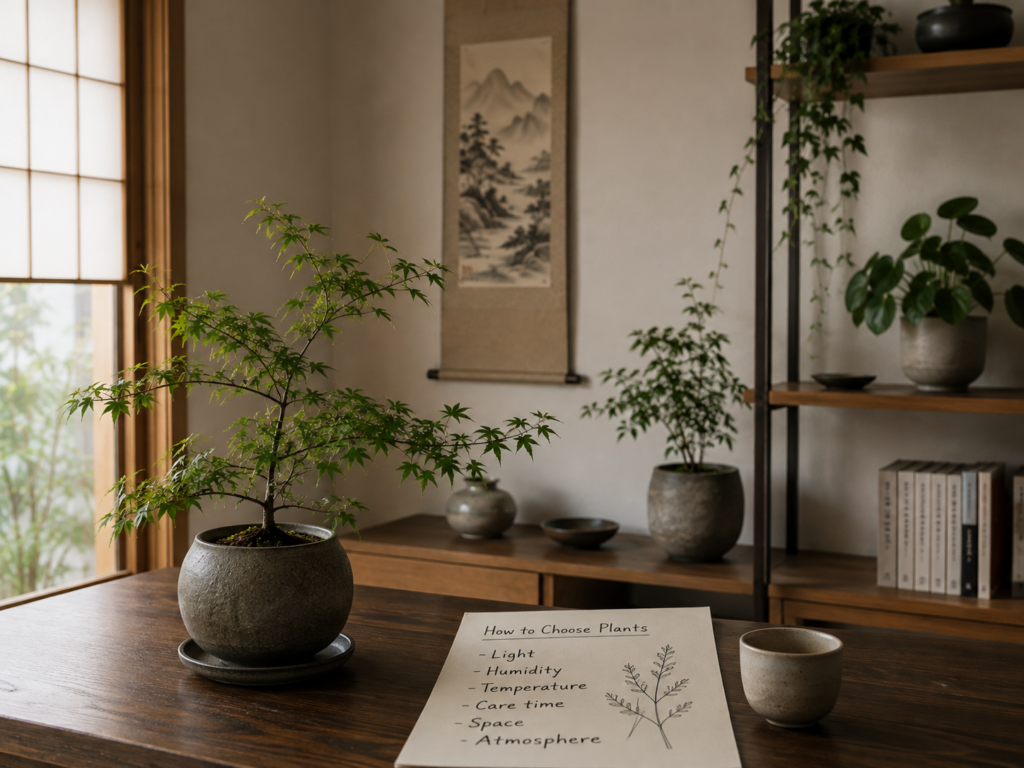
You should also consider practical things such as light, humidity, temperature, and how much time you realistically want to spend caring for the plant.
A beautiful plant that constantly struggles in the wrong location isn’t going to create a peaceful home.
Choose something that works with your space rather than forcing your space to work around it.
The Japanese Approach to Plants Is Really About Less
Perhaps the biggest lesson isn’t about which plant to buy at all.
It’s about how you use it.
Japanese-inspired interiors often feel calm because every element has room to exist. Plants aren’t competing with dozens of decorations. They are part of a larger composition that includes light, wood, texture, empty space, and seasonal change.
You can recreate that feeling in almost any home.
You don’t need a traditional Japanese house.
You don’t need expensive furniture.
And you certainly don’t need to turn your living room into a jungle.
Start with one plant.
Give it a good place.
Let it change with the seasons.
And leave enough empty space around it to appreciate it.
Sometimes that’s all it takes to make a home feel a little more connected to nature.
FAQ
What plants are commonly used in Japanese homes?
Japanese homes can feature many different plants depending on the space and season. Bonsai, seasonal branches, flowers, and simple green houseplants can all work well. The emphasis is often less on having a large collection and more on thoughtful placement.
Do Japanese homes have many houseplants?
Not necessarily. While plants are used in many Japanese homes, minimalist interiors often feature only a few carefully chosen plants. The goal is to create a connection with nature without making the space feel crowded.
What is the best plant for a Japanese-style interior?
There isn’t one universal choice. Bonsai, simple leafy plants, seasonal branches, and small flowering plants can all work. The best option depends on the available light, space, and how much maintenance you want to do.
How do you decorate a small apartment with plants?
Choose smaller plants and give them intentional places rather than filling every available surface. A windowsill, narrow shelf, genkan, balcony, or small side table can be enough. One well-placed plant can have more impact than several crowded together.
What is the difference between bonsai and ikebana?
Bonsai focuses on cultivating and shaping a living tree or plant in a container, while ikebana is the Japanese art of flower arrangement. Both can bring nature indoors, but they create very different visual experiences.
How can I create a Japanese-inspired plant corner at home?
Start with one plant or seasonal branch, a simple natural-material pot, and a little empty space around it. Wood, stone, ceramic, and natural textures can complement the arrangement without making it feel overly decorated.
Final Thoughts
Japanese homes show that you don’t need a lot of greenery to bring nature inside.
A bonsai on a small table, a seasonal branch in a ceramic vase, a few herbs on a balcony, or one leafy plant beside a sunny window can completely change the feeling of a room.
The secret is simplicity, seasonality, natural materials, and space.
Instead of asking how many plants you can fit into your home, ask a better question: which one actually belongs there?
That small change in thinking is what makes Japanese-inspired plant decorating feel so calm — and surprisingly easy to bring into an ordinary modern home.


You May Also Like
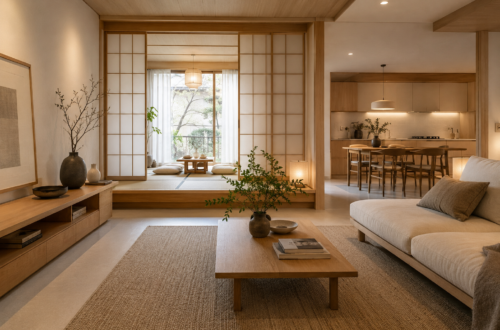
Japanese Interior Design Ideas: The Complete Guide to Creating a Calm, Functional, and Timeless Home
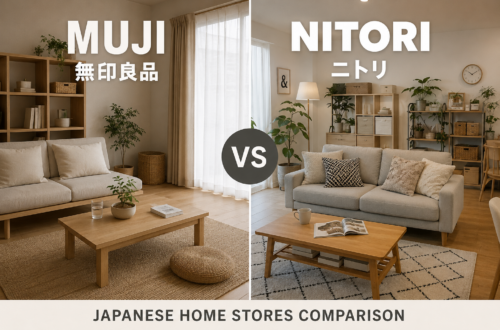
MUJI vs Nitori: Which Japanese Home Store Is Best for Furniture, Home Décor, and Everyday Living?
