Japanese Zen Garden Ideas: How to Create a Peaceful Japanese-Inspired Garden
Some gardens impress with colorful flowers. Others are remembered for grand fountains or perfectly manicured lawns. A Japanese Zen garden leaves a different kind of impression. Long after you leave, it’s often the feeling of calm that stays with you.
With carefully placed rocks, raked white gravel, soft moss, and just a handful of thoughtfully selected plants, these timeless landscapes demonstrate that beauty doesn’t need to be complicated. Every element has a purpose, while every empty space is just as important as the objects surrounding it. Rather than demanding attention, a Zen garden encourages quiet observation, making it one of the most recognizable forms of Japanese landscape design.
Originally created at Zen Buddhist temples, these gardens were designed as places for meditation and contemplation. Over the centuries, their influence expanded far beyond religious settings. Today, Japanese Zen garden ideas inspire homeowners, landscape architects, hotels, and public parks across the world. Whether incorporated into a spacious backyard or a compact courtyard, the same principles of balance, simplicity, and harmony continue to shape modern outdoor spaces.
One of the reasons these gardens remain so popular is their versatility. A traditional Zen garden can occupy an entire temple courtyard, while a contemporary interpretation may fit neatly into a small urban garden or even a balcony. The goal isn’t to recreate a famous Japanese landscape stone for stone, but to capture the peaceful atmosphere that defines this unique style of gardening.
In this guide, you’ll discover the history behind Japanese Zen gardens, the design principles that make them so distinctive, and practical Japanese Zen garden ideas to help you create your own peaceful retreat at home.

What Is a Japanese Zen Garden?
A Japanese Zen garden, often called a karesansui or dry landscape garden, is a carefully composed outdoor space that represents nature through simplicity rather than abundance. Instead of colorful flower beds or large water features, these gardens rely on rocks, gravel, moss, trees, and carefully shaped plants to recreate mountains, rivers, islands, and forests in a symbolic way.
One of their most recognizable features is the white gravel, which is meticulously raked into flowing patterns that represent water. Depending on the design, these patterns may symbolize gentle streams, ocean waves, or the quiet movement of a still lake. Large rocks become mountain peaks or islands, while patches of moss soften the landscape and create a natural sense of age.
Although Zen gardens are strongly associated with Buddhism, they are admired today for far more than their spiritual origins. Their timeless aesthetic has influenced landscape design around the world, inspiring homeowners who want to create outdoor spaces that feel peaceful, uncluttered, and closely connected to nature.
Unlike many traditional Western gardens, where seasonal flowers provide the main visual attraction, a Japanese Zen garden changes more subtly throughout the year. Fresh spring greenery, vibrant autumn maple leaves, delicate winter snow, and even the shifting shadows cast by the afternoon sun all become part of the landscape itself. This quiet appreciation of seasonal change is one of the reasons these gardens never feel static, despite their remarkable simplicity.

Why Are Japanese Zen Gardens So Peaceful?
There is a reason why people often spend far longer in a Japanese Zen garden than they originally intended. The atmosphere isn’t created by expensive landscaping or an abundance of plants. Instead, it comes from careful restraint.
Every rock, tree, lantern, and patch of moss is placed with intention. Nothing feels random, yet nothing appears overly designed. The landscape unfolds naturally, encouraging visitors to slow their pace and notice details that might otherwise go unnoticed—a ripple in the gravel, the texture of weathered stone, or the changing light filtering through maple leaves.
Unlike many modern gardens, which are designed to impress at first glance, a Zen garden gradually reveals its beauty over time. The longer you remain in the space, the more subtle details begin to emerge. It’s a style of landscape that rewards observation rather than spectacle.
One of the defining characteristics of Japanese garden design is the idea that nature should never appear forced. Trees are carefully pruned, but they still retain their natural shape. Moss is encouraged to spread freely instead of being treated as something to remove. Even the empty areas of raked gravel have an important purpose, creating visual balance while giving the surrounding elements room to breathe.
his quiet simplicity is what makes Japanese Zen gardens feel timeless. Trends in landscaping may come and go, but gardens built around natural materials, thoughtful proportions, and seasonal beauty rarely feel outdated.
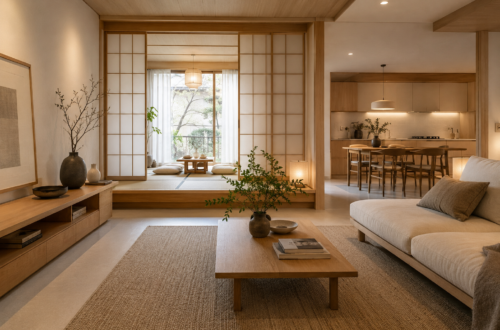
The same philosophy extends far beyond the garden itself. It’s reflected in Japanese architecture, where natural wood, stone, soft lighting, and uncluttered layouts create interiors that feel equally calm and balanced. These timeless principles continue to inspire Japanese interior design ideas and can also be seen in the understated aesthetic of well-known brands like MUJI and Nitori, whose collections emphasize natural materials, functionality, and everyday simplicity.

The Principles Behind Japanese Zen Garden Design
Although every Zen garden is unique, they all follow a few timeless principles that have shaped Japanese landscape design for centuries. Rather than following strict rules, these ideas help create spaces that feel calm, balanced, and closely connected to nature.
Simplicity Comes First
Perhaps the most recognizable feature of a Japanese Zen garden is its simplicity. Instead of filling every corner with flowers, ornaments, or decorative features, the design focuses on only a handful of carefully selected elements.
This minimalist approach allows each stone, plant, or lantern to stand out without competing for attention. The result is a landscape that feels spacious and uncluttered, even when created in a relatively small area.
Nature Is Never Perfectly Symmetrical
Symmetry is rarely the goal in a Japanese garden. Rocks are grouped in odd numbers, trees lean naturally, and winding pathways gently guide visitors through the landscape instead of following perfectly straight lines.
This intentional asymmetry reflects one of the most important ideas in Japanese aesthetics: beauty often feels more natural when it appears effortless. Rather than trying to control nature completely, Japanese gardens work with it, allowing small imperfections to become part of the overall composition.
Empty Space Has Meaning
One of the biggest surprises for first-time visitors is how much empty space a Zen garden contains. Large areas of white gravel may seem simple at first, but they play an essential role in the overall composition.
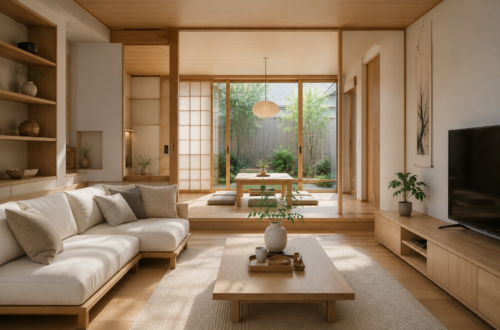
These open spaces symbolize rivers, lakes, or the sea, while also creating a sense of calm that would disappear if every corner were filled with plants. Just as silence gives meaning to music, empty space gives balance to the landscape. The same principle shapes Japanese architecture as well. Rather than filling every room with furniture or decoration, many homes make thoughtful use of negative space, natural light, and carefully planned layouts. It’s one of the reasons Japanese homes feel bigger than their actual floor plans might suggest.
Freshly raked patterns also change throughout the day as sunlight moves across the garden, creating subtle shadows that add another layer of beauty.
Every Season Adds Something New
Unlike gardens that depend almost entirely on colorful flowers, Japanese Zen gardens evolve quietly throughout the year.
Spring introduces fresh green leaves and delicate blossoms. Summer deepens the colors of moss and surrounding trees. Autumn transforms maples into brilliant shades of red and gold, while winter often blankets stones and gravel with snow, creating an entirely different atmosphere.
Rather than trying to look the same in every season, a Zen garden embraces change, reminding visitors that beauty is constantly evolving.

Essential Elements of a Japanese Zen Garden
The beauty of a Japanese Zen garden doesn’t come from expensive materials or elaborate landscaping. Instead, it comes from choosing a small number of natural elements and arranging them with care. Every stone, tree, and pathway contributes to the overall atmosphere, creating a landscape that feels balanced, timeless, and effortlessly peaceful.
While no two Zen gardens are exactly alike, several traditional features appear again and again, each serving both a practical and symbolic purpose.
Rocks Form the Heart of the Garden
In a Japanese Zen garden, rocks are far more than decorative features—they’re the foundation of the entire landscape. Long before plants or gravel are added, the placement of stones determines the garden’s composition and overall balance.
Large upright rocks often represent mountains rising above the landscape, while flatter stones can symbolize islands surrounded by water. Smaller stones help connect these larger features, creating natural groupings that appear as though they’ve always belonged together.
Rather than arranging rocks in perfectly symmetrical patterns, Japanese garden designers carefully position them to create a sense of harmony that feels effortless and natural. Even a single stone can become the focal point of the entire garden when placed with intention.
White Gravel Creates the Illusion of Water
One of the most recognizable features of a Zen garden is the carefully raked white gravel that surrounds the stones.
Instead of building ponds or streams, traditional dry landscape gardens use gravel to represent water. Gentle curved lines suggest flowing rivers, while circular patterns around rocks resemble ripples spreading across the surface of a quiet lake.
Freshly raking the gravel is more than simple maintenance. It has long been considered a mindful practice that encourages patience and focus while preserving the garden’s peaceful appearance.
The clean white surface also reflects natural light beautifully, making the entire landscape feel brighter and more spacious throughout the day.
Moss Adds Softness and a Sense of Age
While gravel and stone create structure, moss introduces warmth and softness.
Japanese gardens rarely rely on bright flower displays. Instead, different varieties of moss gradually spread across shaded areas, covering rocks and the base of trees with rich green textures that become even more beautiful after rain.
Moss also reflects one of the central ideas in Japanese aesthetics—that beauty often develops slowly over time. Rather than appearing perfectly maintained every day, a Zen garden embraces the quiet changes brought by nature, allowing weather and the passing seasons to become part of its character.
Stone Lanterns Bring Balance Instead of Decoration
Few features are more closely associated with Japanese gardens than the traditional stone lantern.
Originally placed in temple grounds and tea gardens to provide gentle illumination, stone lanterns are now one of the defining elements of Japanese landscape design. Their purpose, however, goes far beyond decoration.
A carefully positioned lantern helps create visual balance within the garden, drawing the eye toward a particular viewpoint without dominating the surrounding landscape. Over time, weather, moss, and lichen gradually soften the stone, allowing the lantern to blend naturally into its surroundings.
Rather than becoming the center of attention, it quietly becomes part of the scenery. Modern outdoor lighting follows much the same philosophy. Instead of brightly illuminating every corner of the garden, soft, warm lighting is used to highlight stone pathways, mature trees, bamboo, or architectural features without overpowering the natural landscape. Gentle illumination allows the garden to remain peaceful after sunset while revealing a completely different atmosphere at night.

Plants Are Chosen for Shape Rather Than Color
Unlike many gardens that depend on seasonal flowers, Japanese Zen gardens focus on plants that provide structure throughout the year.
Japanese maples add dramatic autumn color, evergreen pines create year-round balance, bamboo introduces movement in the wind, and carefully clipped shrubs help define different areas of the landscape. Ferns and moss soften the ground beneath larger trees, creating gentle transitions between stone and greenery.
Instead of competing for attention with bright blooms, these plants work together to create subtle seasonal changes that reward repeated visits throughout the year.
15 Japanese Zen Garden Ideas for Every Space
One of the greatest strengths of Japanese Zen gardens is their adaptability. While the most famous examples can be found at historic temples in Kyoto, the same design principles work just as beautifully in modern homes, compact courtyards, and even small balconies.
The goal isn’t to copy a famous garden exactly as it appears. Instead, each space should reflect the same sense of balance, simplicity, and harmony with nature. Whether you’re designing a large backyard or creating a quiet corner for relaxation, these Japanese Zen garden ideas offer plenty of inspiration.
1. Create a Traditional Dry Rock Garden
Perhaps the most iconic Japanese Zen garden idea is the classic karesansui, or dry landscape garden. Instead of relying on water features, it uses carefully arranged rocks surrounded by white gravel that is raked into gentle wave-like patterns. Large stones represent mountains or islands, while the gravel symbolizes rivers or the sea.
Even a relatively small area can capture the timeless elegance of this traditional design, making it one of the easiest ways to introduce authentic Japanese aesthetics into your own garden.

2. Design a Peaceful Stone Path
Stone pathways do much more than connect different areas of a garden. In Japanese landscape design, they encourage visitors to slow down and experience the garden gradually rather than all at once.
Irregular stepping stones feel more natural than perfectly straight paths, allowing each turn to reveal a slightly different view. Combined with moss, low shrubs, or carefully pruned trees, a simple stone walkway can completely transform the atmosphere of an outdoor space.

3. Add Moss for a Timeless Look
Few plants capture the spirit of a Japanese garden better than moss.
Its rich green texture softens stone surfaces, fills shaded corners, and creates the impression that a garden has existed peacefully for decades. Unlike colorful flower beds that demand attention, moss quietly enhances the landscape, becoming even more beautiful after rainfall.
Many of Japan’s most famous temple gardens owe much of their atmosphere to mature moss covering rocks, tree roots, and pathways.

4. Introduce a Japanese Maple
Few trees are more closely associated with Japanese gardens than the graceful Japanese maple.
During spring and summer, its delicate leaves provide light shade and elegant structure. In autumn, however, the tree becomes the centerpiece of the garden as brilliant shades of crimson, orange, and gold transform the landscape.
Even a single maple can dramatically change the mood of a Zen-inspired garden without overwhelming the surrounding design.

5. Include a Traditional Stone Lantern
A stone lantern instantly gives a garden a distinctly Japanese character.
Rather than placing it in the center as a decorative feature, traditional gardens position lanterns where they appear naturally integrated into the landscape—beside a pathway, partially hidden by shrubs, or overlooking a bed of moss.
Weathered stone gradually develops its own unique texture over time, helping the lantern blend even more beautifully with its surroundings.

6. Let Empty Space Become Part of the Design
One of the most overlooked Japanese Zen garden ideas is knowing when not to add something.
Leaving areas of gravel open creates breathing room for the landscape and naturally draws attention toward carefully placed rocks and plants. This thoughtful use of negative space is one of the defining characteristics of Japanese design and one of the main reasons Zen gardens feel so calm.

7. Add a Bamboo Feature
Bamboo has long been one of the defining elements of traditional Japanese gardens. Its slender stems create elegant vertical lines, while the gentle rustling of leaves in the breeze adds another layer of tranquility that can’t be achieved through visual design alone.
A small bamboo grove can provide privacy and soften the edges of a garden, while individual plants work beautifully as accents beside stone pathways or gravel areas. Even in contemporary landscapes, bamboo introduces movement and texture without overwhelming the simplicity of the overall design.

8. Create a Small Courtyard Retreat
You don’t need a large backyard to enjoy the beauty of a Japanese Zen garden. Across Japan, many homes make use of compact courtyards where a handful of carefully selected elements create a peaceful escape from the surrounding city.
A single ornamental tree, several natural stones, a layer of white gravel, and a small patch of moss are often enough to transform an otherwise empty space into a quiet retreat. Rather than filling every corner, Japanese courtyard gardens focus on creating one beautiful view that can be appreciated from inside the house as well as outdoors. This seamless connection between indoor and outdoor living is one of the defining characteristics of Japanese interior design. Carefully framed garden views, natural materials, and uncluttered spaces allow the landscape to become an extension of the home rather than something separate from it.

9. Build a Zen Garden on a Balcony
Even apartment living doesn’t have to limit your creativity. One of the most practical Japanese Zen garden ideas is adapting traditional design principles to balconies and terraces.
A few carefully chosen containers, natural stone, ornamental grasses, and a compact bamboo screen can completely change the atmosphere of a small outdoor space. Wooden decking or gravel underfoot further enhances the feeling of being surrounded by nature, even in the middle of a busy city.
Rather than trying to recreate a full-sized garden, the focus shifts toward creating a quiet corner where you can enjoy a morning coffee, read a book, or simply unwind after a busy day.

10. Introduce a Water Basin
Although dry landscape gardens often symbolize water through gravel, many traditional Japanese gardens include a tsukubai, a small stone water basin originally used in tea gardens for ritual hand washing before entering the tea house.
Today, these beautifully carved basins remain one of the most recognizable features of Japanese landscape design. Whether supplied by a bamboo fountain or a simple recirculating pump, the gentle sound of moving water adds another sensory element that enhances the peaceful atmosphere of the garden.
Combined with moss-covered stones and carefully placed greenery, a water basin creates a natural focal point without disrupting the simplicity of the surrounding landscape.

11. Use Natural Wood and Bamboo Fencing
Boundaries play an important role in Japanese gardens, but they rarely feel imposing.
Instead of tall walls or decorative metal fencing, traditional gardens often use bamboo screens and weathered wooden fences to define different spaces while maintaining a close connection with nature. These natural materials age beautifully over time, developing subtle textures and colors that blend effortlessly into the surrounding landscape.
Simple fencing can also create a sense of privacy, allowing even a small garden to feel like a secluded retreat.

12. Design a Garden Around One Beautiful Tree
Many Japanese gardens don’t rely on dozens of different plant species. Instead, a single carefully chosen tree often becomes the centerpiece of the entire landscape.
Japanese maples are perhaps the most famous choice, but flowering cherry trees, pines, and camellias also create striking focal points throughout the seasons. The surrounding rocks, gravel, and moss are then arranged to complement the tree rather than compete with it.
This restrained approach allows every seasonal change—from fresh spring leaves to brilliant autumn colors—to become part of the garden’s evolving beauty.

13. Combine Stone, Moss, and Gravel
Some of the most beautiful Zen gardens rely on only three materials: natural stone, soft moss, and white gravel.
Together, these elements create a landscape full of contrast. The rough texture of stone, the softness of moss, and the clean simplicity of raked gravel each highlight the beauty of the others without needing additional decoration.
It’s a reminder that successful Japanese garden design often comes from careful editing rather than adding more features.

14. Create a Quiet Meditation Corner
Not every Zen garden needs to be admired while walking through it. Some are designed to be experienced while sitting quietly and observing the changing landscape.
A simple wooden bench, a flat stone, or even a small deck overlooking the garden can become the perfect place for reading, meditation, or simply enjoying the sounds of nature. Carefully framed views encourage visitors to pause and appreciate details that might otherwise be overlooked.
In many traditional temple gardens, the most beautiful viewpoint is intentionally designed to be experienced while seated rather than while walking.

15. Let the Garden Change With the Seasons
Perhaps the most important Japanese Zen garden idea isn’t about adding another feature—it’s about allowing nature to shape the garden over time.
Spring blossoms, deep summer greenery, brilliant autumn foliage, and quiet winter snow each reveal a different side of the landscape. Rather than trying to keep the garden looking identical throughout the year, Japanese design celebrates these gradual seasonal transformations. Seasonal changes also influence how a Zen garden is cared for. As temperatures begin to fall, tasks such as protecting delicate plants, clearing fallen leaves, and preparing ponds or containers become an important part of annual garden maintenance. Learning how to prepare your garden for winter helps preserve both the health of the landscape and its beauty throughout the colder months.
This constant but gentle change is one of the reasons Zen gardens never lose their appeal. Every visit feels slightly different, reminding us that beauty is found not only in perfection, but also in the passing of time.

Best Plants for a Japanese Zen Garden
| Plant | Best Feature | Season |
|---|---|---|
| Japanese Maple | Autumn foliage | Autumn |
| Pine | Evergreen structure | All year |
| Moss | Soft texture | All year |
| Bamboo | Movement | All year |
| Camellia | Winter flowers | Winter |
| Azalea | Spring blooms | Spring |
One of the biggest misconceptions about Japanese Zen gardens is that they require dozens of different plant varieties. In reality, the opposite is often true. Traditional gardens rely on a relatively small selection of carefully chosen plants, each contributing texture, shape, and seasonal interest without overwhelming the landscape.
Rather than creating an explosion of color, these plants help establish a sense of balance that evolves naturally throughout the year. Every leaf, branch, and patch of moss plays a role in shaping the overall atmosphere, proving that simplicity can often be far more powerful than abundance.
Japanese Maple
Few trees are more closely associated with Japanese gardens than the elegant Japanese maple.
Its graceful branches provide delicate structure throughout the year, while the finely divided leaves transform into spectacular shades of crimson, orange, and gold during autumn. Even a single maple tree can become the focal point of an entire garden without dominating the surrounding landscape.
Smaller cultivars also make excellent choices for compact courtyards and container gardens, allowing homeowners to capture the beauty of Japanese landscaping even in limited spaces.
Moss
If there is one plant that defines the atmosphere of a Japanese Zen garden, it is moss.
Covering rocks, tree roots, and shaded pathways, moss introduces a softness that contrasts beautifully with stone and gravel. Its lush green color changes subtly throughout the seasons and becomes especially vibrant after rainfall.
Rather than viewing moss as something to remove, Japanese gardeners often encourage its natural growth, appreciating the sense of age and quiet beauty it brings to the landscape.
Japanese Black Pine
The Japanese black pine is admired for its sculptural form and year-round greenery.
Carefully pruned over many years, these trees develop distinctive shapes that reflect the influence of wind, weather, and time. Mature pines often become living works of art, creating dramatic silhouettes against gravel gardens and open skies.
Because they remain evergreen throughout the seasons, they provide structure even during the quiet winter months.
Bamboo
Bamboo introduces movement into a landscape that is otherwise still.
Even the gentlest breeze causes slender stems and delicate leaves to sway softly, adding a calming sound that enhances the overall atmosphere. Whether planted as a privacy screen or used as a decorative accent, bamboo creates a natural transition between different areas of the garden.
Choosing clumping varieties rather than running bamboo is often the best option for residential gardens, making maintenance much easier.
Azaleas and Camellias
Although Japanese Zen gardens are generally restrained when it comes to flowers, carefully selected flowering shrubs provide seasonal highlights without disrupting the garden’s minimalist character.
Azaleas bloom spectacularly during spring, while camellias brighten the cooler months with elegant blossoms in shades of white, pink, and deep red. Their compact forms also work beautifully alongside stone lanterns, pathways, and moss-covered rocks.
Rather than dominating the landscape, these shrubs provide subtle moments of color that complement the surrounding greenery.
Ferns
Ferns thrive in the cool, shaded environments where many Japanese gardens naturally flourish.
Their delicate foliage softens the edges of pathways, stones, and retaining walls, creating smooth transitions between different textures. Combined with moss and natural rock, ferns help establish the layered appearance that gives mature Japanese gardens their remarkable sense of depth.
Ornamental Grasses
Ornamental grasses bring gentle movement to the landscape throughout the year.
Tall grasses catch the wind, creating subtle motion that contrasts with the stillness of rocks and gravel. During autumn, many varieties develop warm golden tones that complement the brilliant foliage of nearby Japanese maples.
Used sparingly, ornamental grasses add texture without distracting from the garden’s overall simplicity.
Choosing Plants That Age Beautifully
Perhaps the most important lesson Japanese gardens teach is patience.
Unlike many landscapes designed to look perfect immediately after planting, a Zen garden becomes more beautiful with time. Moss gradually spreads across stone, trees develop graceful shapes through careful pruning, and weather slowly softens every surface. Instead of fighting these natural changes, Japanese gardeners embrace them as part of the garden’s story.
This appreciation for slow, natural transformation is one of the reasons Japanese Zen gardens continue to inspire people around the world. Rather than creating a space that feels finished, they create one that continues to evolve season after season.
Common Mistakes to Avoid When Designing a Japanese Zen Garden
Creating a Japanese Zen garden isn’t about following a strict set of rules or copying the layout of a famous temple. In fact, many of the most successful gardens feel completely natural because they avoid unnecessary complexity. A few carefully chosen materials arranged with intention will almost always create a more authentic atmosphere than a space filled with decorative features.
If you’re planning your own Zen-inspired garden, avoiding these common mistakes will help create a landscape that feels peaceful rather than overcrowded.
Trying to Fill Every Empty Space
One of the biggest mistakes beginners make is assuming that every corner needs another plant, lantern, or decorative ornament.
In Japanese landscape design, empty space is never wasted. Open areas of gravel or moss allow the eye to rest and give surrounding elements greater visual impact. A garden with fewer carefully placed features often feels far more elegant than one packed with decorations.
Learning when to stop adding new elements is just as important as deciding what to include.
Choosing Too Many Different Plants
Japanese gardens are admired for their harmony, not for the number of plant species they contain.
Instead of planting dozens of colorful flowers, traditional gardens usually rely on a limited palette of trees, shrubs, moss, and ground cover that work together throughout the seasons. Repeating the same plants in different parts of the garden creates a calm, cohesive appearance that’s easy on the eye.
Too much variety can quickly make even a beautifully designed space feel busy.
Using Bright Decorations
Modern garden centers are full of colorful ornaments, painted statues, and decorative accessories, but these rarely belong in a Japanese Zen garden.
Traditional landscapes rely on natural materials that weather gracefully over time. Stone, wood, bamboo, gravel, and moss develop richer textures as they age, becoming more beautiful with each passing season.
Choosing understated materials allows nature to remain the main attraction.
Forgetting About the Seasons
A Japanese garden should never look exactly the same throughout the year.
Instead of focusing only on spring flowers or summer greenery, think about how the landscape will change during autumn and winter. Evergreen pines provide structure when deciduous trees lose their leaves, while moss, stone, and gravel continue to create visual interest even under a light layer of snow.
Designing with all four seasons in mind gives the garden lasting beauty instead of just a few weeks of color.
Ignoring Natural Balance
Perfect symmetry may seem attractive at first, but it rarely feels natural.
Japanese gardens are carefully balanced without becoming identical on both sides. Trees lean slightly, pathways curve gently, and groups of stones vary in size and height. These subtle differences create movement and make the landscape feel as though it has developed naturally over many years.
The goal isn’t perfection—it’s harmony.
A Zen Garden Is Never Truly Finished
Perhaps the most important lesson Japanese gardens teach is that they’re always evolving.
Trees continue to mature, moss slowly spreads across stone, gravel patterns are redrawn, and every season introduces new colors and textures. Rather than trying to freeze the landscape in time, Japanese gardeners embrace these gradual changes, allowing nature to shape the garden year after year.
This philosophy is what makes a Zen garden feel alive. Instead of creating something that looks perfect on the day it’s finished, you’re creating a landscape that becomes more beautiful with patience, care, and the passing of time.
Famous Japanese Zen Gardens Worth Visiting
While creating your own Zen-inspired garden is incredibly rewarding, nothing compares to experiencing the originals in Japan. Many of the country’s most celebrated gardens have been carefully maintained for centuries, offering visitors an opportunity to see how simplicity, proportion, and natural materials come together to create landscapes of remarkable beauty.
Each garden has its own character, yet all reflect the same timeless principles that continue to inspire Japanese Zen garden ideas around the world.
Ryōan-ji, Kyoto
Perhaps the world’s most famous Zen garden, Ryōan-ji is often considered the ultimate expression of minimalist landscape design.
Its rectangular courtyard contains just fifteen carefully placed rocks surrounded by white gravel, yet the composition has inspired centuries of discussion and interpretation. Viewed from the temple veranda, the arrangement appears deceptively simple, proving that extraordinary beauty can emerge from remarkable restraint.
Rather than offering obvious symbolism, the garden encourages visitors to slow down and form their own interpretation, making every visit a deeply personal experience.
Daisen-in, Kyoto
Located within the historic Daitoku-ji temple complex, Daisen-in presents one of Japan’s finest examples of symbolic landscape design.
Here, rocks, gravel, and carefully pruned vegetation represent mountains, waterfalls, rivers, and the journey of life itself. Although the garden occupies a relatively compact space, its composition creates the impression of an expansive natural landscape unfolding before the viewer.
It’s an excellent example of how Japanese designers transform limited space into something that feels much larger than it actually is.
Ginkaku-ji (The Silver Pavilion), Kyoto
Although Ginkaku-ji is best known for its elegant temple buildings, its gardens are equally remarkable.
One of the most recognizable features is the beautifully sculpted cone of white sand known as the Moon Viewing Platform, accompanied by meticulously raked gravel that reflects changing light throughout the day.
Combined with moss-covered pathways, mature pine trees, and sweeping views over Kyoto, the garden demonstrates how dry landscape elements can coexist beautifully with living greenery.
Kennin-ji, Kyoto
As Kyoto’s oldest Zen temple, Kennin-ji offers several beautiful garden spaces where traditional landscaping and temple architecture blend seamlessly.
Its quiet courtyards combine stone, gravel, moss, bamboo, and carefully shaped trees in a way that feels both refined and natural. Despite being located in the heart of one of Japan’s busiest tourist districts, the gardens provide an atmosphere of remarkable tranquility.
Adachi Museum of Art Garden, Shimane
Although much newer than Kyoto’s temple gardens, the gardens surrounding the Adachi Museum of Art are frequently ranked among the most beautiful in Japan.
Every tree, stone, and shrub is meticulously maintained, creating landscapes that resemble living paintings viewed through the museum’s large windows. Rather than simply displaying artwork inside the building, the gardens themselves become works of art.
This modern interpretation demonstrates that the philosophy behind Japanese Zen garden ideas continues to evolve while remaining deeply rooted in traditional aesthetics.
What Makes These Gardens So Inspiring?
Although each of these famous gardens has its own unique character, they all share a common philosophy. None rely on extravagant displays or elaborate decoration. Instead, they demonstrate how careful composition, natural materials, and respect for the surrounding landscape can create spaces that remain beautiful for centuries.
Whether you’re planning a trip to Japan or simply searching for inspiration for your own garden, visiting these remarkable landscapes offers a deeper appreciation of the timeless principles that continue to shape Japanese garden design today.
Frequently Asked Questions
What is the purpose of a Japanese Zen garden?
The primary purpose of a Japanese Zen garden is to create a peaceful environment that encourages quiet reflection and mindfulness. Originally developed at Zen Buddhist temples, these gardens were designed to support meditation through simplicity, balance, and a close connection with nature. Today, many people create Zen-inspired gardens simply because they provide a calm space to relax and escape the pace of everyday life.
Can you create a Japanese Zen garden at home?
Absolutely. One of the reasons Japanese Zen garden ideas have become so popular is that they can be adapted to almost any space. Whether you have a large backyard, a compact courtyard, or even a small balcony, a few carefully chosen natural elements can create the same peaceful atmosphere found in traditional Japanese gardens.
Do Japanese Zen gardens always include water?
No. Many traditional Zen gardens are known as dry landscape gardens because they represent rivers, lakes, and waterfalls using carefully raked gravel instead of actual water. Some larger Japanese gardens include ponds or streams, but water is not essential for creating an authentic Zen-inspired landscape.
What plants are commonly used in Japanese Zen gardens?
Japanese maples, pines, bamboo, moss, ferns, azaleas, camellias, and ornamental grasses are among the most popular choices. Rather than relying on colorful flower displays, Japanese gardens focus on plants that provide beautiful shapes, subtle textures, and seasonal interest throughout the year.
Do Zen gardens require a lot of maintenance?
Not necessarily. While gravel may need occasional raking and trees benefit from careful pruning, most Japanese Zen gardens are designed to age naturally rather than remain perfectly manicured. Regular maintenance usually focuses on preserving balance instead of constantly replacing plants or flowers.
What’s the difference between a Japanese garden and a Zen garden?
A Japanese garden is a broad category that includes many different styles, such as strolling gardens, tea gardens, courtyard gardens, and pond gardens. A Zen garden is one specific type of Japanese garden, traditionally designed with rocks, gravel, moss, and minimal planting to encourage quiet contemplation.
Can a Zen garden be modern?
Yes. Many contemporary landscapes take inspiration from traditional Japanese Zen garden ideas while using modern materials and layouts. Clean lines, natural stone, minimalist planting, and carefully planned open spaces allow modern gardens to preserve the same peaceful atmosphere without copying historical designs exactly.
Why do Japanese Zen gardens use so much gravel?
Gravel symbolizes water and creates one of the most recognizable features of a Zen garden. Carefully raked patterns represent flowing rivers, gentle waves, or still lakes, while the open surface adds brightness and balance to the overall composition.
Final Thoughts
A Japanese Zen garden is more than a beautiful outdoor space—it’s a different way of thinking about nature.
Rather than filling every corner with colorful flowers or decorative ornaments, these gardens demonstrate how a small number of carefully chosen elements can create an atmosphere of remarkable calm. Stones, gravel, moss, trees, and open space work together to form landscapes that feel balanced, timeless, and deeply connected to the natural world.
Perhaps that’s why Japanese Zen gardens continue to inspire people across generations and cultures. They remind us that beauty doesn’t always come from adding more. Sometimes, the most memorable spaces are created by simplifying, slowing down, and allowing nature to speak for itself.
Whether you’re planning a complete garden makeover or simply looking for inspiration, these Japanese Zen garden ideas show that even the smallest outdoor space can become a peaceful retreat. With patience, thoughtful design, and an appreciation for the changing seasons, it’s possible to create a garden that becomes more beautiful with every passing year.

You May Also Like

MUJI vs Nitori: Which Japanese Home Store Is Best for Furniture, Home Décor, and Everyday Living?
Why Japanese Homes Feel Bigger Than They Really Are